

Nearly 30 States Committed to Support Ukraine’s Cultural Recovery in Vilnius
The physical damage has been compounded by the halt of many cultural and artistic activities, leaving many artists unable to create or work and facing a significant decline in their livelihoods.
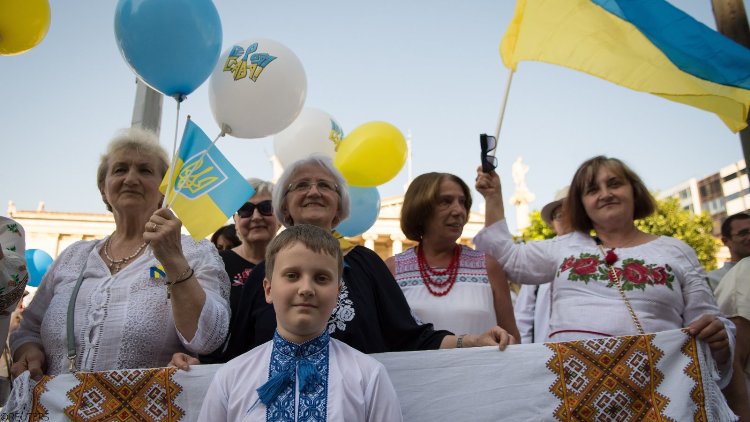
Gathered in Vilnius on Friday, nearly 30 states committed to boosting their support for Ukraine's cultural sector recovery, coordinated by UNESCO. This initiative follows a call from Ukrainian President Volodymyr Zelensky during his meeting with UNESCO Director-General Audrey Azoulay. The International Conference for the Recovery of the Cultural Sector of Ukraine, organized by Lithuania, culminated in a joint commitment from countries across North America, Asia, and Europe to aid Ukrainian artists and cultural professionals, restore damaged sites, and revive cultural life.
Vast Needs Remain to be Met
As of Thursday, UNESCO has verified damage to over 400 cultural sites in Ukraine. These include 191 buildings of historical and artistic significance, 137 religious sites, 31 museums, 25 monuments, 15 libraries, and one archive. Recent months have seen the initiation of consolidation and restoration projects in Kyiv and Odesa, coordinated by UNESCO. However, the financial requirements for continuing this work are immense. According to a February 2024 UNESCO evaluation, the cost averages $680 million annually until 2033.
The physical damage has been compounded by the halt of many cultural and artistic activities, leaving many artists unable to create or work and facing a significant decline in their livelihoods. Ukraine cannot address these needs alone, making increased international involvement crucial.
A Joint Action Plan by UNESCO
The states' commitment at the Vilnius Conference marks a significant milestone, accompanied by a comprehensive medium- and long-term action plan developed by UNESCO in collaboration with Ukrainian authorities and over 40 national and international organizations.
This plan consists of six key areas:
Monitoring, assessing, and documenting damage to cultural heritage.
Implementing preventive and urgent measures, repairs, reconstruction, and recovery of cultural heritage.
Reviving cultural institutions and cultural education.
Strengthening cultural and creative industries.
Enhancing resilience through culture.
Digitally transforming the cultural sector.
The plan aims to prioritize interventions and ensure effective coordination of international efforts.
UNESCO and the participating countries at the Vilnius Conference have agreed to reconvene on June 11 and 12 to work on the implementation of this action plan during the Ukraine Recovery Conference in Berlin, Germany.
ALSO READ
-
Naftogaz Sets Out Cleaner Energy Future With EIB Support and 2050 Net Zero Target
-
KSrelief and UNDP Launch $5M Lifeline for Ukraine’s War-Affected Hospitals
-
Poltava University Reopens With Safer, Greener Spaces for Nearly 3,000 Campus Users
-
UNDP Urges Recovery From Day One as 160 Million People Risk Being Trapped in Crisis
-
Ukraine Faces Another Bitter Winter as UN Inquiry Warns of Deepening Civilian Harm


 Google News