

Rajnath Singh Lays Foundation Stone for Indian Navy's Very Low Frequency (VLF) Station in Telangana
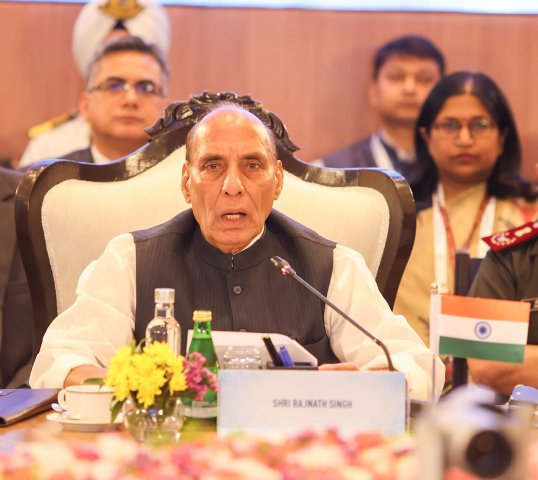
During the ceremony, Shri Rajnath Singh emphasized the strategic importance of the new VLF station, highlighting that it would significantly boost the Indian Navy’s communication network.
- Country:
- India
In a significant step to bolster the Indian Navy's operational capabilities, Raksha Mantri Shri Rajnath Singh laid the foundation stone for a new Very Low Frequency (VLF) communication station at the Damagundam Reserve Forest site in Vikarabad, Telangana, on October 15, 2024. The advanced facility, with an investment of Rs 3,200 crore, will span 2,900 acres and enhance secure, long-distance naval communications, especially between naval command centers, surface ships, and submarines.
Enhancing Maritime Communication and Operational Readiness
During the ceremony, Shri Rajnath Singh emphasized the strategic importance of the new VLF station, highlighting that it would significantly boost the Indian Navy's communication network. This state-of-the-art facility will ensure secure and real-time command and control of naval forces, a critical factor in modern warfare. The station will enable seamless communication with submerged submarines, enhancing India's naval capabilities across the Indian Ocean Region (IOR).
He further added that the VLF station would not only be a military installation but a strategic national asset, reinforcing India's maritime security, especially in the Indo-Pacific. As India continues to emerge as a key security partner in the IOR, the new station will play a pivotal role in supporting India's expanding maritime interests, safeguarding sea lanes, and securing the country's commercial and security interests.
"Effective coordination between men and machines is becoming extremely important in view of the evolving methods of warfare," said Shri Singh, stressing that secure communication is often the decisive factor between victory and defeat in military operations.
Communication as the Key to Success in Complex Operations
Shri Rajnath Singh underscored the vital role that communication systems play in modern military operations, emphasizing the need for foolproof, secure, and real-time communication to ensure swift and informed decision-making during dynamic situations. He added that proper communication enhances the morale and safety of soldiers, providing critical support to their strategic operations.
The Defense Minister also addressed the increasing global interest in the IOR, noting India's role as a first responder and key security partner in the region. He emphasized that maintaining peace in the region requires cooperation from all neighboring countries, cautioning against external forces that could destabilize the area.
Environmental and Economic Benefits
In response to concerns about the project's environmental impact, Shri Rajnath Singh reassured the public that all environmental regulations are being followed, with provisions for the rehabilitation of affected people, if necessary. Sustainable development is a priority, he said, ensuring that the facility's advanced technology would not harm the local environment.
The VLF station is also expected to generate employment and drive economic growth in the surrounding areas. Both skilled and unskilled workers from nearby communities will be employed during construction, and long-term operational roles will follow once the station is functional. Shri Singh noted that the station will act as a growth catalyst for the region, stimulating further economic development.
Honoring the Legacy of Dr. APJ Abdul Kalam
In his speech, Raksha Mantri paid tribute to the "Missile Man of India," former President Dr. APJ Abdul Kalam, on his birth anniversary. He recognized Dr. Kalam's immense contributions to India's defense sector, which inspired generations of scientists and engineers.
Chief of the Naval Staff on Strengthening Naval Communication
Chief of the Naval Staff Admiral Dinesh K. Tripathi highlighted the transformative impact of the VLF station on Indian Navy's global communication network, particularly in ensuring continuous contact with submarines. He stressed that the new facility would complement the existing VLF station at INS Kattabomman in Tamil Nadu, thus enhancing India's strategic maritime capabilities.
The VLF station will provide robust, secure, and reliable communication across vast oceanic regions, ensuring the stealth and effectiveness of Indian naval assets. "This station will stand tall as a testament to the strength and commitment of our Navy to safeguard national maritime interests anytime, anywhere, and anyhow," Admiral Tripathi said.
A Strategic Asset for the Nation's Security
Telangana Chief Minister Shri A. Revanth Reddy, Minister of State for Home Affairs Shri Bandi Sanjay Kumar, and other state officials also attended the event. The new VLF station is set to become a cornerstone of India's defense infrastructure, underscoring the government's commitment to strengthening the country's maritime security and global military presence.


 Google News