

Trump's Deportation Push Faces Legal Hurdles
Donald Trump has appealed to the U.S. Supreme Court to permit the use of the 1798 Alien Enemies Act to expedite the deportation of alleged Venezuelan gang members, amidst legal challenges. The decision has sparked debates over the balance of power between presidential authority and the judiciary in national security matters.
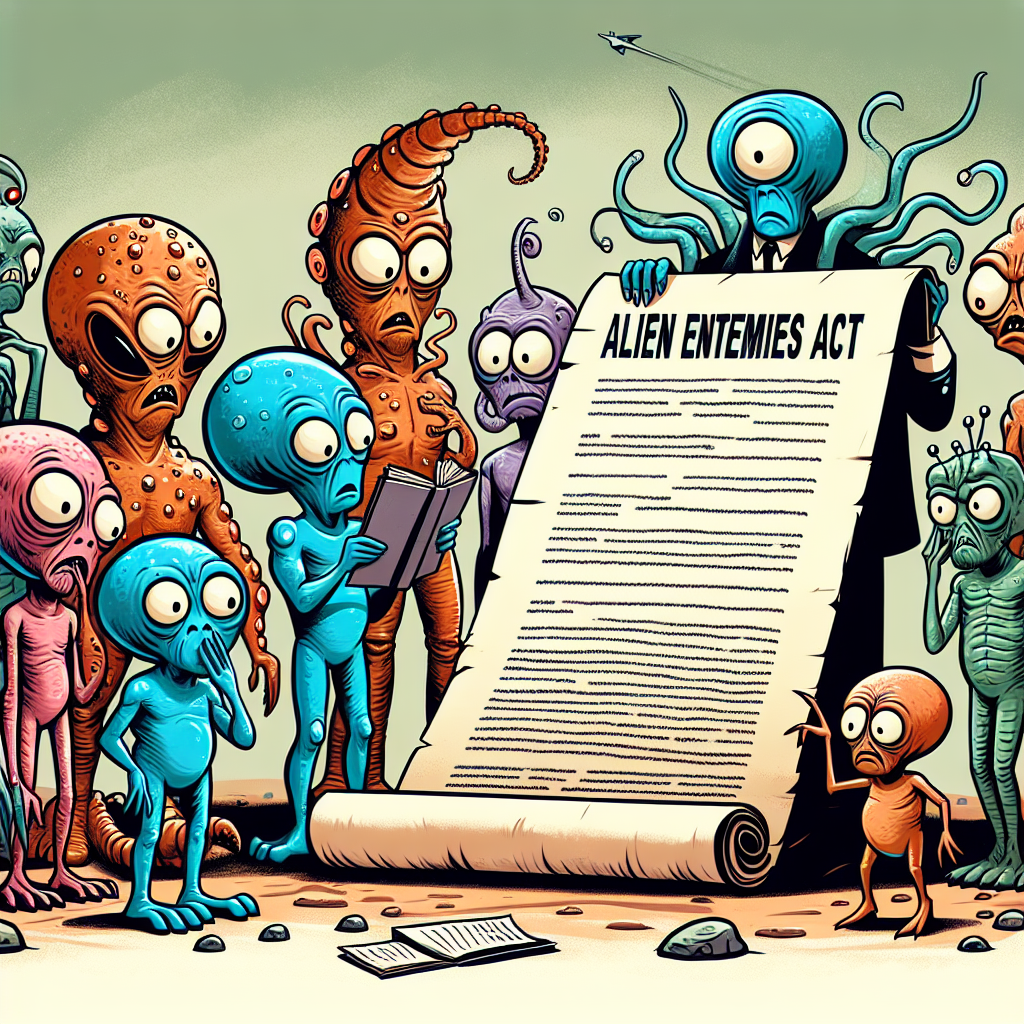
In a bold legal move, former President Donald Trump has petitioned the U.S. Supreme Court to authorize the expedited deportation of alleged Venezuelan gang members under the Alien Enemies Act of 1798. This statute, historically utilized during wartime, is at the center of a contentious legal battle between the administration and civil rights advocates.
The Justice Department, representing the former president, has requested an overturn of a previous halt on these deportations, arguing that the Constitution grants the president clear national security powers. The law typically permits the deportation of individuals whose loyalties lie with a foreign power during wartime, a point contested in this legal challenge.
Critics, including the American Civil Liberties Union, argue the administration has overstepped its authority, employing this archaic law for immediate deportations without due process. The case continues to stir debates over judicial versus executive power, with the U.S. Court of Appeals upholding the temporary block amid accusations and impassioned rhetoric.
ALSO READ
-
Lee Jae Myung's Diplomatic Milestones: Balancing Amidst Global Tensions
-
Diplomatic Moves: Takaichi's UN Meeting with Trump
-
Trade War Chessboard: Agriculture, Energy, and Rare Earths in Focus
-
High-Stakes Diplomatic Dance: Trump and Xi's Crucial Summit
-
Trump's Battle with the Airwaves: A Broadcast Controversy


 Google News