

TRAI Hosts Workshop to Promote Star Rating for Digital Connectivity in Buildings
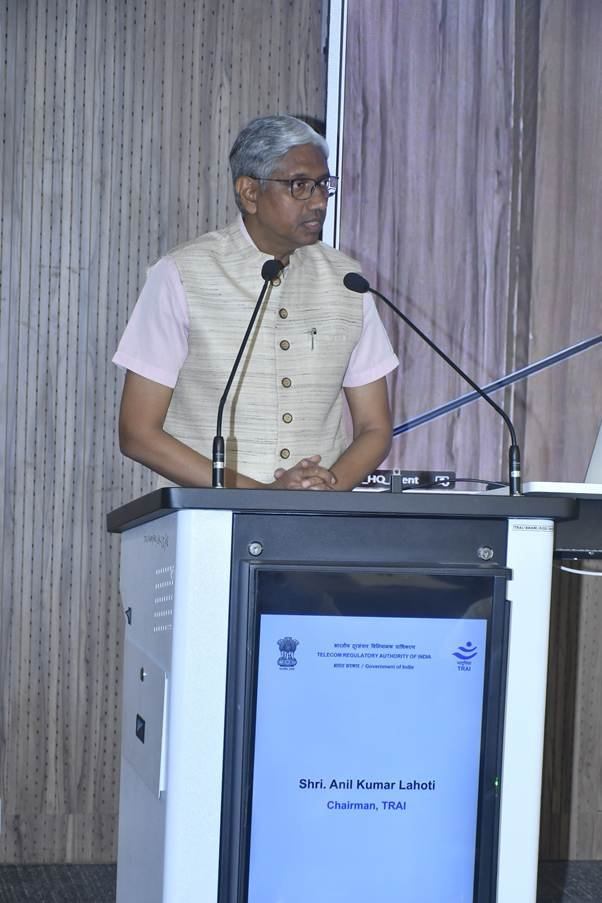
Shri Lahoti drew attention to a key challenge — 70–80% of mobile data traffic is consumed indoors, yet indoor digital infrastructure is often neglected during construction planning.
- Country:
- India
The Telecom Regulatory Authority of India (TRAI) organized a high-level half-day workshop today at its headquarters in New Delhi to raise awareness and promote the adoption of its pioneering Framework for Rating of Properties for Digital Connectivity, notified in October 2024. The event drew participation from nearly 100 senior officials representing a wide range of Central Ministries, infrastructure bodies, urban planners, and standards institutions, underscoring the urgency and importance of integrating Digital Connectivity Infrastructure (DCI) into India's future built environment.
Toward Digitally-Enabled Infrastructure: The New Rating Framework
The workshop was convened to facilitate the institutional uptake of TRAI's voluntary star-rating system, which is designed to assess the digital readiness of physical infrastructure — including residential buildings, office complexes, public facilities, transport terminals, and other spaces — in delivering high-quality broadband and mobile connectivity.
The Regulations of 2024 introduce a performance-based, technology-neutral assessment framework, modeled on the lines of green building ratings and energy efficiency labels, to promote structured and standards-driven deployment of DCI in construction projects.
"Digital connectivity is no longer a luxury — it is a utility like water or electricity," emphasized Shri Anil Kumar Lahoti, Chairperson, TRAI, in his inaugural address.
Embedding Connectivity at the Design Stage
Shri Lahoti drew attention to a key challenge — 70–80% of mobile data traffic is consumed indoors, yet indoor digital infrastructure is often neglected during construction planning. The Chairperson stressed the need to mainstream DCI considerations during the design and development phases of all infrastructure projects.
"We must move from retrofitting telecom infrastructure to building it in by design," he said, calling for the integration of DCI criteria into project guidelines, model RFPs, and capacity-building programs of various ministries and agencies.
Understanding the Rating System: Technical Deep-Dive
In a detailed technical session, Shri Tejpal Singh, Advisor (QoS-1), TRAI, presented the key provisions of the Rating of Properties for Digital Connectivity Regulations, 2024, and the accompanying rating manual developed for use by:
-
Digital Connectivity Rating Agencies (DCRAs)
-
Architects and property developers
-
Telecom service providers
-
Smart city planners
The rating framework includes quantifiable parameters such as:
-
Availability of fibre entry points
-
Indoor signal strength thresholds
-
Rooftop access for antenna installations
-
Wi-Fi and 5G readiness
-
Ease of access for network operators and maintainers
Properties meeting these benchmarks will be assigned a star rating (up to 5 stars), offering transparency and comparability for both occupants and service providers.
Harmonising Standards: BIS and NBC Updates
In a complementary presentation, Shri Abhishek Sharma, Scientist 'B' from the Bureau of Indian Standards (BIS), briefed participants on the proposed revisions to the National Building Code (NBC) 2016. These updates aim to align architectural and construction guidelines with the evolving demands of telecom infrastructure, particularly in the domain of Information and Communication Enabled Installations (ICEIs).
He stressed the importance of creating a harmonised regulatory ecosystem, where building codes and connectivity requirements evolve in tandem, enabling streamlined implementation across sectors.
Institutional Participation and Policy Alignment
Senior officials from the Ministries of Housing & Urban Affairs, Electronics & IT, CPWD, Town and Country Planning Organizations, NBCC, BIS, and academic institutions such as the School of Planning and Architecture (SPA) actively participated in interactive discussions and a Q&A session.
The deliberations focused on:
-
Institutionalizing DCI rating standards in government projects
-
Modifying master plans and tendering processes
-
Upskilling planners and engineers on DCI requirements
-
Collaborative planning between telecom providers and urban developers
Supporting National Flagship Missions
This digital connectivity rating framework directly complements major national initiatives such as the:
-
Digital India programme
-
Smart Cities Mission
-
BharatNet and 5G rollout programs
By embedding digital readiness into core infrastructure development, the framework strengthens India's path toward universal high-speed digital access, especially in urban and semi-urban environments.
Continued Stakeholder Engagement
TRAI reaffirmed its commitment to capacity building and cross-sector dialogue, announcing plans for more regional workshops, awareness sessions, and technical consultations in the coming months. These engagements aim to build a nationwide community of practice focused on future-ready, digitally integrated infrastructure.
The workshop concluded with a call to action for all stakeholders to embed DCI in planning norms, training modules, and execution frameworks, ensuring that every building in India is digitally empowered by design.


 Google News