

Ramaphosa Urges Women’s Full Participation in First National Dialogue Convention
Ramaphosa said it was “to be expected” that, given the history of women’s activism and leadership, they would once again take a leading role.
- Country:
- South Africa
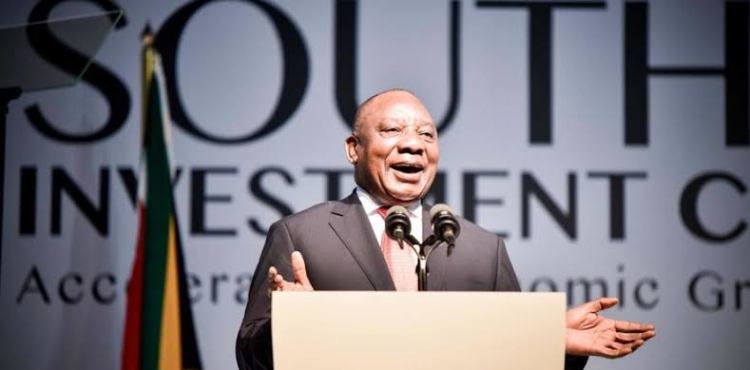
President Cyril Ramaphosa has called for women to be at the forefront of South Africa's first-ever National Convention of the National Dialogue, set to take place this week in Pretoria. Addressing the nation in his weekly Presidential newsletter, the President stressed that women's voices must be central to shaping the country's political, social, and economic future, noting their historic and ongoing role in South Africa's transformation.
Launch of the National Dialogue Convention
The convention, scheduled for Friday, will bring together 200 organisations from 33 sectors across the country. It marks the official launch of the National Dialogue process—an inclusive platform designed to foster consensus on South Africa's most pressing challenges and chart a collective path forward.
Ramaphosa said it was "to be expected" that, given the history of women's activism and leadership, they would once again take a leading role. He emphasised that women's engagement is not just symbolic but essential, as they make up more than half of the nation's population and are affected by every major issue, from unemployment and crime to climate change.
Commitment to Equal Representation
The President underscored the government's commitment to ensuring equal representation of women in all dialogue structures and decision-making processes. He urged stakeholders to mobilise a diverse range of women—across age groups, geographies, cultures, and socio-economic backgrounds—including women with disabilities and members of the LGBTQI+ community.
"Women's struggles are not uniform," he noted. "The challenges faced by rural women or those in traditional communities are vastly different from those of women in urban areas with greater access to education, resources, and public services. These differences must be acknowledged and reflected in the dialogue's agenda."
Learning from Past Consultations
Ramaphosa referenced the 2024 South African Women's Pre-National Dialogue convened by the Institute of Justice and Reconciliation, which highlighted the need for the National Dialogue to address all issues affecting women and to ensure that diverse priorities are recognised.
He also reflected on the country's history of women's mobilisation—from the Federation of South African Women (FEDSAW) influencing the inclusion of gender equality clauses in the Freedom Charter in 1954, to the Women's National Coalition in 1992 ensuring those principles were enshrined in the democratic constitution.
Historical Legacy and Women's Month
With August marking Women's Month, Ramaphosa paid tribute to the legacy of the 1956 Women's March, when 20,000 women, led by Lilian Ngoyi, Helen Joseph, Albertina Sisulu, and Sophia Williams-De Bruyn, protested the apartheid government's pass laws for black women.
He also recalled women's involvement in key moments of resistance—such as the beer-hall protests of 1959, the rent boycotts of the 1980s, and recent movements against gender-based violence—stating that women have "a proud history of standing up and being counted."
A Call to Action
The President urged every sector of society to work towards the full participation of women in the National Dialogue, saying it would be the most fitting tribute to the heroines of 1956.
"With the first National Convention taking place during Women's Month, this is an opportunity to honour their legacy not only through remembrance but through meaningful action that ensures women's voices shape our national future," he concluded.


 Google News