

Jan Vishwas Bill 2025: Expanding India’s Drive for Ease of Living & Doing Business
The Bill had earlier received the Union Cabinet’s approval and was formally presented with a request for referral to a Select Committee of the House.
- Country:
- India
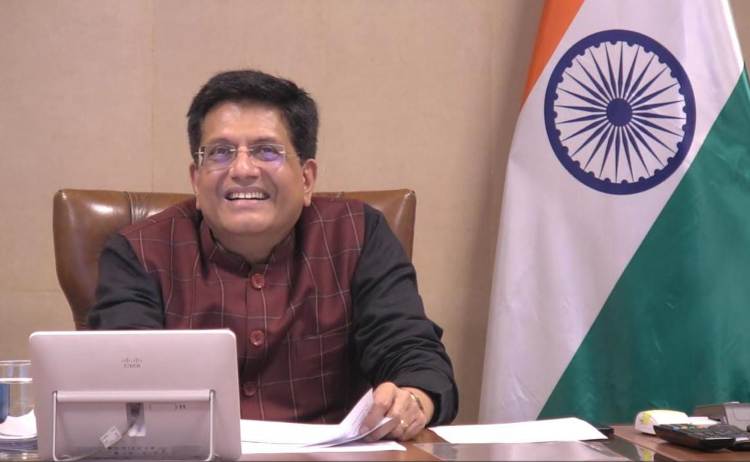
The Union Minister for Commerce and Industry, Shri Piyush Goyal, today introduced the Jan Vishwas (Amendment of Provisions) Bill, 2025 in the Lok Sabha, marking a major step forward in India's continuing efforts to rationalize and modernize regulatory frameworks. The Bill had earlier received the Union Cabinet's approval and was formally presented with a request for referral to a Select Committee of the House. The Hon'ble Speaker of Lok Sabha will appoint the members of this Committee, which has been tasked to submit its report by the first day of the next Parliamentary Session.
Building on the 2023 Reform Legacy
The 2025 Bill follows the landmark Jan Vishwas (Amendment of Provisions) Act, 2023, which was the first consolidated legislation aimed at systematically decriminalising minor offences across a wide spectrum of laws. The 2023 Act, notified on 11th August 2023, had successfully decriminalised 183 provisions across 42 Central Acts administered by 19 Ministries and Departments.
That initiative was widely regarded as a turning point in India's Ease of Doing Business reforms, as it signaled a departure from an over-regulated framework where even minor or procedural violations attracted criminal penalties.
Expanded Scope Under the 2025 Bill
The Jan Vishwas Bill, 2025 significantly expands this reform agenda to cover 16 Central Acts administered by 10 Ministries/Departments, with an ambitious plan to amend 355 provisions in total. Of these:
-
288 provisions are to be decriminalised to directly improve the Ease of Doing Business.
-
67 provisions are proposed to be amended with a focus on Ease of Living for citizens.
In particular, 67 amendments have been proposed under the New Delhi Municipal Council Act, 1994 (NDMC Act) and the Motor Vehicles Act, 1988, both of which are directly connected to daily governance and citizen services.
Key Features of the Bill
The 2025 Bill introduces several progressive measures designed to simplify compliance and reduce unnecessary criminalization:
-
First-Time Contraventions: For 76 offences under 10 Acts, first-time violators will be issued advisories or warnings instead of facing harsh punitive action.
-
Decriminalisation: Imprisonment clauses for minor, technical, or procedural defaults are proposed to be replaced with monetary penalties or official warnings.
-
Rationalisation of Penalties: Penalties will be made proportionate to the offence, with graduated fines for repeated violations, striking a balance between deterrence and fairness.
-
Administrative Adjudication: Designated officers will be empowered to impose penalties through administrative mechanisms, thereby reducing the burden on the judicial system.
-
Automatic Updation of Penalties: To avoid legislative delays, fines and penalties will see an automatic 10% increase every three years, ensuring they remain effective as deterrents.
Acts Under Review: Continuity and Expansion
Interestingly, the 2025 Bill also revisits certain Acts that had been part of the 2023 reforms, indicating a continuous refinement of the regulatory ecosystem. These include:
-
The Tea Act, 1953
-
The Legal Metrology Act, 2009
-
The Motor Vehicles Act, 1988
-
The Drugs and Cosmetics Act, 1940
These Acts will see further decriminalisation of provisions, reinforcing the Government's policy of reducing red tape and legal uncertainties for businesses and individuals alike.
Policy Vision: Minimum Government, Maximum Governance
The introduction of the Jan Vishwas (Amendment of Provisions) Bill, 2025 is more than just a legislative exercise — it is a continuation of India's regulatory reform journey, grounded in the principle of "Minimum Government, Maximum Governance."
By replacing criminal penalties with civil or administrative remedies for minor infractions, the Bill aims to:
-
Foster a business-friendly environment that encourages entrepreneurship and investment.
-
Improve India's standing in global ease of doing business rankings.
-
Ensure citizen-friendly governance by reducing compliance anxiety and legal uncertainty.
-
Free up judicial resources to focus on serious disputes instead of minor infractions.
The Jan Vishwas Bill, 2025 marks a bold step toward creating a simplified, transparent, and modern regulatory ecosystem in India. By building on the achievements of the 2023 Act and expanding its scope, the Bill demonstrates the Government's strong commitment to sustainable economic growth, citizen empowerment, and efficient governance.
Its impact will be felt not just by businesses navigating complex regulations, but also by ordinary citizens seeking smoother interactions with government authorities, thereby laying the foundation for a more efficient, inclusive, and resilient economy.


 Google News