

South Africa Steps Up Preparations for G20 Leaders’ Summit on African Soil
Lamola emphasized that the Working Group and Ministerial meetings remain central to shaping the Declaration, which will serve as the political and strategic blueprint for the G20’s global agenda.
- Country:
- South Africa
As South Africa's presidency of the Group of 20 (G20) enters its final 100 days, the nation is intensifying efforts to host a landmark G20 Leaders' Summit—the first to take place on African soil. The summit, scheduled for later this year in Johannesburg, is being positioned as a defining moment not only for South Africa but also for the Global South.
Progress in G20 Presidency
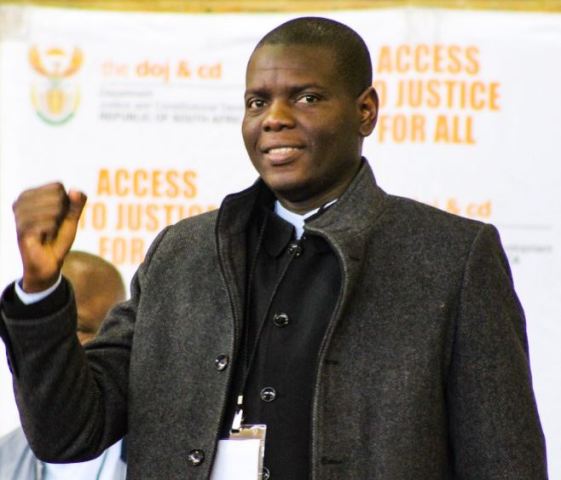
International Relations and Cooperation Minister Ronald Lamola, briefing the media on Wednesday, highlighted the substantial progress achieved since South Africa assumed the presidency in December 2023. Out of 132 scheduled official meetings across both the Sherpa and Finance tracks, 87 have already been conducted. These discussions, ranging from macroeconomic stability to global development priorities, are paving the way for consensus on the forthcoming Johannesburg Leaders' Declaration.
Lamola emphasized that the Working Group and Ministerial meetings remain central to shaping the Declaration, which will serve as the political and strategic blueprint for the G20's global agenda. "We are at a critical juncture, and the negotiations will shape our discussions moving forward," he explained.
Key Developments in the Finance Track
Significant milestones have already been achieved in the Finance Track. The Fourth G20 Finance and Central Bank Deputies Meeting and the Third G20 Finance Ministers and Central Bank Governors Meeting, both held in July, produced a joint communiqué endorsed by all member states. This consensus-driven document tackled pressing macroeconomic issues, particularly those affecting financial stability, global debt management, and responses to inflationary pressures.
"These outcomes are pivotal as we navigate the complex global economic landscape," said Lamola, stressing that South Africa is determined to align global financial discussions with the realities of emerging economies.
Upcoming High-Level Events
In the lead-up to the Summit, South Africa will host and participate in several strategic gatherings. These include the G20 Compact with Africa conference in Johannesburg, a Food Security Meeting in Egypt, and regional discussions on industrialisation and agriculture in Nigeria. Another key event will be the second G20 Foreign Ministers' Meeting, coinciding with the 80th session of the United Nations General Assembly (UNGA 80) High-Level Week in New York.
The Foreign Ministers' Meeting, which will bring together both G20 and non-G20 states, is being heralded as a moment to reinforce multilateralism and strengthen global cooperation. Lamola noted that it will mark only the second time such a meeting is held at the UN, following Brazil's initiative in 2023.
Theme of the Johannesburg Leaders' Declaration
At the heart of preparations lies the Johannesburg Leaders' Declaration, set to focus on the theme "Solidarity, Equality, and Sustainability." According to Lamola, this declaration will encapsulate South Africa's priorities—placing the developmental agenda of Africa and the Global South at the forefront of G20 discussions.
Final negotiations on the declaration will be conducted at the last G20 Sherpa meeting, scheduled from 16 to 19 November, just days before the Leaders' Summit.
Expanding Global Engagement
In addition to official negotiations, South Africa is preparing for the G20 Social Summit, scheduled for 18–20 November. This gathering will broaden engagement beyond the G20's 13 Engagement Groups, incorporating perspectives from civil society, academia, think tanks, and community organisations worldwide.
Lamola said this inclusive approach underscores South Africa's conviction that global challenges—such as climate change, food insecurity, and inequality—require solutions that reflect the voices of people beyond government leaders. "Only when the world is at peace can economic prosperity be sustained," he added.
South Africa–United States Relations
Turning to bilateral matters, Lamola also discussed South Africa's relations with the United States. He confirmed that President Cyril Ramaphosa recently held a teleconference with U.S. President Donald Trump, during which both leaders reaffirmed their commitment to maintaining strong bilateral ties.
This dialogue comes amid friction over Washington's unilateral imposition of 30% trade tariffs, which Pretoria argues undermines fair trade. Lamola explained that a series of engagements are ongoing at both political and technical levels, including meetings with U.S. Charge d'Affaires David Greene and a video conference between Deputy Minister Alvin Botes and U.S. Deputy Secretary of State Christopher Landau.
South Africa will also host a congressional staff delegation from the U.S. House of Foreign Affairs Committee this week, signaling a willingness on both sides to strengthen cooperation despite differences.
Addressing human rights concerns raised in the 2024 U.S. Human Rights Report, Lamola dismissed claims of state-sponsored violations as "unfounded." He noted that while violent crime remains a reality in rural areas, it affects all communities, including farm workers and owners, and should not be misinterpreted as systematic abuse.
A Historic Moment for Africa
With the clock ticking toward November, South Africa's G20 presidency is being cast as a historic turning point for Africa's role in global governance. By centering its presidency around inclusivity, solidarity, and sustainable development, Pretoria is aiming to deliver not only a successful summit but also a lasting contribution to reshaping the G20 as a platform that truly reflects the priorities of developing nations.
"The final months of our G20 Presidency will be crucial in ensuring a successful Leaders' Summit where the G20 can commit to collective solutions for shared global challenges," Lamola concluded.


 Google News