

New Guidelines for Co-location of Anganwadi Centres with Schools to Launch
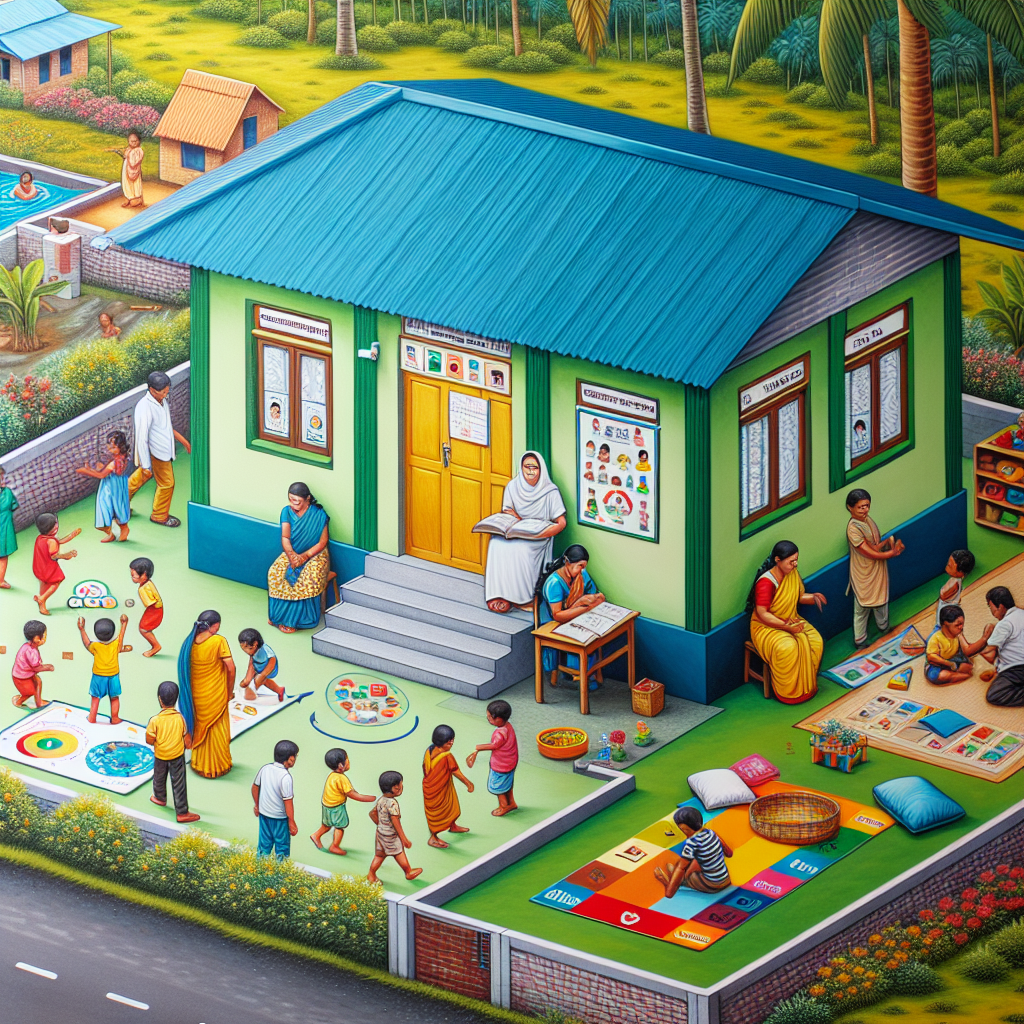
The guidelines emphasize Early Childhood Care and Education (ECCE), which plays a critical role in shaping cognitive, emotional, and social development.
- Country:
- India
The Ministry of Women and Child Development (MWCD), in collaboration with the Department of School Education & Literacy (DoSE&L), Ministry of Education, is set to launch the Guidelines on Co-location of Anganwadi Centres with Schools on Wednesday, 3rd September 2025, at Vigyan Bhawan, New Delhi. This initiative underscores the government's commitment to ensuring that young children receive strong foundational support through integrated early childhood care and education.
The launch event will be attended by Union Minister of Women & Child Development, Smt. Annpurna Devi, and Union Minister of Education, Shri Dharmendra Pradhan, along with senior officers from MWCD, DoSE&L, state and union territory representatives, and Anganwadi workers from across the country.
A Step Towards Viksit Bharat
The co-location model is aligned with the vision of the Hon'ble Prime Minister to build a robust human capital base for a Viksit Bharat. By placing Anganwadi Centres within school premises, children will experience a smoother transition from pre-school to formal schooling. This integration is expected to reduce dropout rates, enhance learning outcomes, and provide holistic development opportunities for children at the most formative stage of their lives.
Building Strong Foundations Through ECCE
The guidelines emphasize Early Childhood Care and Education (ECCE), which plays a critical role in shaping cognitive, emotional, and social development. Under the new framework, Anganwadi Centres will be strategically aligned with schools to ensure children aged 3 to 6 years have access to structured early learning alongside nutrition and health services. This model will also facilitate better utilization of infrastructure, improved teacher collaboration, and stronger community engagement.
Scaling Up the Model
Currently, over 2.9 lakh Anganwadi Centres are already co-located with schools across India. However, states and UTs have been following varied practices. These guidelines aim to provide operational clarity, streamline processes, and offer flexibility for local adaptation. With clear directions on curriculum integration, space sharing, and role delineation between Anganwadi workers and school staff, states and UTs will be better positioned to scale up the co-location model effectively.
Empowering Anganwadi Workers
Anganwadi workers, who form the backbone of the Integrated Child Development Services (ICDS), will benefit from enhanced training and support under the guidelines. The co-location model will provide them access to school facilities and teacher networks, allowing for capacity building and improved delivery of ECCE. This step is also expected to improve service delivery in terms of health check-ups, nutritional monitoring, and parental outreach.
Towards Holistic Child Development
The launch of these guidelines is not just an administrative measure but a strategic intervention in nation-building. By ensuring that every child has access to quality ECCE through integrated Anganwadi-school models, the government seeks to bridge developmental gaps early in life, thereby improving learning trajectories and life outcomes in the long run.
As India works towards becoming a developed nation, initiatives like this will play a central role in nurturing the youngest citizens and securing the country's human capital for decades to come.


 Google News