

Mashatile Unveils National Anti-Gang Strategy to Tackle Organised Crime
“The expansion will include operations targeting drug trafficking, shootings, and murders, extending beyond the Western Cape to other affected regions,” Mashatile said.
- Country:
- South Africa
Deputy President Paul Mashatile has announced the establishment of a comprehensive National Anti-Gang Strategy by the South African Police Service (SAPS), marking a decisive step in the fight against organised crime and gangsterism that has long plagued communities across the country.
A Coordinated National Response to Gang Crime
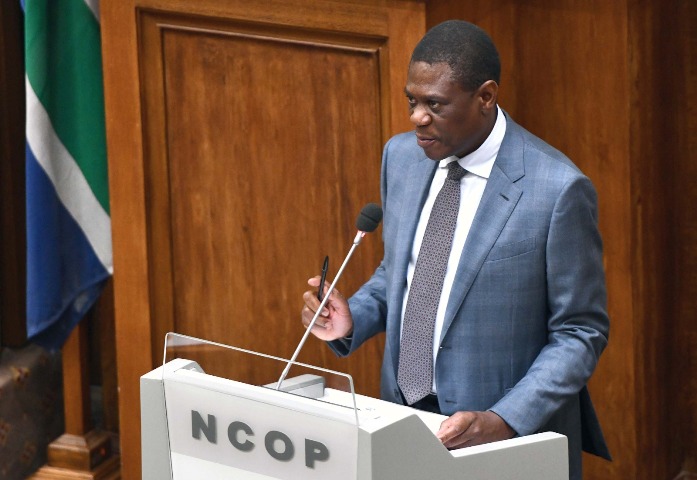
Speaking in the National Assembly during a session on oral questions, Mashatile said the new strategy is designed to dismantle gang-related criminal networks through a multi-pronged approach — combining intelligence gathering, proactive policing, community engagement, and inter-agency collaboration.
"Under the Justice, Crime Prevention and Security Cluster, several measures have been introduced to restore the integrity and performance of SAPS Crime Intelligence," Mashatile stated, underscoring government's intent to root out corruption and inefficiency within the police's intelligence division.
Expansion of Anti-Gang Units to New Provinces
The Deputy President revealed that the Anti-Gang Units (AGUs) — previously concentrated in the Western Cape — will now be expanded to the Eastern Cape and Gauteng, provinces also battling escalating gang violence and drug-related crime.
"The expansion will include operations targeting drug trafficking, shootings, and murders, extending beyond the Western Cape to other affected regions," Mashatile said.
He added that these units will be bolstered by Operation Shanela and Operation Vala Umgodi, both intensive law enforcement campaigns aimed at stabilising high-crime zones and dismantling criminal syndicates.
Integrating National Security and Intelligence Systems
In responding to a question from a Democratic Alliance MP concerning the Madlanga Commission of Inquiry and the Ad Hoc Committee on allegations involving Lieutenant General Nhlanhla Mkhwanazi, Mashatile reaffirmed that the government remains committed to strengthening the entire criminal justice system.
He said this will be achieved by improving crime intelligence, tightening inter-departmental coordination, and upgrading technological systems to combat organised criminal operations that often span provinces and borders.
"The government will continue to strengthen the Crime Intelligence Division to combat organised crime, gangsterism, and violent criminality in hotspot areas through structural and technological interventions, including Community Policing Forums (CPFs)," the Deputy President explained.
Multi-Agency Anti-Gang Plan in the Western Cape
Mashatile also highlighted an important development announced by Acting Minister of Police Professor Firoz Cachalia — a multi-agency anti-gang plan in the Western Cape, one of the regions hardest hit by violent gang wars and extortion rackets.
This coordinated initiative involves several key law enforcement and prosecutorial bodies, including the National Prosecuting Authority (NPA), the Asset Forfeiture Unit (AFU), the Special Investigating Unit (SIU), and SAPS.
"The plan has been finalised, and funding has already been allocated for implementation," Mashatile confirmed.
Data-Driven Policing and Financial Disruption of Criminal Networks
In a bid to modernise law enforcement, Mashatile announced that SAPS has enhanced its digital analytics and surveillance systems, allowing for more data-driven and intelligence-led policing. This technological shift aims to anticipate and intercept criminal activities before they escalate into violent incidents.
Additionally, SAPS is now working with the South African Revenue Service (SARS) to weaken the financial infrastructure of organised crime. The collaboration focuses on tracking illicit financial flows, shell companies, and cross-border business networks that sustain criminal syndicates.
Rebuilding Trust and Accountability
Mashatile emphasised that rebuilding public confidence in law enforcement is a top priority. The National Anti-Gang Strategy not only targets the visible manifestations of crime but also seeks to restore credibility within the police service through internal reforms, accountability measures, and closer cooperation with communities.
"Community engagement is a cornerstone of this strategy. The public must see the police as partners in safety and justice," he said.
A Renewed Commitment to Safer Communities
The launch of the National Anti-Gang Strategy represents a significant escalation in South Africa's efforts to combat violent organised crime, integrating law enforcement, intelligence, and financial oversight into one cohesive framework.
Through enhanced intelligence capacity, multi-agency collaboration, and the expansion of Anti-Gang Units, government hopes to curb the influence of criminal syndicates, protect vulnerable communities, and restore peace in urban and rural areas alike.


 Google News