

KZN Premier Calls for Unified Governance to Strengthen Service Delivery
The meeting aimed to reinforce collaboration and ensure that strategies across all spheres of government are not only aligned but mutually reinforcing.
- Country:
- South Africa
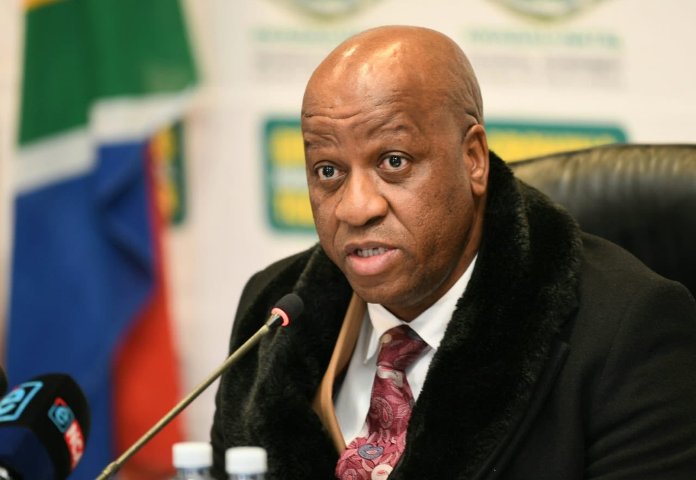
KwaZulu-Natal Premier Thamsanqa Ntuli has issued a strong call for unified, coordinated, and accountable governance across all spheres of government, warning that fragmented approaches continue to weaken service delivery and diminish public trust.
Speaking at the Special Premier's Coordinating Forum (PCF) held at the Archie Gumede Conference Centre in Durban, the Premier emphasised that effective cooperation between national, provincial, and local structures is essential for improving developmental outcomes and building a capable, responsive state.
A Forum to Strengthen Alignment and Shared Responsibility
The high-level forum brought together representatives from across government and society, including:
-
National and provincial political leaders
-
Members of the Executive Council
-
Mayors and municipal officials
-
Amakhosi and traditional leadership
-
Civil society organisations
-
Private sector representatives
The meeting aimed to reinforce collaboration and ensure that strategies across all spheres of government are not only aligned but mutually reinforcing.
The session followed the Special Extended President's Coordinating Council (PCC) convened on 18 September 2025, where President Cyril Ramaphosa urged all spheres of government to deepen coherence and strengthen joint planning and implementation. KwaZulu-Natal's expanded PCF was convened in direct response to this national directive.
Institutionalising the District Development Model (DDM)
A central theme of the gathering was the institutionalisation and strengthening of the District Development Model (DDM)—the framework designed to ensure integrated planning through a One Plan and One Budget approach for every district and metro.
Premier Ntuli reinforced the importance of the DDM as more than an administrative tool:
"The DDM is not simply a coordination tool but a practical mechanism for synchronising planning, mobilising resources, and ensuring collective implementation," he said.
He emphasised that bi-annual reports on DDM progress are now expected to be submitted to both the President's Coordinating Council and Cabinet, creating stronger accountability, transparency, and national oversight.
Strengthening Local Government Capacity
Local government performance—critical to service delivery—featured prominently in the Premier's address. Ntuli highlighted that municipalities form the frontline of government and must be strengthened to fulfil their constitutional responsibilities.
The provincial government is prioritising support in the following areas:
-
Improved financial management and governance stability
-
Strengthened infrastructure planning capacity
-
Increased investment in water, sanitation, and electricity distribution
-
Acceleration of road maintenance and climate-resilient infrastructure
-
Support for revenue collection and institutional stability
Premier Ntuli stressed that collapsing municipal systems directly affect the daily lives of communities and hold back economic growth.
Safety, Social Cohesion, and Crime Prevention
The Premier also highlighted community safety and social cohesion as fundamental components of sustainable development.
KwaZulu-Natal will intensify collaboration with:
-
The South African Police Service (SAPS)
-
Traditional leadership structures
-
Community Policing Forums (CPFs)
-
Youth organisations and faith-based groups
-
Civil society and grassroots movements
The goal is to create safer communities, safeguard economic activity, and confront social challenges that hinder development, such as crime, substance abuse, and political violence.
Building Strategic Partnerships Beyond Government
Premier Ntuli underscored that solving complex developmental challenges requires expertise and participation beyond government. He called for stronger collaboration with:
-
Traditional institutions
-
The private sector
-
Universities and research institutions
-
Development agencies and global partners
He emphasised that sustainable solutions must be rooted in community realities, and success depends on blending local knowledge, technical skills, and evidence-based planning.
Honest Reflection and Continuous Engagement
Encouraging open dialogue, Premier Ntuli urged stakeholders to reflect candidly on achievements, failures, systemic barriers, and opportunities.
He noted that the forum marks the start of a renewed cycle of collaboration, calling for consistent communication and follow-through beyond the meeting.
"This is not a once-off engagement but the beginning of stronger coordination, continuous implementation, and joint problem-solving," he said.
Commitment to a Capable and Developmental State
Closing the session, Premier Ntuli thanked all partners for their commitment to building a coordinated, capable, and developmental state. He reaffirmed the provincial government's dedication to:
-
Strengthening intergovernmental relations
-
Aligning provincial and municipal programmes
-
Ensuring communities experience the tangible impact of unified governance
-
Building a resilient and inclusive KwaZulu-Natal
The Special Premier's Coordinating Forum will continue through scheduled engagements and structured follow-up sessions to track progress, evaluate implementation, and accelerate the realisation of KwaZulu-Natal's developmental priorities.


 Google News