

Cambodia and ILO Set 2026–2027 Decent Work Priorities with Focus on Informal Workers, Skills and Labour Reforms
Speaking at the endorsement meeting, Heng Sour, Minister of Labour and Vocational Training, emphasised the implementation-driven nature of the workplan.
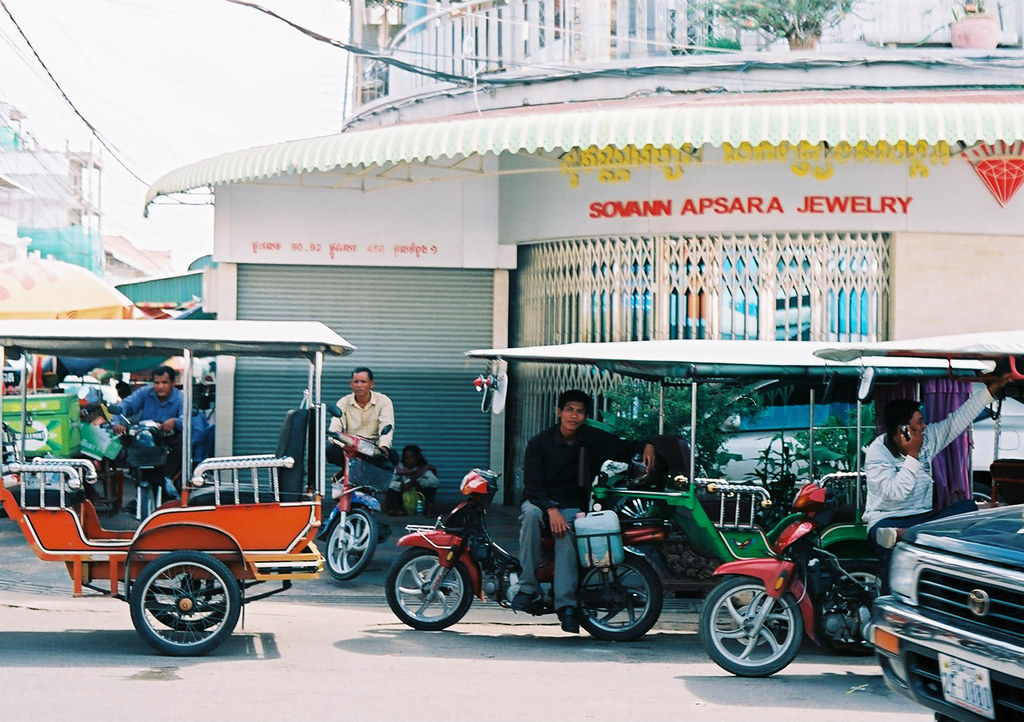
Labour policy reform, institutional strengthening, skills development and the expansion of social protection—particularly for informal and uncovered workers—are at the core of Cambodia's renewed efforts with the International Labour Organization (ILO) to advance decent work over the coming years.
On 22 January 2026, the Ministry of Labour and Vocational Training (MLVT), together with relevant line ministries, employers' and workers' organisations, and the ILO, met to endorse the priority areas for the 2026–2027 workplan under the Cambodia Decent Work Country Programme (DWCP) 2024–2028.
A Framework for Delivering Decent Work
Decent Work Country Programmes serve as the ILO's principal framework for cooperation with its member states, guiding technical assistance and policy engagement across priority areas such as employment, labour rights, social protection and social dialogue. In Cambodia, the DWCP 2024–2028 provides the strategic foundation for aligning national labour reforms with international labour standards while supporting inclusive and sustainable economic growth.
Speaking at the endorsement meeting, Heng Sour, Minister of Labour and Vocational Training, emphasised the implementation-driven nature of the workplan.
"This workplan is about execution and results. Through strong tripartite cooperation, we are aligning labour reforms, skills, social protection and industrial relations to ensure decent work, inclusive growth and resilience for Cambodia's workforce," he said.
Priorities for 2026–2027
Building on progress achieved during the 2024–2025 workplan, stakeholders validated a set of priorities for the next phase, centred on strengthening labour institutions and policies, expanding access to skills development, and extending social protection coverage—particularly to informal economy workers who remain outside formal labour and social security systems.
The workplan also places strong emphasis on promoting a more inclusive, resilient and formalised economy, while reinforcing industrial relations, social dialogue mechanisms and the protection of labour rights. This includes targeted measures to safeguard the rights of migrant workers, a group that plays a significant role in Cambodia's labour market but remains vulnerable to exploitation and insecurity.
Employers and Workers Back Tripartite Cooperation
Employers' organisations highlighted the link between skills, productivity and competitiveness in achieving sustainable growth.
Sok Lor, Vice President of the Cambodian Federation of Employers and Business Associations (CAMFEBA), noted that economic resilience depends on fair and effective labour relations.
"A competitive and resilient economy requires skilled workers, productive enterprises and fair labour relations. As employers, we are committed to investing in our workforce and fostering decent working conditions, to help drive Cambodia's sustainable growth and long-term prosperity for all," he said.
From the workers' side, representatives underscored the importance of social dialogue and inclusive development.
Sam Soeun, Representative of Cambodian Workers' Organisations, said the new workplan strengthens protections for vulnerable workers and ensures fairness during economic transition.
"This workplan strengthens social dialogue and protects workers, especially the most vulnerable. It ensures that economic transformation in Cambodia is fair, inclusive and leaves no worker behind," he said.
From Cooperation to Delivery
The ILO stressed that the DWCP is designed to deliver measurable outcomes rather than serve as a purely strategic document.
Xiaoyan Qian, Director of the ILO Country Office for Thailand, Cambodia and Lao PDR, described the workplan as a practical tool for accountability and impact.
"The DWCP is not just a cooperation framework—it is a delivery instrument. The workplan sharpens priorities, strengthens accountability and focuses collective action on what makes a real difference in people's lives," she said.
The finalised 2026–2027 workplan is expected to be submitted for formal endorsement by the Government, workers' and employers' organisations in March 2026, marking the next step in Cambodia's efforts to advance decent work and inclusive growth in line with national development priorities.


 Google News