

Africa Must Unite to Protect Mineral Sovereignty Amid Global Uncertainty: Mantashe
The annual Mining Indaba brings together African leaders, investors, and industry stakeholders to discuss the future of the continent continent’s mineral wealth.
- Country:
- South Africa
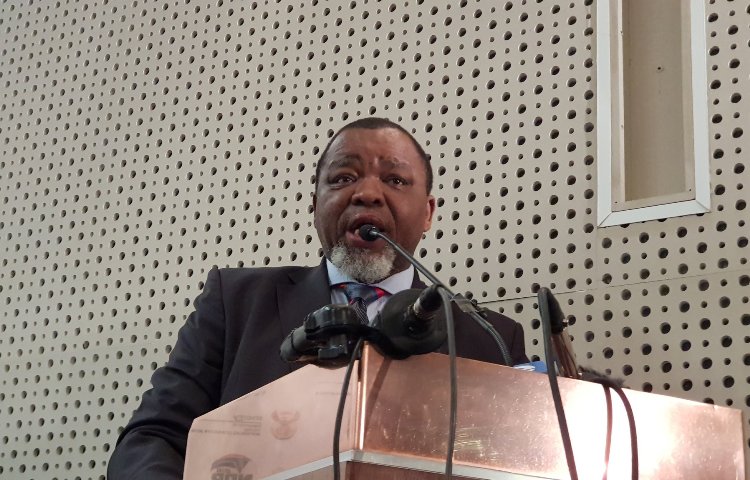
South Africa's Minister of Mineral and Petroleum Resources, Mr Gwede Mantashe, has called on African nations to strengthen unity and collective leadership as global competition for critical minerals intensifies.
Speaking at the opening of the Investing in Africa Mining Indaba in Cape Town on Monday, Mantashe warned that Africa is facing a "moment of profound global uncertainty," driven by geopolitical tensions and growing pressure from developed economies seeking greater control over the natural resources of developing countries.
"This dynamic represents a serious threat to the sovereignty of resource-endowed countries, the majority of which are here on the African continent," he said.
"Stronger Together" Is a Strategic Imperative for Africa
The annual Mining Indaba brings together African leaders, investors, and industry stakeholders to discuss the future of the continent continent's mineral wealth.
Mantashe said the theme of this year's Indaba — "Stronger Together: Progress Through Partnerships" — must be viewed as more than a slogan.
"It is a strategic imperative for Africa to act collectively, speak in one voice, and avoid the destructive race to the bottom in our engagement with global powers and investors," he stressed.
African Ministers' Roundtable to Deepen Critical Minerals Collaboration
Mantashe highlighted the importance of the African Ministers' Critical Minerals Roundtable, hosted jointly with the African Union on the sidelines of the Indaba.
The platform aims to strengthen continental leadership on critical minerals by:
-
Deepening collaboration across Africa
-
Accelerating responsible exploration and mining
-
Ensuring Africa captures greater value from its mineral endowment
He noted that Africa's partnerships must evolve beyond extraction.
"Our partnership must move beyond extraction to industrialisation and value addition closer to the point of production," he said.
South Africa's Critical Minerals Strategy Completed and Underway
Turning to domestic developments, Mantashe revealed that South Africa has completed a comprehensive study on the state of mining and finalised its Critical Minerals Strategy.
"The strategy is in place, and its implementation is underway," he said.
According to Mantashe, the achievement aligns with the G20 declaration and positions both South Africa and Africa more broadly to assert greater control over strategic resources.
Regulatory Reforms to Create Certainty and Attract Investment
A key element of the strategy includes a review of South Africa's mining regulatory framework.
Mantashe reaffirmed the government's commitment to building a system that is:
-
More certain
-
More predictable
-
More transparent
"One that attracts investment while ensuring that the benefits of our mineral wealth are shared equitably with all South Africans," he emphasised.
Prospecting Reform Not a Retreat From Transformation
On the removal of the requirement for Black Economic Empowerment (BEE) participation at the prospecting stage, Mantashe insisted the move is not a retreat from transformation.
"It is rather a pragmatic recognition that prospecting is a high-risk phase where no economic value has yet been proven," he explained.
The change is intended to:
-
Stimulate exploration
-
Increase South Africa's share of global exploration investment
-
Expand the pipeline of future mines
Mining Confidence Reflected in New Rights and Operations
Mantashe said early "green shoots" of growth are emerging, including the opening of at least five mining operations.
He also revealed that between February 2025 and January 2026, the department granted:
-
358 prospecting rights
-
32 mining rights
"This demonstrates continued confidence in South Africa as a mining investment destination of choice," he said.
Africa's Mineral Future Depends on Collective Action
Concluding his remarks, Mantashe reiterated that Africa's mineral wealth must become a foundation for industrialisation, sovereignty, and shared prosperity — not external control.
Africa, he said, must speak with one voice and ensure that the continent captures the full value of its strategic resources in a rapidly changing global landscape.


 Google News