

Devil’s Elbow on SH2 Rebuild Completed; Cyclone Gabrielle Recovery Restores
State Highway 2 is a critical economic and social artery for Hawke’s Bay, supporting freight movement, regional connectivity, and emergency access.
- Country:
- New Zealand
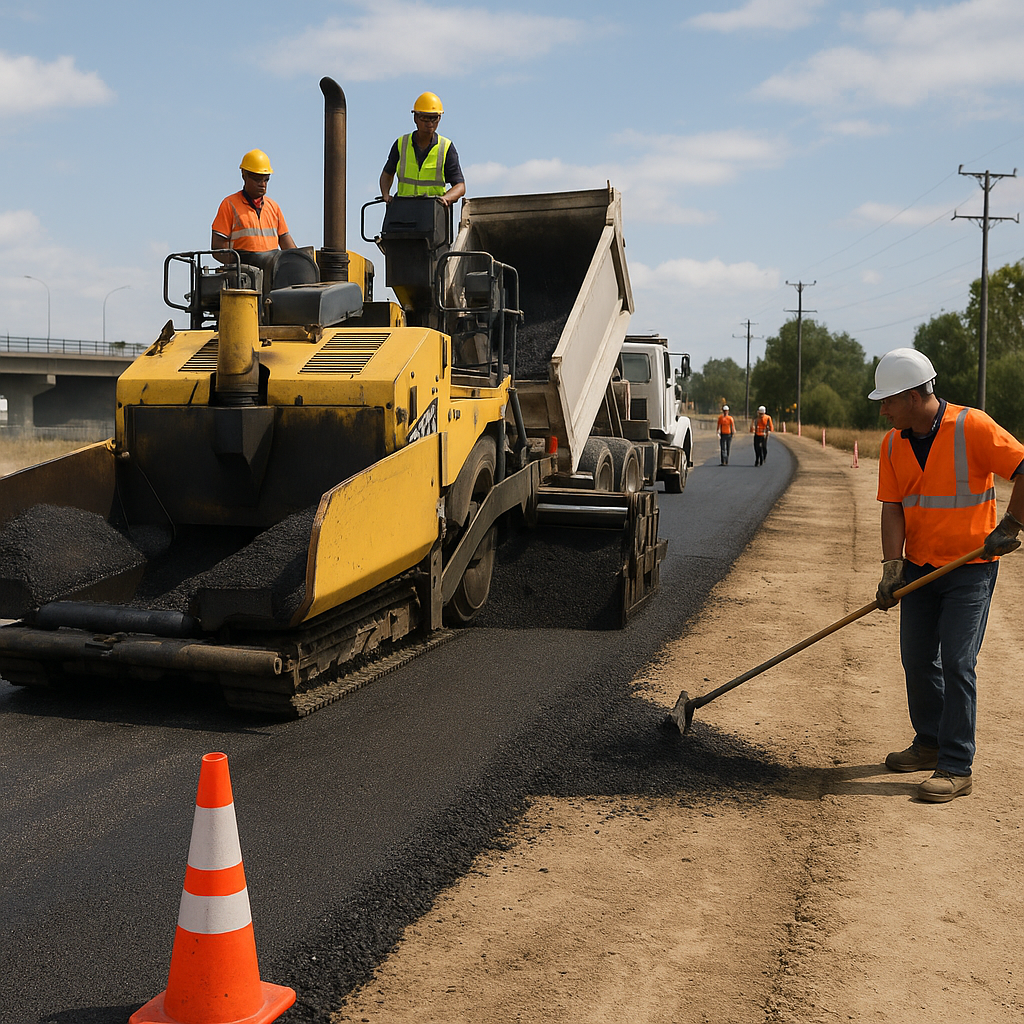
The completion of extensive reconstruction works at Devil's Elbow on State Highway 2 (SH2) marks a defining moment in New Zealand's recovery from Cyclone Gabrielle, formally closing one of the most complex infrastructure restoration efforts in the Napier–Wairoa corridor. Transport Minister Chris Bishop has confirmed that final asphalting has now been completed on the 4-kilometre stretch, delivering a fully rebuilt and significantly more resilient roadway.
This milestone not only restores a vital transport link between Napier and Wairoa but also represents a major leap forward in how New Zealand designs and delivers climate-resilient infrastructure in the face of increasingly severe weather events.
A Strategic Corridor Reconnected
State Highway 2 is a critical economic and social artery for Hawke's Bay, supporting freight movement, regional connectivity, and emergency access. The Devil's Elbow section—known for its narrow, winding alignment and unstable terrain—suffered extensive structural damage during Cyclone Gabrielle in early 2023, with multiple under slips, culvert failures, and slope collapses rendering sections unsafe and severely disrupting travel.
With the completion of this rebuild, road users can now benefit from:
-
A smoother, safer driving surface across the full 4 km section
-
Improved travel reliability and reduced journey times
-
Enhanced resilience against future storm events
"This is more than just a road rebuild—it's a transformation of one of the most vulnerable sections of the state highway network into a corridor designed to withstand the realities of a changing climate," Mr Bishop said.
Engineering Innovation in Challenging Terrain
The Devil's Elbow project stands out for its engineering complexity and innovative resilience-focused design. Delivered by Transport Rebuild East Coast (TREC) in partnership with local contractors, the project involved 11 separate recovery initiatives, each addressing unique geotechnical and hydrological challenges.
Key works included:
-
9 major underslip repairs, stabilizing previously collapsed sections of road
-
Rock scaling operations to remove unstable cliff material and reduce rockfall risk
-
A new 12-metre-high retaining wall, engineered to support steep terrain and prevent future failures
-
Full rehabilitation of the main culvert at Devil's Elbow, ensuring uninterrupted drainage capacity
-
A comprehensive culvert upgrade programme, replacing and repairing multiple structures to improve stormwater management
The integration of these elements reflects a shift toward "build back better" principles—moving beyond restoration to long-term resilience.
Water Management at the Core of Resilience
A defining feature of the rebuild has been its focus on water control, widely recognised as one of the most critical factors in preventing road failure during extreme weather.
Engineers prioritized:
-
Increased culvert capacity to handle higher rainfall volumes
-
Improved drainage alignment to reduce water pooling and erosion
-
Reinforced embankments to withstand saturated ground conditions
"Keeping water away from the road is fundamental to infrastructure resilience," Mr Bishop noted. "The upgraded drainage systems here are already proving their value—we've seen this stretch perform well during recent heavy rainfall events."
Community, Workforce, and Economic Impact
The project has also delivered significant local benefits, employing regional contractors and supporting the local economy throughout its multi-year delivery. Crews worked under difficult and often hazardous conditions, navigating unstable ground, weather disruptions, and constrained site access.
The rebuild required:
-
Continuous coordination between engineering teams, contractors, and local authorities
-
Traffic management solutions to maintain partial access during construction
-
Community engagement to manage disruptions and ensure safety
Mr Bishop acknowledged the role of local communities and road users, whose patience and support were instrumental in enabling the project's completion.
Near Completion of Cyclone Gabrielle Recovery Works
With Devil's Elbow now complete, the broader Cyclone Gabrielle recovery programme in Hawke's Bay is nearing its conclusion. Remaining works include:
-
Underslip repairs on State Highway 38
-
Ongoing restoration of Rail Bridge 217
The near completion of these projects signals a transition from emergency recovery to long-term resilience planning across the region.
A Blueprint for Future Infrastructure
The Devil's Elbow rebuild is increasingly being viewed as a model for future infrastructure recovery projects across New Zealand. By combining advanced geotechnical engineering, improved water management systems, and climate-adaptive design, the project demonstrates how vulnerable transport corridors can be transformed into robust, future-ready assets.
"This project shows what's possible when we invest not just in rebuilding, but in rethinking how our infrastructure performs under pressure," Mr Bishop said. "It sets a benchmark for resilience across the national transport network."
As traffic resumes along a fully restored SH2 corridor, the completion of Devil's Elbow stands as both a symbol of recovery and a forward-looking investment in the safety, reliability, and sustainability of New Zealand's transport infrastructure.


 Google News