

UN Warns Weak WASH Systems Threaten Health and SDG 6 Progress
“Millions of lives are still lost each year because people lack access to safe water, sanitation and hygiene,” said Dr Ruediger Krech, Director a.i. at WHO.
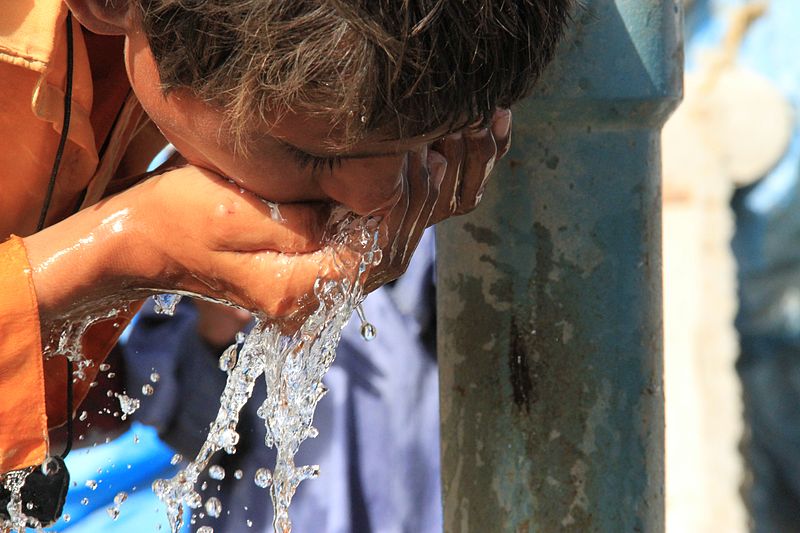
Urgent action is needed to strengthen national water, sanitation and hygiene (WASH) systems if countries are to meet Sustainable Development Goal 6 (SDG 6) and protect public health amid escalating climate risks and recurring disease outbreaks, according to a major new UN report released today.
The State of systems for drinking-water, sanitation and hygiene: Global update 2025, produced under the UN-Water Global Analysis and Assessment of Sanitation and Drinking-Water (GLAAS) and jointly developed by WHO and UNICEF, presents one of the most comprehensive assessments to date of why progress on WASH remains off track.
Drawing on data from 105 countries and territories—covering 62% of the global population—and 21 development partners, the report finds that while policies and plans are often in place, weak delivery capacity, fragmented governance and chronic financing gaps continue to undermine implementation.
"With less than five years until 2030, we are at a critical moment to take decisive action," said Dr Alvaro Lario, Chair of UN-Water and President of the International Fund for Agricultural Development (IFAD). "The choices we make now will determine whether WASH becomes a catalyst for better public health and transformational benefits, especially for the most vulnerable."
Plans without capacity
The findings show a consistent global pattern: ambition is not matched by execution.
-
Fewer than 13% of countries report having sufficient financial and human resources to implement their WASH plans
-
64% of countries report overlapping and unclear institutional responsibilities, leading to inefficiencies
-
While most countries have national targets for water and sanitation, only 49% have a target for hand hygiene
Despite gradual progress, unmet needs remain staggering. According to WHO/UNICEF Joint Monitoring Programme estimates:
-
2.1 billion people lack safely managed drinking-water
-
3.4 billion lack safely managed sanitation
-
1.7 billion lack basic hygiene services
"Millions of lives are still lost each year because people lack access to safe water, sanitation and hygiene," said Dr Ruediger Krech, Director a.i. at WHO. "This demands stronger WASH systems and much greater investment to deliver safely managed services for all."
Financing, regulation and climate gaps
The report highlights a 46% funding gap between identified national needs and available resources in 20 reporting countries. Efficiency losses further erode progress, with non-revenue water averaging 39%.
Regulatory weaknesses remain widespread:
-
Fewer than half of countries publish public reports on drinking-water quality
-
Only about 20% report drinking-water surveillance at the required frequency
While 80% of countries now address climate risks in WASH policies, targeted support for populations most affected by climate change is far weaker. Just 20% of countries finance specific measures for these groups, and only 42% monitor progress.
"The findings show that accelerating SDG 6 depends on stronger systems—financing, governance, capacity and data," said Cecilia Scharp, Director of UNICEF's Global WASH Practice. "As countries prepare for the 2026 UN Water Conference, this evidence is vital to ensure resilient services reach the most vulnerable children."
A mounting health toll
The consequences of weak WASH systems remain severe. At least 1.4 million people died in 2019 from preventable causes linked to unsafe water and sanitation. In 2024 alone, more than 560,000 cholera cases and 6,000 deaths were reported across 60 countries.
The report was launched at the High-Level Preparatory Meeting for the 2026 UN Water Conference, held in Dakar, Senegal (26–27 January 2026), co-hosted by Senegal and the United Arab Emirates, ahead of the main conference scheduled for December 2026.
ALSO READ
-
Cleaner Kitchens, Polluted Skies: Hidden Health Cost of India’s Electricity Boom
-
El Niño Health Alarm: Rising Heat, Floods and Hunger Put Communities on High Alert
-
WHO’s New Behavioural Sciences Course Brings Human Behaviour Into Public Health Focus
-
Tajikistan Gets $43.27 Million to Fight Outbreaks and Bring Health Care Closer to Home
-
Hidden by Stigma, Missed by Surveys: WHO Calls for Better Sexual Violence Data


 Google News