



Fragile Ceasefire Brings Hope for Gaza’s Children—but Time Is Running Out
Since the ceasefire took hold in early October, more humanitarian aid has been able to enter Gaza, though not yet at the scale required.
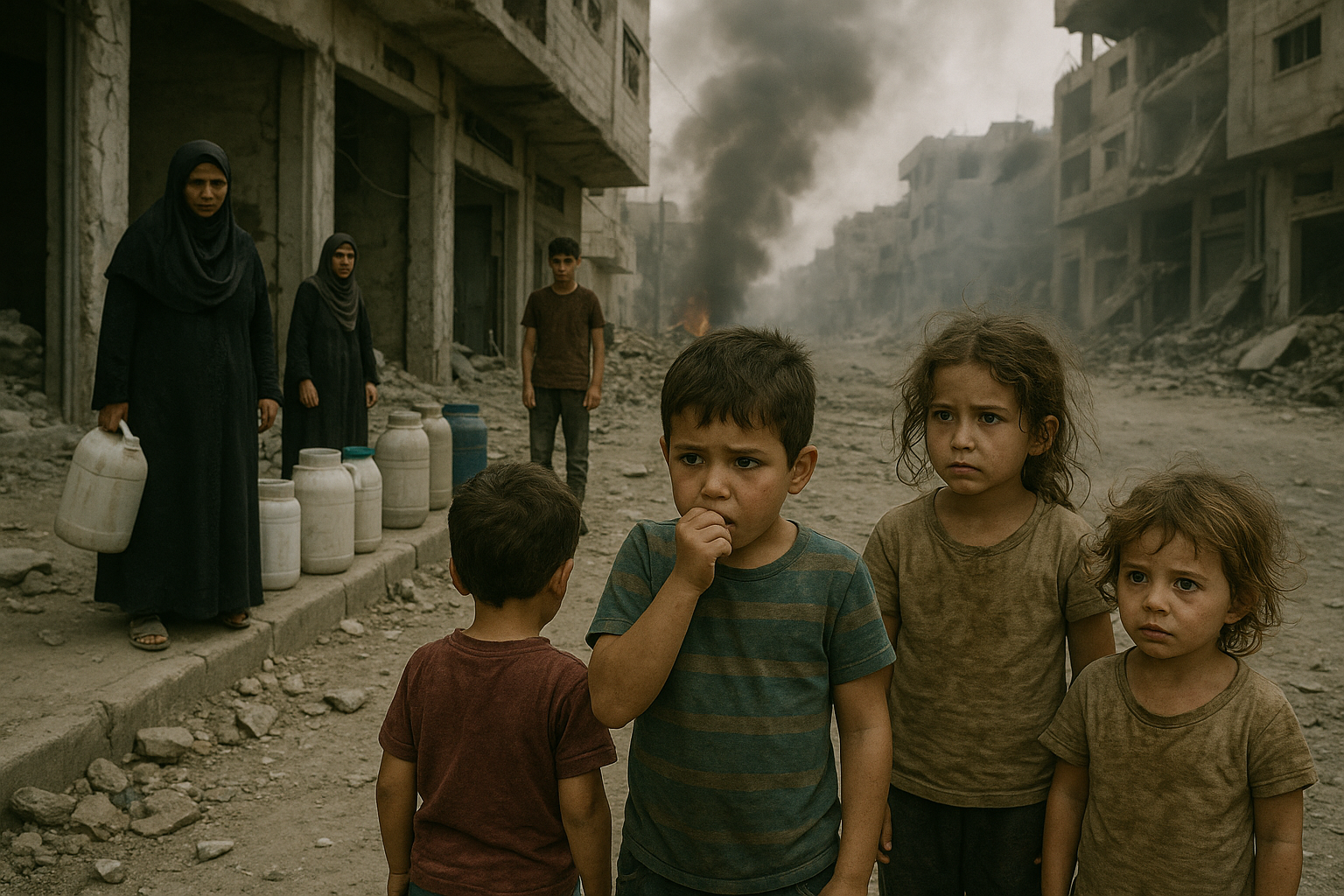
A fragile ceasefire in Gaza is beginning to ease suffering for children, but the situation remains dangerously precarious, UNICEF warned after a joint field visit to Gaza and the West Bank by UNICEF and the World Food Programme (WFP).
Speaking after her fifth visit to the State of Palestine since the war began, the UNICEF Executive Director said the past week offered both hope and deep concern. For the first time in many months, a pause in fighting is delivering tangible humanitarian gains for more than one million children, even as violence, malnutrition, exposure, and displacement continue to claim young lives.
Since the ceasefire took hold in early October, more humanitarian aid has been able to enter Gaza, though not yet at the scale required. Markets have begun to function again, with fresh food reappearing. Food security has improved and famine conditions have been reversed in several areas. Children are finally receiving recreational kits to help cope with trauma after more than two years without safe play.
UNICEF and partners have delivered clean drinking water to more than 1.6 million people, distributed blankets and winter clothing to 700,000, and restored life-saving pediatric intensive care services at Al-Shifa Hospital. A Gaza-wide catch-up immunization campaign is now underway, reaching children who missed routine vaccines during the conflict. Since October, 72 new UNICEF-supported nutrition facilities have opened, bringing the total to 196 across Gaza.
“These gains matter,” the UNICEF chief said. “They show what is possible when fighting pauses, political commitment is sustained, and humanitarian access opens.”
Children Still Dying, Shelter Crisis Deepens
Despite progress, the ceasefire has not ended the crisis. More than 100 children have reportedly been killed since early October, and 100,000 children remain acutely malnourished, requiring long-term care. An estimated 1.3 million people—many of them children—urgently need proper shelter.
Families are living in tents and bombed-out buildings amid winter storms. Parents reported burning scraps of plastic and wood to keep children warm. At least 10 children have reportedly died from hypothermia since winter began.
The situation is further threatened by moves to de-register international NGOs, which UNICEF warned could severely undermine humanitarian operations and limit the scale-up of life-saving assistance across Gaza and the West Bank.
Education as Lifeline
Amid devastation, education is emerging as a critical source of stability and hope. UNICEF and education partners are supporting more than 250,000 children to resume learning through temporary learning centres.
At one such centre in Deir El Balah, a young girl named Aya told UNICEF she dreams of becoming a nurse and of a Gaza rebuilt with schools, homes, and parks.
“For children in Gaza, returning to classrooms is not only about learning,” the UNICEF chief said. “It is essential for mental health and psychosocial support.”
More than 700,000 school-aged children across Gaza have been out of formal education since October 2023. UNICEF announced that a major ‘Back to Learning’ campaign will be launched this week.
UNICEF and WFP: Scaling Up, If Access Is Granted
Since the ceasefire, UNICEF and WFP together have delivered more than 10,000 aid trucks into Gaza—around 80% of all humanitarian cargo. Joint efforts include accelerated nutrition responses, learning programmes paired with food support, and digital cash assistance reaching over one million people.
But agencies stress that three urgent actions are needed to prevent further loss of life and move toward recovery:
-
The ceasefire must hold and advance to Phase 2, enabling mass reconstruction and a safer environment for children.
-
Humanitarian access must expand, with all crossings—Rafah, Kerem Shalom, Zikim, Kissufim, Erez East and West—operating simultaneously, alongside safe corridors via Jordan and Egypt and the reopening of Salah Al Din Road.
-
Predictable humanitarian access must be guaranteed, including approval for essential “dual-use” items needed for water, sanitation, electricity, shelter, and education, allowing early recovery and reconstruction to begin.
UNICEF and WFP say they are ready to scale up immediately: supplies are positioned, staff are on the ground, and plans are prepared—if access is granted.
“The children of Gaza do not need sympathy,” the UNICEF chief concluded. “They need decisions—now—that give them warmth, safety, food, education, and a future. There is a window to change their trajectory. We cannot waste it.”
ALSO READ
Tragedy at Ganga Ghat: Four Children Feared Drowned
Nine members of family, including six children, killed after car falls into well in Maharashtra's Nashik district: Police.
Australia Leads the Global Crackdown on Social Media for Children
Efforts to Reunite Ukrainian Children: A Step Towards Humanity
New Study Warns of Elevated Health Risks for Children from Toxic Metals in Betwa–Yamuna Waters


 Google News