

Science News Roundup : Black hole hunters cast gaze at center of the Milky Way galaxy; Chinese unmanned cargo spacecraft docks with space station module and more
A Long March-7 rocket carrying the Tianzhou-4 spacecraft blasted off at 1:56 a.m. Beijing time (1756 GMT Monday) from the Wenchang Space Launch Center in southern Hainan province. Intact, pregnant ichthyosaur fossil recovered from Patagonian glacier in Chile Chilean scientists successfully recovered one of the world's most complete ichthyosaur fossils with intact embryos from the Tyndall Glacier in Chile's Patagonia region.
Following is a summary of current science news briefs.
Chinese unmanned cargo spacecraft docks with space station module
An unmanned Chinese cargo spacecraft successfully docked with an orbiting space station module on Tuesday in the sixth of 11 missions needed to finish building China's first space station by the end of the year. A Long March-7 rocket carrying the Tianzhou-4 spacecraft blasted off at 1:56 a.m. Beijing time (1756 GMT Monday) from the Wenchang Space Launch Center in southern Hainan province.
Intact, pregnant ichthyosaur fossil recovered from Patagonian glacier in Chile
Chilean scientists successfully recovered one of the world's most complete ichthyosaur fossils with intact embryos from the Tyndall Glacier in Chile's Patagonia region. The preserved and pregnant ancient marine reptile was dubbed "Fiona" by scientists. The 4-meter-long fossil will help scientists study embryonic development in ichtyosaurs, which roamed the seas between 90 and 250 million years ago.
Black hole hunters cast gaze at center of the Milky Way galaxy
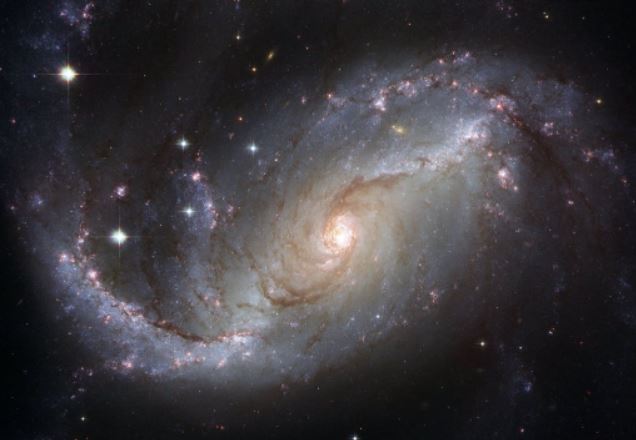
Residing at the center of our spiral-shaped Milky Way galaxy is a beast - a supermassive black hole possessing 4 million times the mass of our sun and consuming any material including gas, dust and stars straying within its immense gravitational pull. Scientists have been using the Event Horizon Telescope (EHT), a global network of observatories working collectively to observe radio sources associated with black holes, to study this Milky Way denizen and have set an announcement for Thursday that signals they may finally have secured an image of it. The black hole is called Sagittarius A*, or SgrA*.


 Google News