

Novel method allows astronomers to observe and study first stars and galaxies
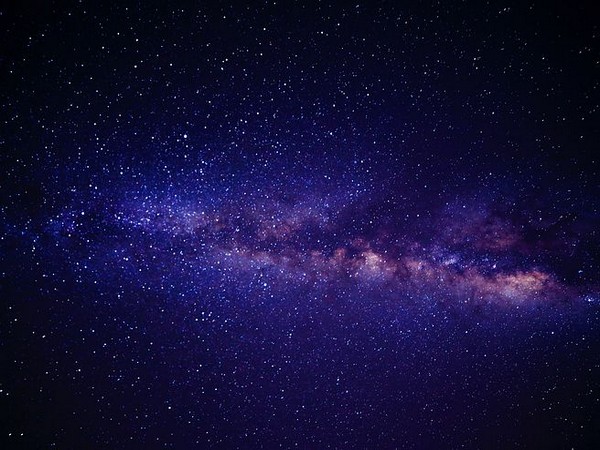
Astronomers, led by the University of Cambridge, have developed a method that they say will allow them to observe and study the first stars and galaxies and help explain how the Universe evolved from the emptiness after the Big Bang to the complex realm of celestial objects we observe today, 13.8 billion years later.
The methodology developed by the Cambridge-led team will allow astronomers to observe the earliest stars through their interaction with the hydrogen clouds, in the same way, we would infer a landscape by looking at shadows in the fog. Their findings are reported in the journal Nature Astronomy.
"At the time when the first stars formed, the Universe was mostly empty and composed mostly of hydrogen and helium. Because of gravity, the elements eventually came together and the conditions were right for nuclear fusion, which is what formed the first stars. But they were surrounded by clouds of so-called neutral hydrogen, which absorb light really well, so it's hard to detect or observe the light behind the clouds directly," said Dr Eloy de Lera Acedo from Cambridge's Cavendish Laboratory, the paper's lead author.
The methodology developed by de Lera Acedo and his colleagues is part of the REACH (Radio Experiment for the Analysis of Cosmic Hydrogen) experiment. It uses Bayesian statistics to detect a cosmological signal in the presence of interference from the telescope and general noise from the sky so that the signals can be separated.
The team used simulations to mimic a real observation using multiple antennas, which improves the reliability of the data – earlier observations have relied on a single antenna.
The telescope's construction is currently being finalised at the Karoo radio reserve in South Africa, which is far away from human-made radio frequency interference (e.g. television and FM radio signals).
"We are extremely excited to see how well the system will perform, and have full confidence we'll make that elusive detection," said Professor de Villiers, co-lead of the project at the University of Stellenbosch in South Africa.
The first observations from REACH are expected later this year.


 Google News