

The angry Sun! 17 coronal mass ejections were observed last week, says NASA
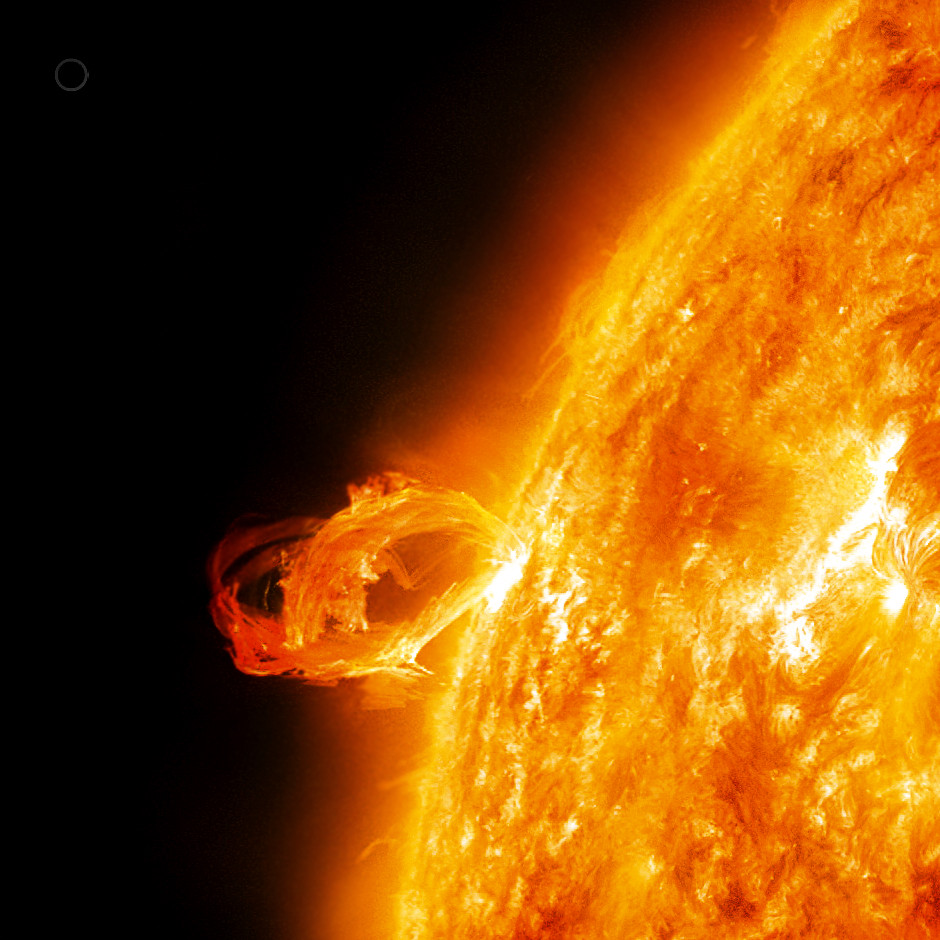
In the past week alone, more than 15 coronal mass ejections (CMEs) - large expulsions of plasma and magnetic field from the Sun's corona - were observed along with 19 solar flares and 11 sunspots, according to NASA.
Sunspots, dark spots that freckle the face of the Sun, are often precursors to solar flares - intense outbursts of energy from the surface of the Sun.
Time for the #SunDay solar activity round up! This past week 17 coronal mass ejections were observed, along with 19 solar flares and 11 sunspots. The GIF below shows a coronal mass ejection seen on August 17th. pic.twitter.com/CsS33E5mHb
— NASA Sun & Space (@NASASun) August 21, 2022
NASA earlier warned that solar events like flares and coronal mass ejections will continue to increase as we near solar maximum - the peak of the Sun's natural 11-year cycle - in 2025, impacting lives and technology on Earth, as well as satellites and astronauts in space.
During its 11-year cycle, the Sun shifts from relatively calm to stormy, then back again. During solar maximum - the period when the Sun is most active - the Sun is freckled with sunspots and its magnetic poles reverse. NASA track sunspots in order to determine, and predict, the progress of the solar cycle — and ultimately, solar activity.
According to the European Space Agency (ESA), August 14 and 15 were explosive days at the Sun as cannibal coronal mass ejections erupted from its surface, heading straight for Earth. Estimated to be travelling at pretty average speeds (the mean speed of a CME is ~400 km/s), one of the two CMEs cannibalised the other on the way to Earth and merged into each other.
Cannibal #solarstorms strike Earth! What's going on here then?14 and 15 Aug were explosive days at the Sun as coronal mass ejections (CMEs) – enormous clouds of plasma – erupted from its surface, headed straight for Earth 🌞🫣🌍📷CME from Jan 2012 pic.twitter.com/WR5dNSngwB
— ESA Operations (@esaoperations) August 18, 2022


 Google News