

Asteroid hunter Lucy resumes high-data-rate communication with Earth
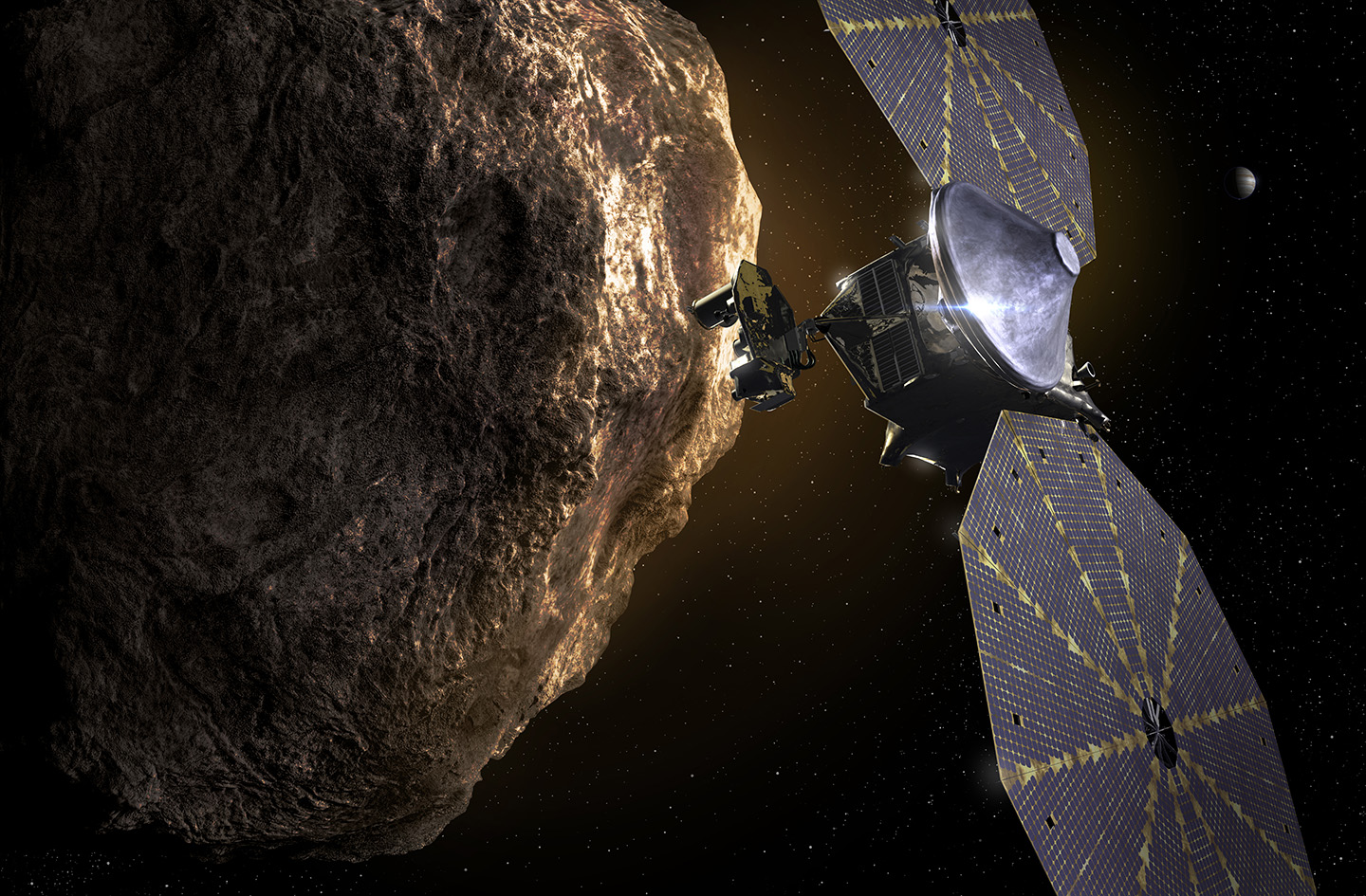
NASA's asteroid-hunting spacecraft, Lucy, has resumed high-data-rate communication with Earth. The spacecraft continues to operate safely and progress toward its mission goals, the agency said on Friday.
Lucy launched on October 16, 2021, on a United Launch Alliance (ULA) Atlas V rocket from Space Launch Complex 41 at Cape Canaveral Space Force Station in Florida on a mission to study the Trojan asteroids - a population of primitive asteroids orbiting in tandem with Jupiter.
Earlier this year, the mission team carried out efforts to deploy the spacecraft's unlatched solar array, but the deployment attempts were paused during a period of low-data-rate communications. After analyzing the spacecraft's telemetry and carrying out ground-based tests, the team decided to continue attempts to further deploy the solar array.
The latest attempt, according to the agency, deployed the wing incrementally forward, but it did not latch. The operation did succeed in providing the Lucy mission team with data to evaluate the solar array's status and ascertain any changes since the last deployment attempt on June 16.
"The likelihood of mission success in the current unlatched state is high, however, the team expects that additional deployment—or potential latch only improves confidence in performance without jeopardizing the spacecraft's safety," NASA said in a statement.
On October 16, Lucy carried out its first Earth gravity assist, during which the spacecraft came extraordinarily close to the planet's surface - within 350 Km. All of Lucy's instruments functioned as expected during the gravity assist. The team is continuing to analyze the images of the Earth and Moon collected during the flyby.
The spacecraft will return for a second gravity assist in 2 years and for a third gravity assist in 2030. Data collected by the mission will help scientists hone their theories on how the planets formed 4.5 billion years ago.


 Google News