



Astronomers identify new threat to life on planets like Earth
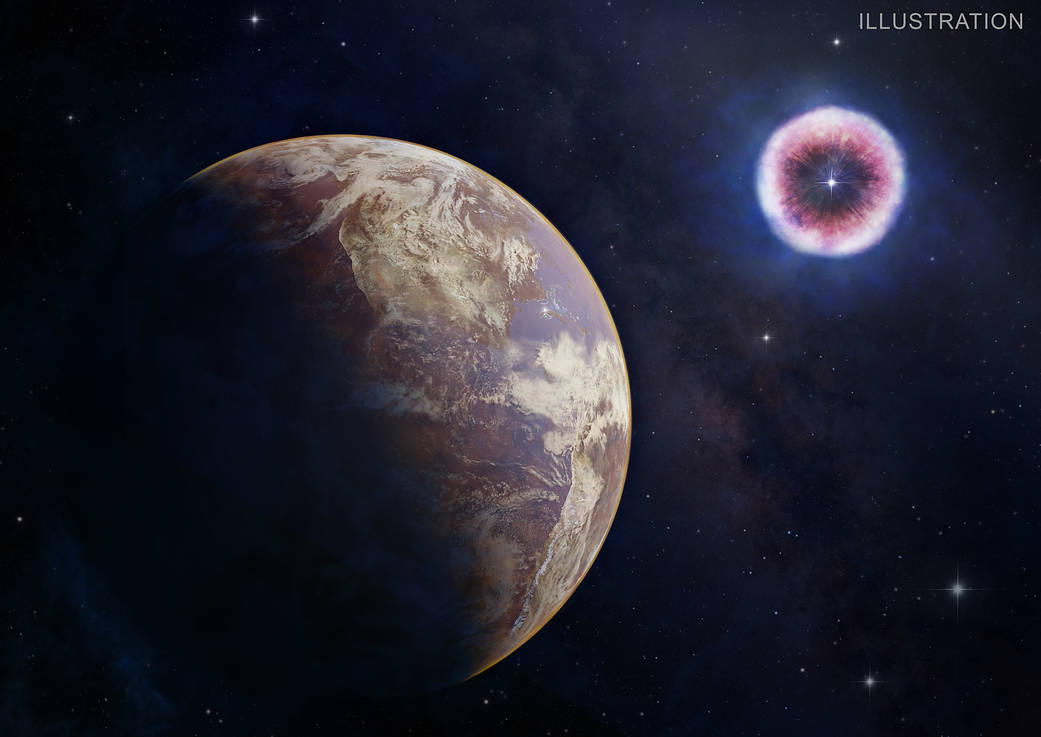
A new study based on observations from NASA's Chandra X-ray Observatory and other telescopes has identified a stellar danger to planets like Earth - a phase during which intense X-rays from exploded stars can affect planets over 100 light-years away.
The newly identified threat arises when the blast wave from a supernova interacts with the dense gas surrounding the exploded star, producing a significant amount of X-rays. This burst of X-rays can travel through space for months or even years after the explosion, eventually reaching planets located over 100 light-years away. The intense exposure to X-rays can have long-lasting effects on the planet's atmosphere, potentially leading to an extinction event.
Astronomers warn that such a process could have devastating consequences on Earth-like planets. It could wipe out a significant portion of Earth's protective ozone layer and could also lead to the demise of a wide range of organisms, especially marine ones at the foundation of the food chain, leading to an extinction event.
The prolonged exposure to the lethal X-ray and the impact of ultraviolet radiation from the planet's host star can lead to the production of a large amount of nitrogen dioxide, which could cause a brown haze to form in the planet's atmosphere, as depicted in the illustration. This exposure could damage the planet's plants, resulting in a "de-greening" of land masses.
While the Earth and our Solar System are not currently at risk of a supernova explosion, many other planets in the Milky Way are not so fortunate. These catastrophic events can have far-reaching consequences, potentially shrinking the areas of the galaxy where conditions are conducive to supporting life - known as the Galactic Habitable Zone.
This study is based on X-ray observations of 31 supernovae and their aftermath, primarily from NASA's Chandra X-ray Observatory, Swift and NuSTAR missions, and ESA's XMM-Newton.
There's strong evidence – including a radioactive type of iron – that supernovae occurred close to Earth between ~2m-8 million years ago. A new study shows how X-rays from such stellar explosions could threaten any life on surrounding planets for decades. https://t.co/gz2uX55LzS pic.twitter.com/be9LmT5iHL
— NASA Exoplanets (@NASAExoplanets) April 20, 2023


 Google News