

Navigating New Horizons: Preparing for a World of Uncertainty
The United Nations Environment Programme (UNEP) has released a report titled "Navigating New Horizons: A Global Foresight Report on Planetary Health and Human Wellbeing," highlighting the urgent need for strategic foresight to address the rapidly converging global crises. The report identifies critical shifts and emerging issues that could disrupt planetary health and human wellbeing, emphasizing the importance of proactive and holistic approaches to safeguard the future.
 CoE-EDP, VisionRI
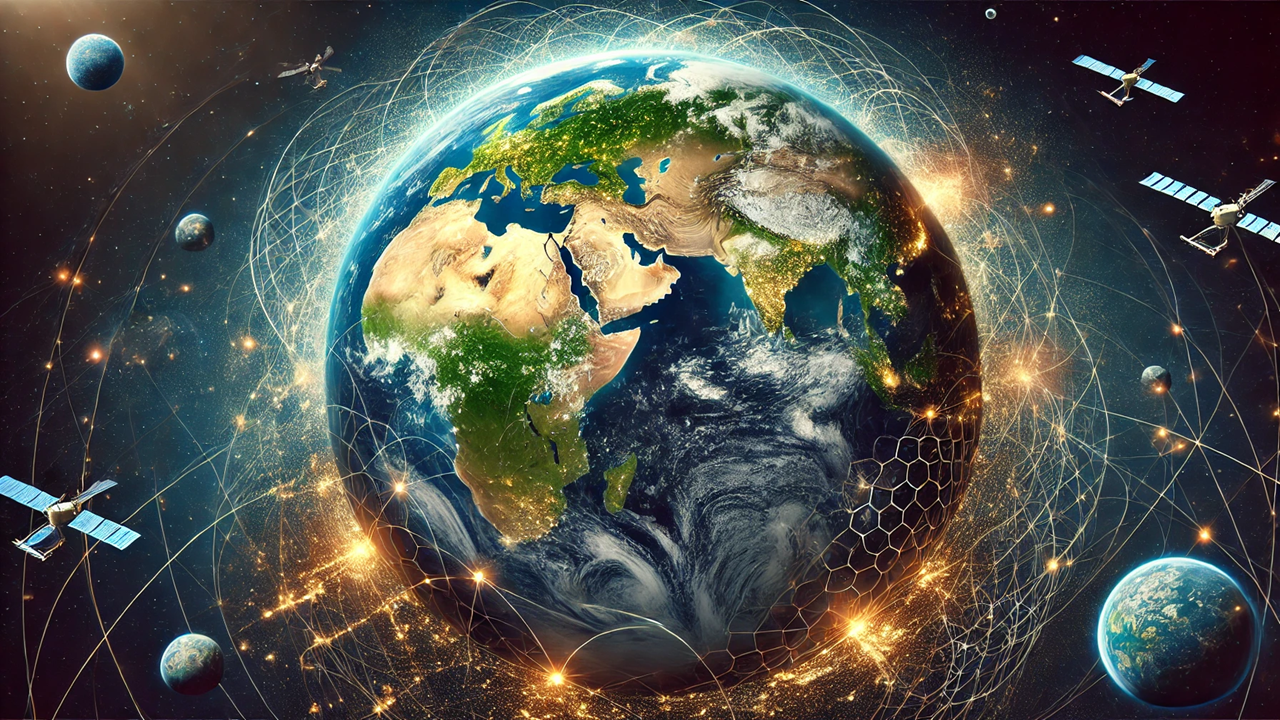
Global crises are converging at an unprecedented rate, according to a new report by the United Nations Environment Programme (UNEP), which calls for urgent and strategic foresight to safeguard planetary health and human wellbeing.
In a rapidly evolving world, the United Nations Environment Programme (UNEP) is at the forefront of efforts to anticipate and mitigate emerging threats to our planet and its inhabitants. The latest UNEP report, "Navigating New Horizons: A Global Foresight Report on Planetary Health and Human Wellbeing," underscores the critical importance of strategic foresight in navigating the challenges of a fragile and uncertain world.
The Need for Strategic Foresight
The UNEP's mission is clear: to empower the global community to identify emerging issues and take proactive measures to balance planetary health and human wellbeing. This mission requires a holistic approach, recognizing the interconnectedness of environmental, social, and technological changes. The rapid pace of change, exacerbated by technological advancements, frequent natural disasters, and geopolitical turbulence, demands a new way of thinking about the future.
Strategic foresight, a key tool in UNEP's arsenal, helps detect early signs of change, assess potential developments, and strengthen resilience against unexpected events. By translating future uncertainty into present-day choices, UNEP aims to ensure that the right issues are addressed at the right time for the right audience.
A World on the Brink of Polycrisis
The world is on the edge of what UNEP describes as a "polycrisis," where global crises not only amplify and accelerate but also synchronize. Climate change, biodiversity loss, and pollution—the triple planetary crisis—are increasingly intertwined with human crises such as resource conflicts, displacement, and deteriorating health. The report highlights the staggering speed of change in social norms, employment, leisure, and our relationship with nature, driven by the rapid development of new technologies and artificial intelligence (AI).
UNEP's foresight process, which included extensive surveys, scenario development, and engagement with youth voices, has identified a series of critical shifts and emerging issues that require close monitoring. These include competition for natural resources, new forms of conflict, mass forced displacement, widening inequalities, declining trust, and the spread of misinformation.
Signals of Change and Potential Disruptions
The report identifies several emerging issues and signals of change that could significantly disrupt planetary health and human well-being. Among these is the increasing demand for critical minerals for clean energy technologies, which could impact biodiversity, food and water security, and pollution. The rapid growth in space activity and orbital debris, and the potential deployment of Solar Radiation Modification (SRM) technologies, also pose significant risks.
Old issues are resurfacing in new forms. The weaponization of technologies and access to critical infrastructure have become more problematic with the advent of AI and autonomous weapons systems. The threat of antimicrobial resistance, emerging zoonotic diseases, and ancient viruses released from thawing permafrost are also highlighted as significant risks.
A Path Forward
Despite the daunting challenges, the report offers a glimmer of hope. Just as the impact of multiple crises is compounded when they are linked, so too are the solutions. UNEP's foresight process has provided valuable insights that could help steer the world away from the edge of multiple crises and towards a more stable and balanced future. Key to this better future is a focus on intergenerational equity and a new social contract that unites global communities in pursuit of transformative change across technological, economic, and social factors.
Adopting agile and reflexive governance, with shorter-term, time-bound targets, combined with multi-layered monitoring at the UN level, could significantly enhance the achievement of the Sustainable Development Goals (SDGs). Emphasizing well-being metrics over pure economic growth will be crucial in driving the necessary transformation. The future must be consultative, multilateral, cooperative, and inclusive, integrating the voices of traditionally marginalized groups, including women, youth, local communities, and Indigenous Peoples.
- FIRST PUBLISHED IN:
- Devdiscourse


 Google News