

India Unveils AI Governance Guidelines to Ensure Safe and Responsible AI
The unveiling represents a major milestone as India prepares for the upcoming India–AI Impact Summit 2026, underscoring the country’s growing leadership in the global AI governance discourse.
- Country:
- India
The Ministry of Electronics and Information Technology (MeitY), under the IndiaAI Mission, has officially launched the India AI Governance Guidelines — a landmark framework designed to foster safe, inclusive, and responsible adoption of Artificial Intelligence across all sectors of society.
The launch event was presided over by Prof. Ajay Kumar Sood, Principal Scientific Adviser to the Government of India, and graced by key dignitaries including Shri S. Krishnan, Secretary, MeitY; Shri Abhishek Singh, Additional Secretary, MeitY, CEO IndiaAI Mission, and DG NIC; Ms. Kavita Bhatia, Scientist 'G' & GC, MeitY & COO IndiaAI Mission; and Prof. B. Ravindran of IIT Madras. Officials from the Office of the Principal Scientific Adviser, including Dr. Preeti Banzal and Dr. Parvinder Maini, were also present.
The unveiling represents a major milestone as India prepares for the upcoming India–AI Impact Summit 2026, underscoring the country's growing leadership in the global AI governance discourse.
A Comprehensive Framework for Responsible AI
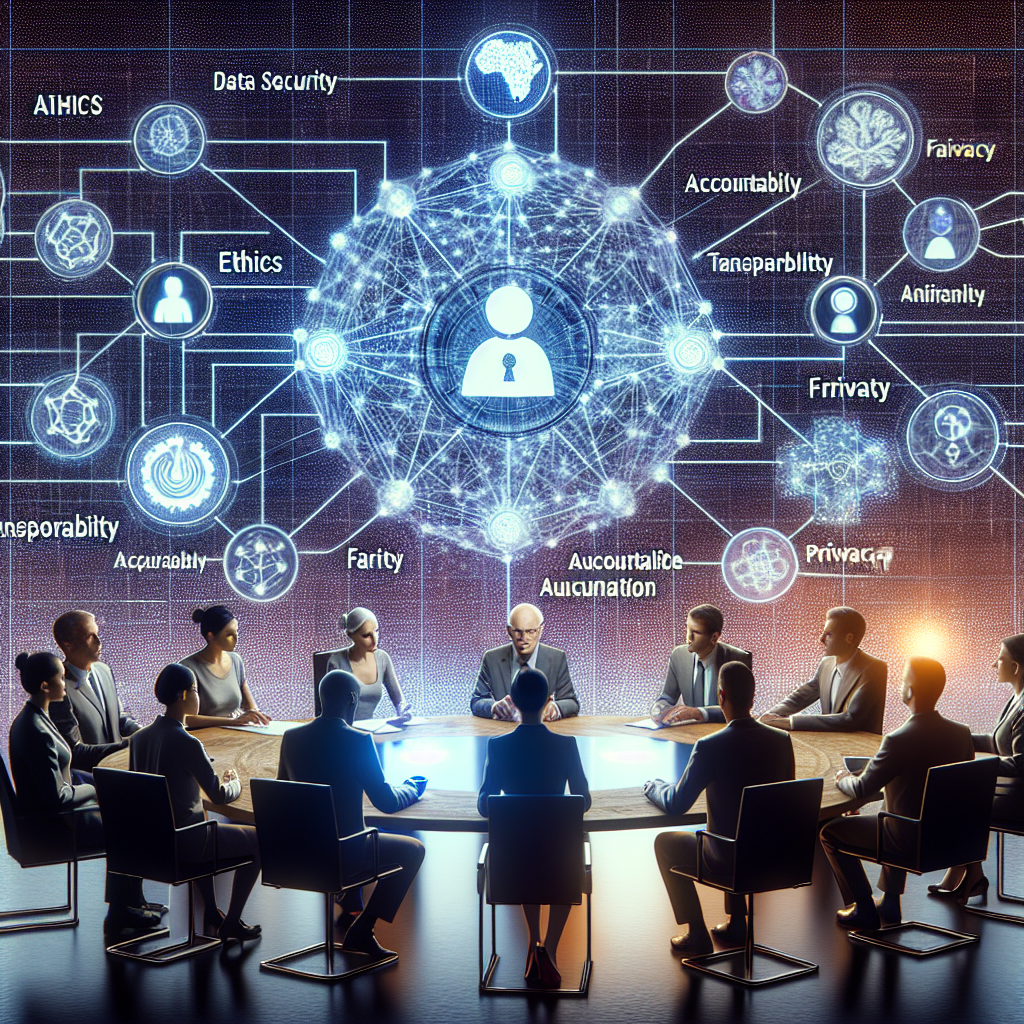
The India AI Governance Guidelines provide a multi-dimensional approach to ensure that AI development and deployment in India are transparent, ethical, and human-centric. The framework is structured around four critical components:
-
Seven Guiding Principles (Sutras): These establish the ethical foundation for AI use, rooted in fairness, inclusivity, and accountability.
-
Six Pillars of AI Governance: Covering institutional frameworks, regulatory mechanisms, risk management, research promotion, public awareness, and global cooperation.
-
Action Plan with Timelines: Specific steps delineated for short, medium, and long-term objectives.
-
Practical Guidelines: Directed toward industry, academia, and policymakers to ensure compliance and responsible AI practices.
Leadership Perspectives
Shri S. Krishnan, Secretary, MeitY, emphasized that India's AI journey will leverage existing legislative structures, ensuring human-centric innovation. "Our focus remains on using existing legislation wherever possible. At the heart of it all is human centricity, ensuring AI serves humanity and benefits people's lives while addressing potential harms," he noted.
Prof. Ajay Kumar Sood reiterated the moral foundation of the initiative, stating, "The guiding principle that defines the spirit of the framework is simple — Do No Harm. We focus on creating sandboxes for innovation and ensuring risk mitigation within a flexible, adaptive system."
Shri Abhishek Singh, CEO IndiaAI and DG NIC, highlighted the extensive stakeholder engagement in drafting the guidelines, which underwent public consultation before finalization. He stressed that the mission seeks to make AI "accessible, affordable, and inclusive," while ensuring that India becomes a model for trustworthy and responsible AI ecosystems.
High-Level Committee and Contributors
The framework was developed by a high-level committee chaired by Prof. Balaraman Ravindran of IIT Madras. The committee included prominent AI and policy experts such as:
-
Ms. Debjani Ghosh, Distinguished Fellow, NITI Aayog
-
Dr. Kalika Bali, Senior Principal Researcher, Microsoft Research India
-
Mr. Rahul Matthan, Partner, Trilegal
-
Mr. Amlan Mohanty, Non-Resident Fellow, NITI Aayog
-
Mr. Sharad Sharma, Co-founder, iSPIRT Foundation
-
Ms. Kavita Bhatia, MeitY & COO IndiaAI Mission
-
Mr. Abhishek Aggarwal, Scientist D, MeitY
-
Mr. Avinash Agarwal, DDG (IR), DoT
-
Ms. Shreeppriya Gopalakrishnan, DGM, IndiaAI
This multi-stakeholder team ensured the guidelines reflect a balance between innovation, risk management, and ethical responsibility.
IndiaAI Hackathon for Mineral Targeting: Innovation in Action
The event also recognized the winners of the IndiaAI Hackathon for Mineral Targeting, conducted under the Applications Development Pillar of the IndiaAI Mission in collaboration with the Geological Survey of India (GSI), Ministry of Mines.
The hackathon showcased the potential of AI and machine learning in mineral prognostication, using geological, geochemical, and satellite data to identify resource-rich zones.
🏆 Winners:
-
First Prize (₹10 lakh): CricSM AI – "Critical and Strategic Mineral Mapping with AI" by Prof. Partha Pratim Mandal and team.
-
Second Prize (₹7 lakh): Knowledge and Data-Driven Mineral Targeting by Soumya Mitra and team.
-
Third Prize (₹5 lakh): SUVARN: Semi-Unsupervised Value-adaptive Artificial Resource Network by Sayantani Bhattacharya and team.
-
Special Prize (₹5 lakh): For an AI/ML solution identifying new exploration zones for critical minerals and commodities by Deepa Kumari, Anamika Choudhary, and Sandhya Jagannathan.
Towards the India AI Impact Summit 2026
The India AI Impact Summit 2026, scheduled for February 19–20, 2026, in New Delhi, will convene global AI leaders, policymakers, researchers, and industry experts to deliberate on AI's role in advancing People, Planet, and Progress.
As India steps forward with a "Do No Harm" philosophy, these guidelines not only shape a secure AI future for the country but also aim to set an example for the Global South, ensuring that technology serves humanity with accountability, transparency, and equity.
Read the full report at: indiaai.gov.in
ALSO READ
-
WHO Academy Expands Learning in 19 Languages to Reach Health Workers Everywhere
-
Five Companies, 30% of S&P 500: How Market Giants Pulled Further Ahead in a Decade
-
WHO and KEI Explore Community Rights in Traditional Medicine Research and Innovation
-
AI in Courts Could Open Doors to Justice or Leave Vulnerable People Further Behind
-
Beyond the AI Hype: Sierra Leone Bets on Data, Skills and Connectivity to Drive Real Development


 Google News