

Indigenous World 2018, a global report on indigenous peoples’ rights by IWGIA
The Indigenous World also serves as an inspiration to raise global awareness of the rights of indigenous peoples, their struggles, their worldviews and their resilience.
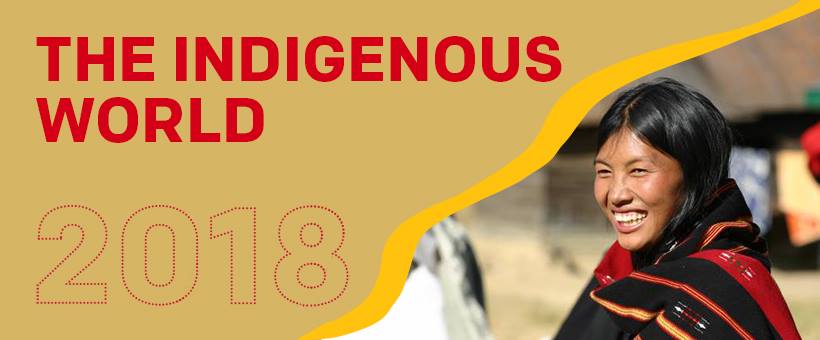
The Indigenous World is a one-of- a-kind documentation tool, that offers a comprehensive yearly overview of the developments indigenous peoples experience around the world. The book is unique because it provides a glimpse of key events and facts useful for researchers, development workers and media. The Indigenous World also serves as inspiration to raise global awareness of the rights of indigenous peoples, their struggles, their worldviews and their resilience.
The rising tensions between states and indigenous peoples are reaching a tipping point and The Indigenous World 2018 adds to the documented records, highlighting the increase in attacks and killings of indigenous peoples while defending their lands. The 56 country reports and 13 reports on international processes in this edition underscore this global trend.

The book is the result of a collaborative effort between indigenous and non-indigenous activists and scholars who voluntarily share their valuable insights and analysis. In this edition, 83 authors from Latin America, Africa, Asia, Arctic and the Pacificline-up the main events impacting the lives of indigenous communities in 2017, making the book a go-to reference for everyone who wishes to be updated on the rights of indigenous peoples. The 2018 edition is dedicated to the situation of the
rights to lands, territories and resources of indigenous peoples.
Why are indigenous rights at the core of a paradigm shift?
"First they ignore you, then they laugh at you, then they fight you, then you win". This legendary quote accurately describes the stages that movements and social conflicts often go through and indigenous peoples' struggle and resilience is no exception. While the quote's origin remains uncertain, it provides a good image with which to sum up the events that impacted on indigenous peoples during 2017.
Indigenous peoples are one of the marginalised groups that are most exposed to violence and suppression for asserting their rights. The escalation of violence recorded in 2017 and its increased visibility has placed indigenous peoples right at the centre of a global conversation, pushing for a paradigm shift based on the recognition of their rights, especially land rights. 2017 can be read at the beginning of an era that offers substantial opportunities for the world to change its relationship with indigenous communities, and their ancestral land and identities.
📖The Indigenous World 2018 will be out soon! Be an early bird and get it in your mailbox by signing up to https://t.co/U2Hs53rSbp In this edition, 83 authors from all around the world share their insights with a focus on land, territories and resources #IndigenousWorld pic.twitter.com/pk1EMxwc6r
— IWGIA (@IWGIA) March 27, 2018
The increasing cases of forced evictions, land grabbing. criminalisation, killings, harassment, and militarization on indigenous land compiled in this book show why indigenous peoples are key actors to achieve sustainable development. Suppressing indigenous peoples' demands to a healthy environment will have an impact on how our planet will look if natural resource extraction keeps expanding. If states and business fail to protect those last standing on the world's remaining natural diversity, what else remains to be exploited? The outbreak of violence against indigenous human rights defenders documented in this book is, however, also met with policy changes aimed at improving the safety of environmental defenders.
Some encouraging developments in this edition also show that the indigenous movement has placed itself at the core of a paradigm shift, pushing for a more inclusive and sustainable development. Indigenous peoples, in partnership with civil society and other human rights defenders, have strengthened their resilience on all fronts, increased their capacity to advocate for their demands and to lead a global wake-up call to respect and abide by indigenous traditional knowledge and worldviews.


 Google News