

COLUMN-Israel’s 'Iron Beam' points to growing laser arms race
The same month, scientists from the National University for Defence Technology in China claimed to have achieved their own breakthrough in laser technology, saying they had designed a new cooling system that would considerably increase capability. USE SO FAR UNCLEAR Israeli officials had initially said they hoped Iron Beam might be in service by the end of the current year, but by the time Hamas attacked, this had slipped to 2024.
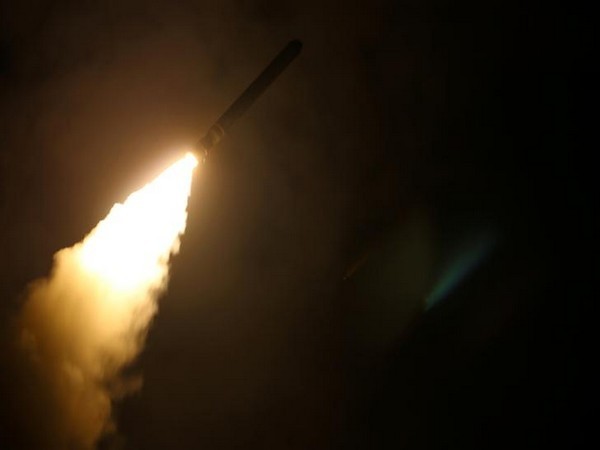
As Hamas launched its deadly surprise attack on Israel in the early hours of Oct. 7, around 3,000 rockets rose from concealed launch pads in the Gaza Strip in a bid to at least briefly overwhelm Israel's "Iron Dome" counter-missile batteries. Ever since Nazi Germany's first V1 and V2 rockets began slamming into southern England in 1944, engineers have been working on defensive systems against such attacks.
The projectiles launched by Hamas are less sophisticated than the Russian rockets and drones with which Ukraine's air defences now wage a similarly endless battle, but the sheer volume launched on Oct. 7 ensured more than usual got through to Israeli targets, including Tel Aviv. Israeli airstrikes have considerably reduced the threat from Gaza – the Israeli Defence Force said last week roughly 7,000 rockets were fired from Gaza over the first month of the war after the first day, the number falling significantly each week. Hamas said it fired up to 5,000 rockets on the first day, but the IDF says this was an overestimation of around 40%.
Future rocket campaigns against the Israeli heartland will also have to overcome another hurdle – what looks likely to be the world's first operational missile defence system using lasers. Other nations are watching closely. Israeli officials and defence executives had already spent much of 2023 promoting the incoming "Iron Beam" defence system, including at the IDEX Middle East defence show in the United Arab Emirates in February.
Israeli firms quietly dropped out of this week's Dubai airshow following the start of the Israel-Hamas conflict, but regional and wider interest in both Iron Dome and Iron Beam is only likely to intensify. Primarily intended to bring down the relatively rudimentary self-assembled "Grad" rockets favoured by militants from Hamas and Hezbollah, each Iron Dome interceptor missile costs around $60,000. A laser-based system should theoretically be much cheaper, although as with rocket-based systems it could be overwhelmed by a sufficiently large number of missiles. Clouds, rain and battery life are also limitations.
According to briefings by Israeli defence and industry officials, the system fires a beam roughly the diameter of a coin and has proved effective against a range of drones, missiles and other targets at a range of several kilometres. While military-grade lasers have previously been used to blind sensors and even human pilots, these are amongst the first capable of physically destroying a target. While previous planned laser systems – such as early U.S. schemes to mount a giant ballistic missile-killing laser on a 747 airliner – have been massive and long-range, improvements in battery, targeting and other technology now mean short-range battlefield use seems likely to come first.
Multiple firms and nations are also pushing ahead with laser systems – including Lockheed Martin and Northrop Grumman. In August, Russian news agency RIA Novosti reported the Kremlin testing its own laser weapon to bring down missiles and other small flying vehicles. The same month, scientists from the National University for Defence Technology in China claimed to have achieved their own breakthrough in laser technology, saying they had designed a new cooling system that would considerably increase capability.
USE SO FAR UNCLEAR Israeli officials had initially said they hoped Iron Beam might be in service by the end of the current year, but by the time Hamas attacked, this had slipped to 2024. There have been multiple, usually unsourced reports since that it has already been moved to the frontline, but Israeli officials have avoided commenting on this alongside other details of the conflict.
Since the start of the war, grainy videos showing shafts of light and explosions have been shared on social media, claimed as proof of Iron Beam use. Reuters traced some early imagery to a specific computer game, proving they were false, but it is impossible to tell whether other more recent shots – generally simply showing sky – are genuine or not, or even whether such use would be visible. What is certain is that the United States and other nations are watching closely.
Development may be accelerated by the allocation of $1.2 billion in U.S. investment in Iron Beam allocated specifically from the Biden administration's roughly $106 billion military aid package to Israel. U.S. Army acquisition chief Doug Bush told reporters last week the Israeli technology was "intriguing", and that the U.S. Army might also adopt the system alongside other laser defence programs it is working on. This year, U.S. officials say military personnel have tested at least two of four laser prototypes designed to be fitted on the Stryker armoured vehicle. The U.S. Army says it still has multiple issues it is working through, but frontline U.S. commanders have sometimes gone out of their way to make it publicly clear they are keen to trial the systems as soon as they are ready.
That includes the Asia-Pacific region, where U.S. officials warn Chinese leader Xi Jinping has ordered his military to be ready to invade neighbouring Taiwan as soon as 2027, a conflict that could see U.S. and allied forces facing enormous numbers of Chinese missiles, drones and rockets. "The key is about acceleration," U.S. Admiral John Aquilino, commanding U.S. forces in the region, told reporters this summer while commenting on laser weapons, stressing the urgency of the requirement.
"If that capability exists, and we can deliver it in 18 to 24 months, I'm ready to plug it in. I'm ready to experiment with it tomorrow. I've got the largest test range on the globe." MIDDLE EAST, UKRAINE TESTBED
Still, it has been events in Ukraine and the Middle East that have proved the greatest testbed for counter-drone and anti-missile systems – with new technology also bringing into service new types of interceptor rockets. Both Israel's "David's Sling" and "Arrow 3" have seen their first use in anger this year, the latter last week over the Red Sea against rockets presumably fired from Yemen. U.S. forces in the Middle East have also found themselves more closely engaged since the Gaza conflict began, with U.S. bases in Iraq and Syria coming under repeated drone and rocket attack from suspected Iranian-backed forces, while at least one U.S. destroyer in the Red Sea shot down multiple drones and rockets earlier in the war.
In a wider conflict, much larger attacks could well exhaust the stockpiles of any nation that had not built up massive defensive rocket stockpiles in advance. Ukrainian media report Russian forces have deliberately sent large, crude sacrificial drones with radar receptors to soak up highly expensive Western-provided missiles, with the U.S. Patriot costing several million dollars a shot. The stakes are clearly high. Last year, Ukraine asked Israel and the United States for access to Iron Dome systems, but was rebuffed by both governments. Israel is likely to feel that was a good decision – it has needed every battery it can get, including some transferred from the U.S., to regain its 90% success rate to bringing down Hamas rockets after the first day.
Multiple European and Asian nations are now making similarly hard choices about how much they pay for air defences and what territory they cover. The new laser arms race will likely grow as long as global tensions keep rising – and if the first laser shots on a live battlefield have not been fired already, they may well have been by the start of 2024. * Peter Apps is a Reuters columnist writing on defence and security issues. He joined Reuters in 2003, reporting from southern Africa and Sri Lanka and on global defence issues. He has been a columnist since 2016. He is also the founder of a think-tank, the Project for Study of the 21st Century, and, since 2016, has been a Labour Party activist and British Army reservist.
His first book – "Deterring Armageddon: A Biography of NATO" – will be published in February.
ALSO READ
-
Trade War Chessboard: Agriculture, Energy, and Rare Earths in Focus
-
High-Stakes Diplomatic Dance: Trump and Xi's Crucial Summit
-
Trump and Xi Set for High-Stakes Summit: Trade, Taiwan, and Technology in Focus
-
US Tariff Announcement Delay Amidst Xi-Trump Summit
-
Bridging Diplomacy: Wang Yi's Call with Marco Rubio Amidst US-China Tensions


 Google News