

Gwede Mantashe Appointed as Acting Police Minister Amid Inquiry Into Mchunu
The Presidency issued a formal statement confirming that Mantashe will hold both his current portfolio and the acting police minister role.
- Country:
- South Africa
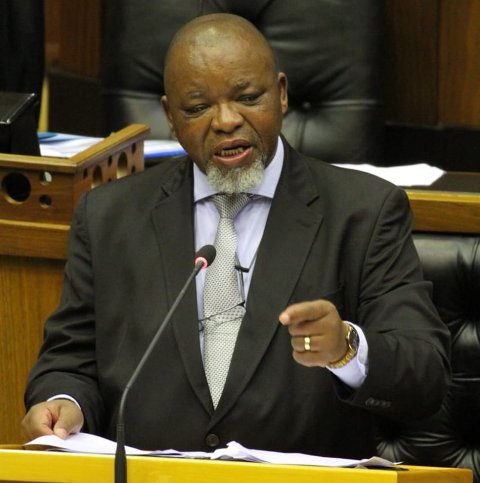
President Cyril Ramaphosa has announced the appointment of Minister of Mineral and Petroleum Resources, Gwede Mantashe, as the Acting Minister of Police, following the sudden leave of absence taken by Minister of Police Senzo Mchunu. The appointment takes effect immediately and is expected to be temporary, pending the arrival of Prof Firoz Cachalia, who will assume the portfolio in August after retiring from his academic post.
This development marks a significant shift in South Africa's security governance landscape, as it comes amid serious allegations that have rocked the upper echelons of law enforcement and intelligence.
Transition in the Police Ministry
The Presidency issued a formal statement confirming that Mantashe will hold both his current portfolio and the acting police minister role. His dual role underscores the urgency of ensuring continuity in the police ministry while the government addresses a growing scandal surrounding alleged criminal infiltration in the police force.
"Minister Mantashe will serve in this capacity until Prof Firoz Cachalia, who will retire from his position at the University of the Witwatersrand at the end of this month, assumes his position at the start of August," the Presidency noted.
Prof Cachalia, a former MEC and academic known for his commitment to constitutional governance and reform, is expected to bring fresh oversight to a ministry now at the heart of an explosive national controversy.
The Mkhwanazi Revelations and Political Fallout
The dramatic shake-up follows allegations made by KwaZulu-Natal Police Commissioner, Lieutenant General Nhlanhla Mkhwanazi. In a public address, Mkhwanazi claimed that a criminal syndicate has deeply embedded itself within South Africa's law enforcement and intelligence sectors. His revelations did not stop there; he directly implicated Minister Senzo Mchunu, alleging that the Police Minister colluded with criminal actors to disband the Political Killings Task Team in KwaZulu-Natal—a specialized unit that had been probing politically motivated murders in the province.
In response, President Ramaphosa addressed the nation on Sunday evening, emphasizing the seriousness of the accusations and announcing decisive action.
"These allegations call for an urgent and comprehensive investigation," he stated, underlining the gravity of Mkhwanazi's claims and their implications for national security and democratic governance.
Establishment of a Judicial Commission of Inquiry
To address the growing crisis and restore public confidence in law enforcement institutions, President Ramaphosa declared the formation of a Judicial Commission of Inquiry. The commission will be chaired by Acting Deputy Chief Justice Mbuyiseli Madlanga, an eminent jurist known for his work on constitutional and human rights jurisprudence.
Justice Madlanga will be joined by two prominent senior counsels—Advocate Sesi Baloyi SC and Advocate Sandile Khumalo SC—tasked with helping lead the inquiry. The commission will investigate the extent of criminal infiltration within the police and intelligence services, as well as the specific accusations leveled against Mchunu and other senior officials.
"In order for the Commission to execute its functions effectively, I have decided to put the Minister of Police, Mr Senzo Mchunu, on a leave of absence with immediate effect," Ramaphosa announced.
The President confirmed that Mchunu has agreed to cooperate fully with the Commission, a move welcomed by the Presidency as necessary to ensure transparency and accountability.
Political Implications and Governance Concerns
This inquiry represents one of the most serious institutional probes into the police service since the post-apartheid era. It brings renewed scrutiny to the state's ability to manage internal corruption and politically motivated violence, particularly in volatile provinces like KwaZulu-Natal.
Analysts have noted that Ramaphosa's decision to install Mantashe—a senior and trusted member of his Cabinet—as acting minister signals a desire to maintain control and cohesion in a time of crisis. However, the dual responsibilities may place a heavy burden on Mantashe, who is already engaged in managing the sensitive and strategic mining and energy portfolio.
Observers will also be watching closely for the arrival of Prof Cachalia in August, whose academic and legal credentials are expected to bring reformist energy to the ministry.
As South Africa grapples with the implications of these revelations, the judicial commission is expected to begin its work imminently. The outcome of its investigation could have far-reaching consequences, not only for the implicated individuals but also for the broader trust in South Africa's security and governance institutions.


 Google News