

Lesetja Kganyago Urges G20 to Balance Innovation With Equity in the AI Era
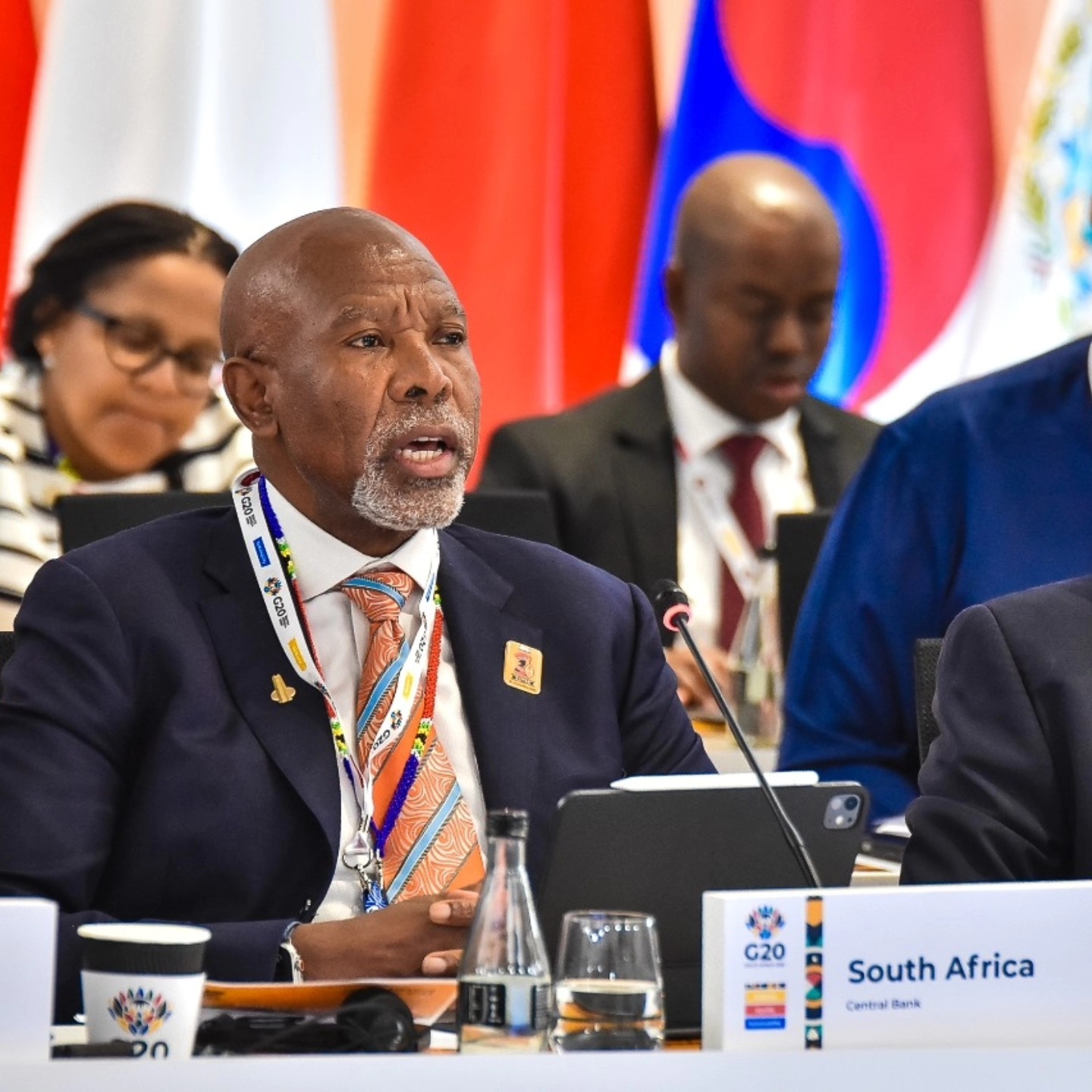
“AI represents a significant turning point in the global economic landscape,” Kganyago told his G20 counterparts.
- Country:
- South Africa
Artificial Intelligence (AI) is fast becoming one of the most powerful forces reshaping the global economy, but unless managed with care and foresight, it risks deepening existing inequalities and widening the digital divide between developed and developing nations. This was the cautionary message delivered by South African Reserve Bank (SARB) Governor Lesetja Kganyago during the third G20 Finance Ministers and Central Bank Governors Meeting, held in Zimbali, KwaZulu-Natal on Thursday.
Kganyago's remarks come at a time when AI is at the forefront of both public discourse and national development agendas across the globe, offering enormous potential but also posing unprecedented policy challenges — particularly for emerging markets and developing economies (EMDEs).
AI as a Game-Changer for Productivity — If Harnessed Equitably
Kganyago highlighted the dual-edged nature of artificial intelligence: on one hand, it represents a transformative opportunity to revive global productivity, accelerate economic growth, and improve living standards. On the other hand, without proactive intervention, it may destabilise fragile labour markets, displace workers, and entrench systemic inequality.
"AI represents a significant turning point in the global economic landscape," Kganyago told his G20 counterparts. "Our challenge is not just to catch up but to ensure this shift does not deepen inequality or destabilise already fragile labour markets."
He referred to a G20 side event on AI's implications for labour markets, noting the importance of collaborative learning and shared policy frameworks to address common challenges.
Africa's Unique Opportunity—and Its Pressing Risks
Focusing on the African context, Kganyago noted that the continent has a young and rapidly growing working-age population — a demographic advantage often described as Africa's "youth dividend." According to the African Development Bank, Africa could unlock up to $1 trillion in productivity gains by 2035. But this potential hinges on a critical precondition: closing persistent gaps in digital infrastructure, data access, skills development, and access to capital.
"The stakes are especially high for developing nations. If we do not bridge these divides now, AI could become a catalyst for further marginalisation, rather than empowerment," Kganyago warned.
A G20 Responsibility to Shape Inclusive Global Recovery
Governor Kganyago called on the G20 — representing the world's largest economies — to rise to the challenge by promoting a recovery that is resilient, inclusive, and forward-looking.
He argued that the choices made now, amid post-pandemic uncertainty and technological flux, will determine the trajectory of global cooperation and equity for decades to come.
"As G20 countries, we carry a unique responsibility to ensure that technological gains are broadly shared. This means deepening policy coordination, investing in human capital, and enabling our economies to adapt, compete, and thrive."
His message strongly advocated for a multi-pronged policy approach, including:
-
Investment in education and digital skills to prepare workforces for AI-driven changes
-
Structural reforms to enhance productivity while protecting vulnerable workers
-
Equitable digital infrastructure to ensure all countries benefit from technological advances
-
Global regulatory frameworks that balance innovation with data rights, ethics, and fairness
South Africa's Perspective: Tech Inclusion as a Development Imperative
Kganyago's remarks also reflect South Africa's broader developmental stance: that economic transformation must be inclusive and that new technologies, particularly those as disruptive as AI, must not become the preserve of wealthy nations or elite segments of society.
In a country where unemployment remains high, particularly among youth, and digital access is uneven, the rise of AI and automation could further divide opportunity unless proactively addressed through public policy, investment, and regional cooperation.
South Africa's own initiatives, such as the Presidential Commission on the Fourth Industrial Revolution (PC4IR), have called for ethical AI, skills development, and state capacity building to ensure that the country is not left behind in the global tech race.
G20's Role: From Technology Leadership to Global Stewardship
As part of the G20, South Africa is pushing for a more balanced and globally coordinated tech transition, urging developed nations to not only lead in AI innovation but also help build inclusive ecosystems that benefit low- and middle-income countries.
Kganyago's remarks align with a growing consensus that technology must serve humanity, not marginalise it. This means crafting global governance structures for AI that reflect shared values, ensure data protection, and uphold labour rights, particularly in the context of rising automation.
Looking Ahead: Cooperation Over Competition
With the global economy still recovering from the pandemic, climate shocks, and supply chain realignments, the Governor's comments serve as a reminder that no country can afford to address these issues in isolation. The future of work, technology, and inclusion must be tackled collectively.
"The policy choices we make during these uncertain times will shape the future of global economic cooperation," Kganyago concluded.
As the G20 continues to deliberate on its economic agenda, the message from South Africa is clear: the AI revolution must not become another driver of exclusion — it must be a force for shared prosperity, opportunity, and equitable development.


 Google News