

UN Experts Condemn US Sanctions on ICC Judges as Blow to Justice and Victims
According to Washington, the sanctions are intended to counter what it called “malign efforts by the ICC” to investigate alleged crimes by Israel and the United States.
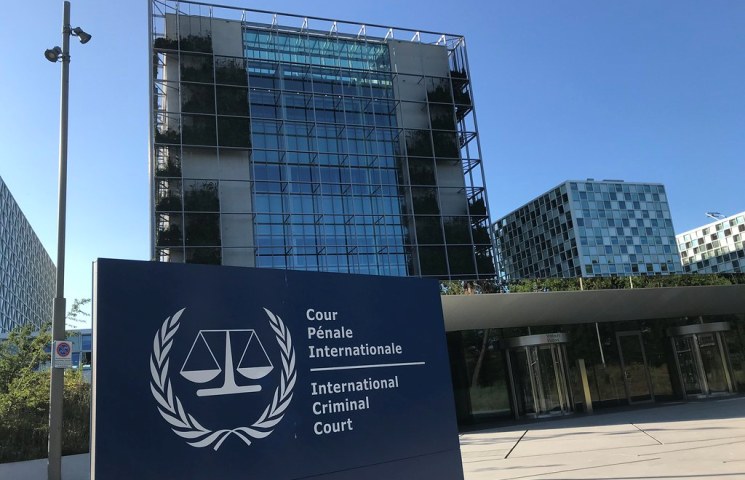
A group of United Nations human rights experts has strongly condemned a new round of United States sanctions targeting officials of the International Criminal Court (ICC), describing the move as a direct attack on judicial independence and a devastating blow to victims of atrocity crimes worldwide.
The sanctions, announced by the US Secretary of State on 20 August, affect two ICC judges and two deputy prosecutors. They follow earlier measures imposed on four ICC judges in June, as well as sanctions against the Court's chief Prosecutor earlier this year.
US Justification and ICC Cases at Issue
According to Washington, the sanctions are intended to counter what it called "malign efforts by the ICC" to investigate alleged crimes by Israel and the United States. The announcement referenced ICC rulings authorizing arrest warrants for Israeli Prime Minister Benjamin Netanyahu and former Israeli Defence Minister Yoav Gallant, as well as the Court's earlier authorisation to investigate crimes committed in the context of the Afghanistan conflict.
The US, which is not a party to the Rome Statute establishing the ICC, has long opposed the tribunal's jurisdiction over its nationals and those of allied states. However, critics argue that sanctioning international judges and prosecutors undermines accountability for the world's gravest crimes, including genocide, war crimes and crimes against humanity.
UN Experts: "Power, Not Justice, Rules"
In a joint statement, the UN experts described the sanctions as unprecedented and deeply troubling:
"Sanctioning ICC judges and prosecutors sabotages the fight against impunity and tells the world that power, not justice, rules in the face of atrocity."
They emphasized that ICC legal professionals play a vital role in bringing perpetrators of mass atrocities to justice and that reprisals against them threaten the very foundations of international law.
Protection of Judicial Independence
The experts highlighted existing international standards which guarantee that judges, prosecutors, and lawyers must be able to perform their functions "without intimidation, hindrance, harassment or improper interference." They further stressed that judicial professionals should not face prosecution, administrative penalties, economic sanctions, or other reprisals for carrying out their duties in accordance with professional ethics and international law.
"The ICC's legal professionals must be protected from reprisals and allowed to act independently and without fear," the experts insisted.
Call for US to Reverse Sanctions
The UN experts called on Washington to rescind the measures, urging the US Government to uphold the rule of law and the independence of judicial institutions. They appealed to the broader international community to defend the ICC's mandate.
"The US Government must uphold the rule of law and the independence of judges and prosecutors by rescinding these sanctions. We urge all States to respect the Court's independence as a judicial institution and protect the impartiality of those who work within the Court."
Appeal to the European Union
The experts also urged the European Union (EU) and the European Commission to enforce Council Regulation (EC) No 2271/96—the EU Blocking Statute—to shield ICC personnel from unlawful extraterritorial sanctions. The regulation, adopted in the 1990s, was designed to counter US secondary sanctions, and experts argue it could provide a legal shield for ICC officials targeted by Washington.
Broader Implications for International Justice
This latest confrontation underscores the longstanding tension between the ICC and the United States. Washington has historically resisted the Court's jurisdiction, citing concerns over sovereignty and the potential for politically motivated prosecutions.
Yet for victims of mass atrocities—from Darfur to Afghanistan to Palestine—the sanctions are seen as a dangerous precedent that erodes the global fight against impunity. Experts fear that if left unchecked, the measures could discourage judicial professionals, undermine accountability mechanisms, and embolden perpetrators of serious crimes.
The experts confirmed they have formally communicated their concerns to the United States government. The situation continues to test not only the resilience of the ICC but also the willingness of the international community to defend independent justice in the face of political pressure.


 Google News