

UN Expert Urges Justice-Based Peace Framework for Gaza Amid Ceasefire Hope
The UN expert underscored that accountability for war crimes, crimes against humanity, and genocide cannot be compromised under any peace framework.
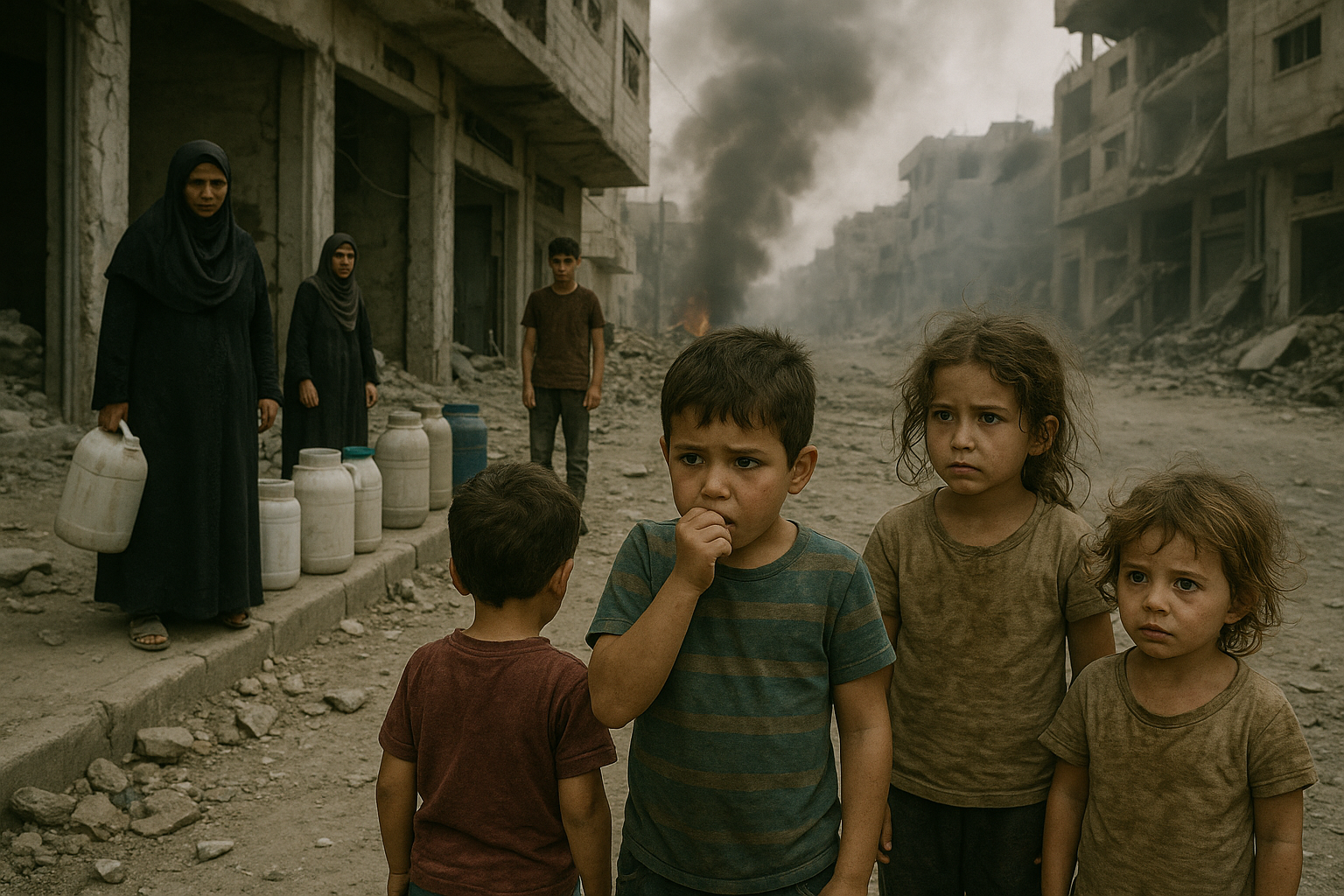
The recent halt in Israel's military offensive against Palestinians in Gaza and the simultaneous release of all living Israeli hostages, alongside several detained Palestinians, have created a fleeting moment of hope in a region devastated by war and humanitarian catastrophe. Yet, according to UN Special Rapporteur Bernard Duhaime, this hope will be short-lived unless peace efforts are anchored in justice, inclusivity, and accountability.
"Peace is a path to engage on. It cannot be imposed," Duhaime said, emphasizing that genuine peace must rest on "the recognition of the dignity of all involved" and involve "the full participation of Palestinians." His remarks came as the Gaza Peace Summit, which began on 13 October, aimed to lay the groundwork for an enduring settlement across the Levant.
Transitional Justice: The Cornerstone of Lasting Peace
Duhaime stressed that sustainable peace requires a robust transitional justice process, encompassing truth-telling, criminal accountability, reparations, memorialisation, and guarantees of non-repetition. He warned that without such mechanisms, the current peace proposal risks becoming "a superficial arrangement" incapable of healing the deep wounds inflicted by decades of occupation and violence.
"The ceasefire proposal lacks clarity on the mechanisms, timelines, and institutional arrangements necessary to undertake a meaningful transitional justice process," he cautioned. In his view, there must be a clear roadmap outlining how truth will be established, how victims will access full reparations, and how perpetrators of crimes will be held accountable.
Transitional justice, as the UN defines it, is not simply about post-conflict reconciliation—it is about confronting historical injustices, addressing systematic violations, and creating a foundation for a future based on mutual respect and rule of law. Duhaime's statement places the Gaza process within this broader framework, urging negotiators to look beyond short-term ceasefires toward enduring justice.
Accountability as a Non-Negotiable Principle
The UN expert underscored that accountability for war crimes, crimes against humanity, and genocide cannot be compromised under any peace framework. "Crimes such as war crimes, crimes against humanity, and genocide must not be shielded by amnesties, statutes of limitation or other measures that similarly limit criminal responsibility," Duhaime stated.
This stance aligns with established principles of international law, reaffirmed by the International Criminal Court (ICC) and the International Court of Justice (ICJ), that hold all perpetrators—state or non-state—equally accountable. Duhaime warned that omitting such accountability mechanisms could derail the peace process, perpetuate cycles of violence, and embolden future violations.
Protecting Human Rights Defenders and Truth-Seekers
Duhaime praised the persistent efforts of Palestinian and Israeli human rights organizations, journalists, and civil society groups documenting atrocities on both sides. These actors, he said, are essential to ensuring truth, justice, and accountability. However, many face severe repression, harassment, and attacks for their work.
He called on the international community to establish a safe haven for preserving vital documentation of violations and to provide these groups with the legal and institutional support they urgently need. "Their protection is a moral and legal imperative," he emphasized.
Broader Regional and Legal Dimensions
The Special Rapporteur cautioned against treating Gaza's governance as a standalone issue, highlighting the inseparable link between Gaza, the occupied West Bank, and East Jerusalem. "Any peace accord must ensure the full implementation of relevant decisions of the International Court of Justice, which has reaffirmed Israel's immediate obligation to end its illegal occupation," he said.
He also insisted that any international peacekeeping presence must be strictly neutral and designed to protect both Palestinians and Israelis from attacks by state or non-state actors alike. "Occupation and oppression must end now," he asserted, stressing that neutrality should never become a pretext for inaction in the face of ongoing human rights violations.
A Call for Justice-Driven Peace
For Duhaime, the path forward lies in transforming this fragile ceasefire into a comprehensive peace grounded in justice. He urged all parties to embrace a bold vision that prioritizes dignity, equality, and human rights over political expediency. "A durable resolution to such a conflict demands a bold commitment to justice. Only then can a future rooted in peace, dignity, respect, and mutual security be finally built," he said.
The UN expert also reaffirmed his readiness to provide technical assistance to Palestine, Israel, and other stakeholders to develop and implement transitional justice mechanisms. His appeal underscores the growing international consensus that peace in Gaza cannot be achieved through diplomacy alone—it must be built on truth, reparations, and recognition of Palestinian self-determination.
The Road Ahead: From Ceasefire to Coexistence
As the Gaza Peace Summit continues, the world watches closely. The ceasefire has stopped the immediate bloodshed, but without addressing the root causes—occupation, displacement, and impunity—it may only postpone the next eruption of violence. Duhaime's warning is clear: peace without justice is fragile, and justice without truth is impossible.
A just and lasting peace, experts agree, will require an inclusive process involving both state actors and civil society, sustained international support, and a firm commitment to uphold international law. The challenge is immense—but, as Duhaime concluded, the alternative is an endless cycle of suffering.
ALSO READ
-
UN Expert Urges Malaysia to Halt Myanmar Returns as Refugees Face War and Violence
-
Longer Lives, Unequal Care: UN Report Exposes Gaps in Support for Older People Globally
-
Century After Slavery Convention, Millions Still Wait for Freedom and Justice
-
Netherlands Pledges Over €309 Million to Strengthen Justice and Prevent Conflict
-
Nicaragua Used Disappearances to Crush Dissent as Eight Died in Custody, UN Reports


 Google News