

Narend Singh Calls for United Action to Safeguard Biodiversity and Communities
Deputy Minister Singh emphasised that conservation must be fundamentally people-centered, noting: “Conservation without people is hollow.
- Country:
- South Africa
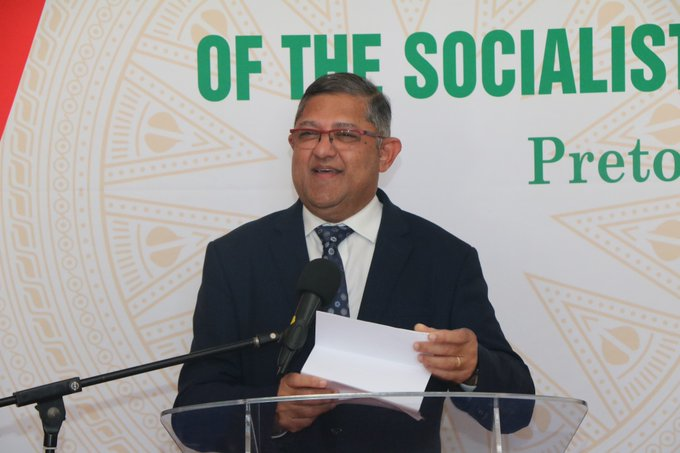
South Africa's Deputy Minister of Forestry, Fisheries and the Environment, Narend Singh, has reaffirmed that the country's biodiversity can only be protected through a whole-of-government, whole-of-society approach, grounded in community participation, equitable governance, and a shared national mission. Addressing the World Wildlife Fund (WWF) South Africa Annual General Meeting (AGM) in Sandton, Johannesburg, the Deputy Minister outlined the urgent environmental, social, and security challenges facing the nation — and the collective responsibility required to overcome them.
His remarks placed particular emphasis on aligning South Africa's conservation efforts with global biodiversity frameworks, empowering Indigenous communities, and combating the rising tide of wildlife trafficking driven by sophisticated criminal networks.
Biodiversity Conservation Rooted in People and Communities
Deputy Minister Singh emphasised that conservation must be fundamentally people-centered, noting: "Conservation without people is hollow. True success hinges on inclusive, transformative biodiversity management, where local communities are not just beneficiaries, but co-architects and custodians."
This approach aligns with the Kunming–Montreal Global Biodiversity Framework, which aims to halt and reverse global biodiversity loss by 2050. South Africa is currently updating its National Biodiversity Strategy and Action Plan (NBSAP) to reflect these global goals, including commitments to:
-
Tackle habitat loss and fragmentation
-
Address invasive species, pollution and unsustainable resource use
-
Strengthen equitable access and benefit-sharing
-
Support community-led conservation models
-
Promote biodiversity-driven livelihoods and green economies
The Deputy Minister said that local communities, especially those living adjacent to biodiversity-rich landscapes, hold knowledge and stewardship that are essential for long-term ecological sustainability.
Centring Indigenous Knowledge and Ensuring Fair Benefit Sharing
Singh shared experiences from his recent participation at the World Tribal Alliance gathering, which convened traditional leaders from 15 countries. He described their Indigenous knowledge as "remarkable and too often exploited."
At COP16 in Colombia, global negotiators adopted the Cali Call for Action, which seeks to protect Indigenous Knowledge Holders and ensure they benefit fairly from the medicines, remedies and innovations derived from their heritage.
Singh stressed South Africa's commitment to these principles: "Their knowledge is a gift to humanity, but it must never be taken without recognition, protection and economic benefit."
Call to WWF: Drive Community-Led and Inclusive Conservation
Addressing the WWF AGM, Singh urged the organisation to extend its leadership in conservation by expanding programmes that:
-
Champion community-based natural resource management (CBNRM)
-
Support co-management agreements that strengthen local decision-making
-
Provide skills development and training for rural youth
-
Foster women-led conservation enterprises
-
Improve market access for community-based biodiversity products
-
Strengthen access and benefit-sharing (ABS) frameworks
He underscored that successful conservation requires thriving communities, not marginalised ones.
Rising Threat of Transnational Wildlife Crime
Expressing deep concern, the Deputy Minister described wildlife trafficking as a multifaceted criminal threat, noting that it is no longer limited to poaching alone.
"This is not just an environmental crisis — it is an assault on our rule of law, security, economy and tourism sector."
Criminal syndicates involved in poaching are also connected to:
-
Human trafficking
-
Drug smuggling
-
Illegal mining
-
Arms trafficking
-
Cross-border criminal economies
These networks exploit corruption, community vulnerability, and porous borders to traffic high-value species such as rhinos, pangolins, succulents, and rare reptiles.
Singh commended WWF for its ongoing support in the fight against succulent poaching, stating: "You have provided dedicated personnel to assist in this area, and for that we are grateful."
Government's Strategic Response: Fighting Wildlife Trafficking
The Deputy Minister highlighted the government's role through the National Integrated Strategy to Combat Wildlife Trafficking (NISCWT), approved by Cabinet in 2023. The strategy aims to:
-
Strengthen intelligence-led policing
-
Enhance border security and customs coordination
-
Improve prosecutorial capacity and judicial outcomes
-
Support community-based anti-poaching units
-
Protect rangers and ensure their welfare
-
Promote international cooperation against transnational syndicates
Singh stressed that combating wildlife crime demands a unified national effort involving law enforcement, conservation agencies, communities, and international partners.
A Shared Mission to Protect South Africa's Natural Heritage
The WWF AGM brought together leaders from government, business, academia and civil society, all committed to safeguarding South Africa's rich natural heritage for future generations.
The Deputy Minister closed with a powerful message: "Our biodiversity is not just a national treasure — it is the foundation of our livelihoods, our identity, and our future. Protecting it requires all of us."
As South Africa strengthens its conservation strategies, partners across society are being called to champion inclusive, ethical and community-centered biodiversity protection — ensuring that ecosystems and people thrive together in a sustainable future.


 Google News