

South Africa Bets on AI, Robotics and STEM to Future-Proof Education and Growth
Nzimande highlighted that South Africa hosts Africa’s largest public science system, anchored by globally recognised institutions such as the CSIR, HSRC, NRF and SANSA.
- Country:
- South Africa
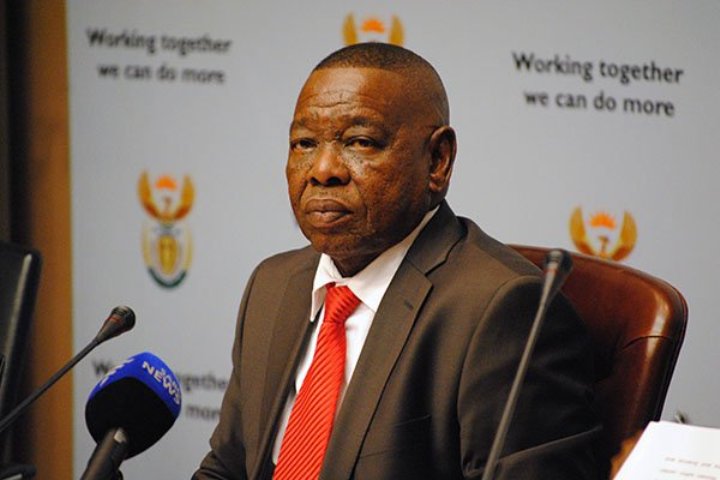
South Africa is accelerating investment in science, technology and innovation (STI) as a foundation for long-term development, with a renewed focus on future-ready education, digital skills and emerging technologies, Minister of Science, Technology and Innovation Professor Blade Nzimande said at the Basic Education Sector Lekgotla opening today.
Addressing education leaders and policymakers, Nzimande stressed that no country can meet its development goals without sustained investment in STI capabilities, linking strong science outcomes directly to the quality of mathematics and science education delivered in public schools.
"High-quality science and high-quality education are inseparable," Nzimande said, adding that many of the technologies shaping modern life — from digital platforms to advanced medical diagnostics — are the result of decades of investment in education-led innovation ecosystems.
A Continental Science Powerhouse Built on School-Level STEM
Nzimande highlighted that South Africa hosts Africa's largest public science system, anchored by globally recognised institutions such as the CSIR, HSRC, NRF and SANSA. He also pointed to flagship research infrastructure, including the Square Kilometre Array (SKA) and the Southern African Large Telescope (SALT), noting that the SKA has been actively used to support maths and science education in rural communities like Carnarvon in the Northern Cape.
He further cited the Nuclear Medicine Research Infrastructure (NuMeRI) at Steve Biko Hospital as an example of how advanced science infrastructure underpins drug development, clinical research and next-generation diagnostics for diseases such as cancer and tuberculosis.
"These global science capabilities exist because young people receive foundational training in maths and science through our education system," the Minister said.
Education That Shapes the Future — Not Just Prepares for It
Against a backdrop of global instability — including climate change, pandemics, digital inequality and disruptive technologies — Nzimande called for a future-proof education system aligned with South Africa's Decadal Plan for Science, Technology and Innovation (2022–2032).
The plan promotes an education model that actively shapes the future, prioritising skills in artificial intelligence, robotics, biotechnology and digital solution development, while combining classroom learning with hands-on, problem-solving experiences.
"Digital and future skills must be embedded early, supported by extracurricular platforms that allow learners to apply scientific principles to real-world challenges," he said.
Scaling STEM, Coding and Early Intervention
The Department of Science, Technology and Innovation is expanding initiatives to build STEM capability at scale, including support for STEM Olympiads, science fairs and innovation competitions led nationally by the South African Mathematics Foundation and the Eskom Expo for Young Scientists.
The Minister said future efforts would focus more strongly on:
-
Grassroots coaching and mentoring
-
Early childhood exposure to maths and science
-
Addressing long-standing anxiety around STEM subjects
-
Supporting underperforming matric learners through targeted recovery programmes
He referenced concerns raised by Basic Education Minister Siviwe Gwarube that only 34% of 2025 matric candidates wrote mathematics, underscoring the urgency of systemic intervention. Nzimande also highlighted recent successes, including a KwaZulu-Natal primary school placing second in a national coding and robotics competition, as evidence of untapped potential.
Call to Action for EdTech, AI and STEM Ecosystem Partners
The Department of Science, Technology and Innovation is calling on EdTech companies, AI and robotics startups, universities, research labs and private-sector innovators to partner with government and schools to scale digital learning tools, teacher support platforms, STEM enrichment programmes and early skills development initiatives.
Strengthening collaboration across education and science, Nzimande said, will be critical to ensuring South Africa develops the skills base needed for inclusive growth, technological leadership and global competitiveness.


 Google News