

Unlocking Green Trade Potential: Labor Market and Policy Insights for the Philippines
The World Bank’s study highlights how regulatory barriers hinder green goods trade in the Philippines, limiting its role in a low-carbon transition. While reforms could boost trade and inclusivity, complementary policies are needed to address labor market shifts and ensure equitable benefits.
 CoE-EDP, VisionRI
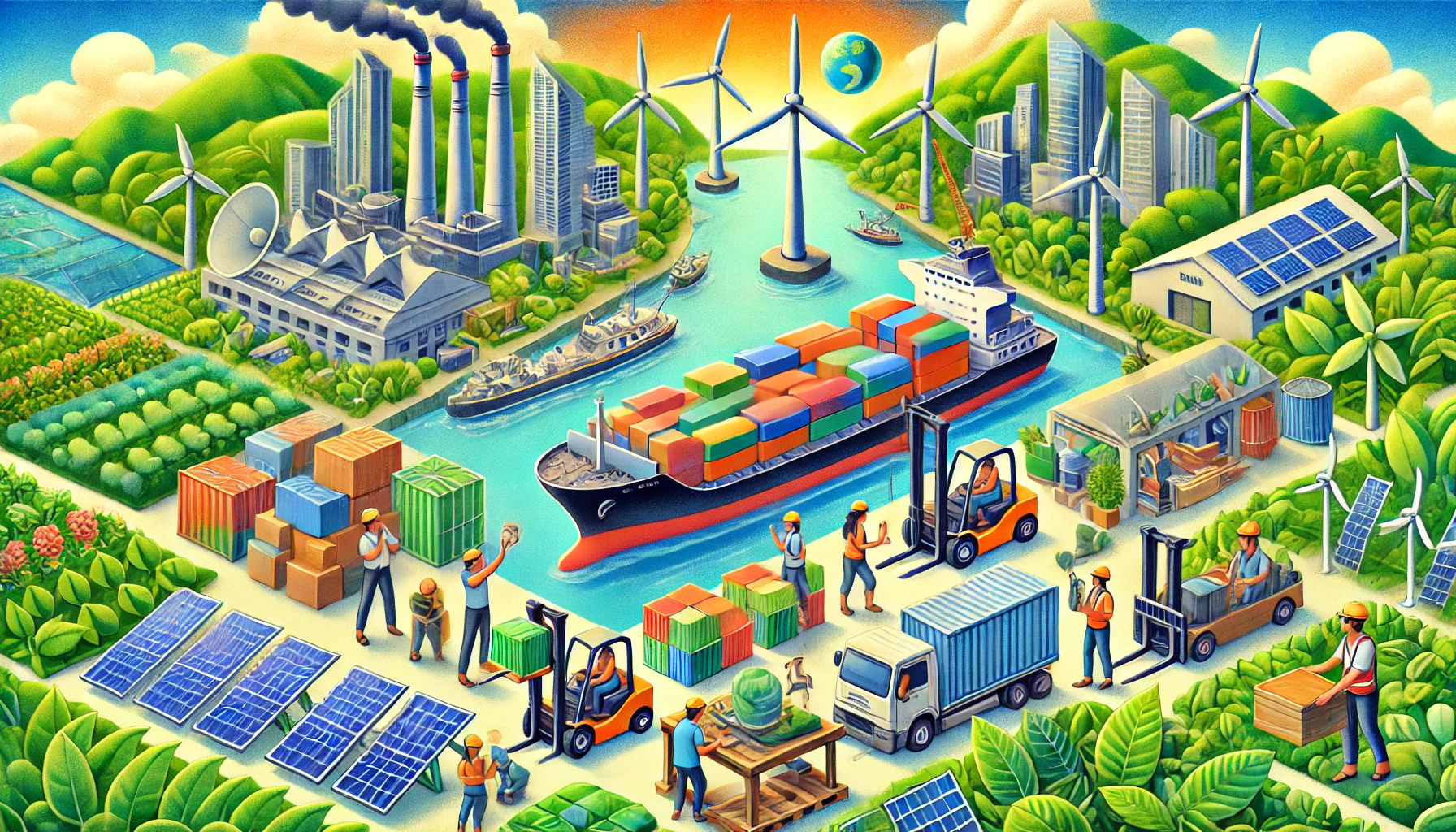
The World Bank's Economic Policy Global Department, supported by international donors and research collaborators, has released an insightful Policy Research Working Paper exploring the intersection of trade policy, green goods, and labor markets in the Philippines. This study highlights how green goods trade, vital for transitioning to a low-carbon global economy, faces challenges from regulatory barriers and labor market dynamics. The Philippines, a country vulnerable to climate change impacts, is an ideal case for analyzing how trade policies can foster sustainability while balancing economic and social goals. Despite its potential, the study finds that the country's green goods trade is underdeveloped compared to other ASEAN countries, with declining import and export shares over the past years.
Barriers to Green Trade in the Philippines
A significant finding of the report is the detrimental role of non-tariff measures (NTMs) on green goods trade. The research identifies five critical NTMs labeling requirements, non-automatic import licensing, technical barriers to transport and storage, testing requirements, and traceability demands that disproportionately inflate costs for green goods imports. These measures create inefficiencies that discourage both imports and exports, restricting the Philippines from fully participating in global green value chains. Reforming these NTMs could significantly reduce costs, boost trade, and align the country's trade policies with international environmental commitments. However, the report cautions that reforms must be implemented carefully to manage their broader economic and social impacts.
Green Trade's Uneven Impact on Labor Markets
The study reveals contrasting effects of green goods imports and exports on the labor market. Imports are positively correlated with higher earnings and a greater share of female workers across industries, suggesting that green goods trade could promote inclusivity and wage growth. On the other hand, exports are associated with a decline in the proportion of high-skilled workers within industries, reflecting the relatively lower complexity of green exports from the Philippines. This finding underscores a potential risk: while green trade can generate employment, it may also lead to skill downgrading in export-driven industries. Policymakers must address these disparities to ensure that green trade benefits are distributed equitably.
A Need for Complementary Policies
The research emphasizes that trade policy reforms must be accompanied by labor market strategies to mitigate potential disruptions. As the green goods trade grows, industries will undergo labor reallocations, potentially displacing workers or requiring new skills. Retraining programs, financial support for affected workers, and initiatives to upgrade the complexity of exported green goods are crucial. For instance, promoting innovation in high-value green technologies could sustain or enhance the skill composition of the workforce while boosting the country's competitiveness in the global green economy.
Unlocking the Philippines' Green Potential
The strategic importance of green goods trade for the Philippines cannot be overstated. Enhancing this sector could reduce the country's reliance on fossil fuel imports, foster innovation, and support international climate goals. The study highlights that green goods imports are critical for advancing exports, as they provide the technologies and materials needed to participate in global green value chains. By addressing regulatory barriers and encouraging green trade, the Philippines could position itself as a leader in sustainable industries, creating jobs and driving economic growth. However, this transition requires a careful balance of trade liberalization and labor protection to ensure long-term sustainability and social equity.
A Path to Sustainable Growth
This World Bank research contributes to the growing body of knowledge on green trade and its socioeconomic implications, particularly in developing economies. It underscores that while green goods trade presents significant opportunities for economic growth and environmental sustainability, it also poses challenges that require coordinated policy responses. The findings urge policymakers to integrate trade, labor, and environmental strategies, crafting a comprehensive approach to sustainable development. By reforming NTMs, supporting the workforce, and promoting high-value green exports, the Philippines can achieve a more inclusive and sustainable economy. However, the report emphasizes that these reforms must be informed by rigorous analysis and tailored to the country's unique socio-economic context to ensure that the transition to a greener future is both effective and equitable.
- FIRST PUBLISHED IN:
- Devdiscourse
ALSO READ
-
Better Heat Planning Can Protect Crowds and Ease Pressure on Hospitals, WHO Says
-
Hotter Years, More Cavities? Understanding Link Between Climate and Dental Health
-
Asia-Pacific Puts Services Trade at Centre of Growth and Jobs Through TS4D Talks
-
Philippines Builds National Roadmap to End Child Labour, Trafficking and Slavery
-
Philippines Could Unlock Billions Through Smarter Taxes and Public Spending


 Google News