

Hunger and Education: How Food Inflation Delayed Learning Recovery Across Asia
The ADB study finds that food insecurity, worsened by soaring food inflation, significantly slowed children’s recovery from COVID-19 learning losses across nine Asian countries. Older students and those facing longer school closures were most affected, underscoring the need for school meal programs and targeted support.
 CoE-EDP, VisionRI
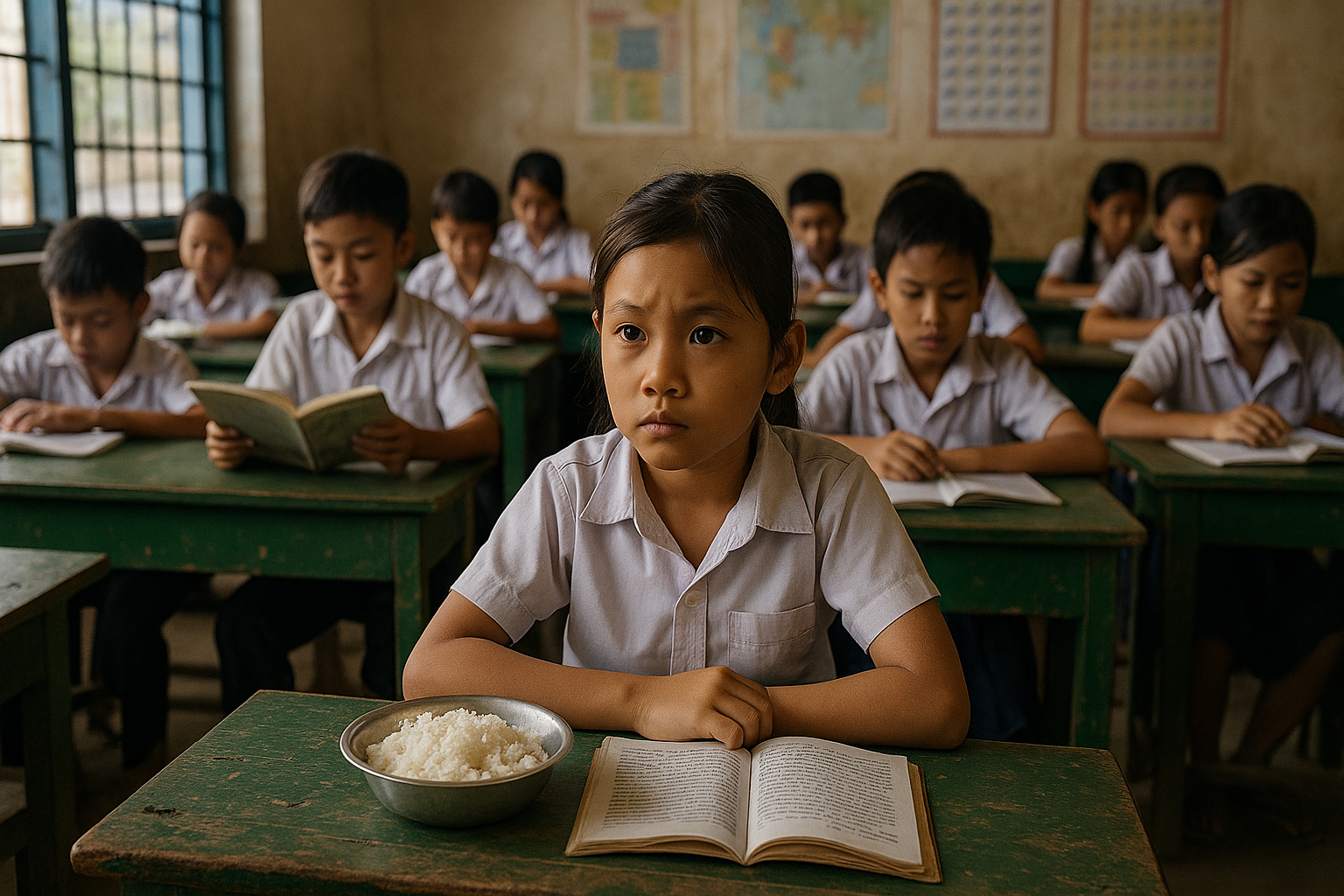
The Asian Development Bank (ADB), working alongside the International Fund for Agricultural Development and PJM Consulting, has released a pathbreaking working paper that directly ties food insecurity to children's ability to recover from pandemic-induced learning losses. The study covers nine developing Asian nations, Afghanistan, Armenia, Georgia, Kazakhstan, the Kyrgyz Republic, Mongolia, Pakistan, Tajikistan, and Uzbekistan, and uses household surveys from 2023 to uncover how rising food inflation worsened hunger at home and slowed children's return to normal learning after schools reopened. Unlike earlier research that merely suggested correlations, this study breaks new ground by establishing a causal relationship. It finds that food insecurity, already worsened by surging food prices, is not just a nutritional problem but a developmental obstacle with far-reaching consequences for education.
When the Price of Food Soars Beyond Reach
The backdrop for this study is the turbulent global economy following COVID-19 and the Russian invasion of Ukraine, which destabilized supply chains and sent food prices soaring. Across the nine countries, consumer price inflation averaged nearly 13 percent in 2022, while food price inflation climbed higher at about 17 percent. In Pakistan, the crisis was acute: by 2023, food prices were rising at a staggering 39 percent. Afghanistan, Mongolia, and Kazakhstan also faced steep increases, pushing millions of families into deprivation. Severe food insecurity, where families run out of food and go without eating for a day or more, was reported by around one-third of households in Tajikistan, Afghanistan, and Georgia. These conditions aligned with FAO's global estimate that 2.4 billion people were moderately or severely food insecure in 2022, underscoring that hunger had worsened dramatically since the pandemic.
Schools Reopen, But Recovery Lags Behind
During the pandemic, schools in the surveyed countries were shut for between 10 and 40 weeks. Families struggled to keep their children engaged, and the majority reported setbacks: about 80 percent believed their children's learning slowed, while 40 percent admitted there was little to no progress. When classrooms reopened, hopes of quick recovery were soon tempered by reality. Survey data showed that only 43 percent of households believed their children learned faster after reopening, while 30 percent said progress remained slower than during closures. Kyrgyzstan stood out as the worst case, where 77 percent of parents said their children continued to fall behind. Afghanistan and Mongolia, however, reported better recovery rates, suggesting that local policies and support mechanisms influenced outcomes.
Establishing Causality Between Hunger and Learning
The novelty of this research lies in its methodological approach. Families were assessed using the US Household Food Security Scale, with scores ranging from zero for secure households to four or five for those in severe insecurity. Half of the households surveyed were moderately insecure, while a quarter fell into the severe category. To establish causality, researchers introduced the concept of Relative Food Inflation, which measures food price hikes against overall inflation. The results were unequivocal: food insecurity caused by rising prices directly harmed learning recovery. A one standard deviation increase in food insecurity raised the likelihood of slower learning progress by 17.6 percent and lowered the probability of faster progress by nine percent. The impact was strongest among older children and those who had endured longer school closures. Elementary school students, by contrast, appeared more resilient, partly because many of them benefited from free or subsidized school meals that softened the blow of household hunger.
Policy Lessons: Nourishment and Knowledge Go Hand in Hand
The implications of these findings stretch far beyond the pandemic. Food insecurity, the study argues, is a barrier not just to health but to human capital development. If children cannot recover their learning after disruptions, the economic future of entire nations is at risk. The authors recommend targeted support for vulnerable households with school-aged children during periods of high food inflation, including free or subsidized school meals. They also urge governments to closely monitor children's learning recovery after closures of any kind, whether caused by pandemics, disasters, air pollution, extreme weather, or conflict. School meal programs, the paper stresses, should be designed to continue even during closures, ensuring that nutrition and learning are jointly protected.
While the study acknowledges limitations, such as its reliance on parents' perceptions rather than standardized test results, it leaves little doubt about the urgency of the problem. It calls for more detailed surveys that differentiate between chronic and acute hunger, caloric and nutritional deficiencies, and that track the role of school meal programs. Yet the central message is clear: when food inflation erodes household security, it also erodes children's chance to recover lost knowledge. For Asia's developing economies, where young populations are seen as engines of future growth, protecting children from hunger is as vital as protecting them from illiteracy.
By highlighting a causal connection between food insecurity and delayed learning recovery, the Asian Development Bank and its partners have issued a warning with profound resonance. Hunger at home does not stay at home; it follows children into classrooms, slows their progress, and undermines the foundation of future development. The report insists that governments recognize this link and act decisively, for nourishing children's bodies and nourishing their minds are inseparable duties in the march toward inclusive growth.
- FIRST PUBLISHED IN:
- Devdiscourse
ALSO READ
-
ADB’s $15m Deal Backs Naoero Airlines Upgrade to Strengthen Pacific Air Links
-
ADB’s $20.5 Million Grant Opens Path to Wider Pension Coverage Across Tajikistan
-
Thailand’s $750 Million Nature Bond Puts Biodiversity at the Heart of Public Finance
-
ADB’s $1.3 Billion Mongolia Plan Backs Better Healthcare, Schools and Disaster Readiness
-
ADB Backs Indonesia With $650 Million to Expand Markets and Safer Digital Finance


 Google News