

Pakistan Rethinks Flood Warnings as Climate Risks Grow
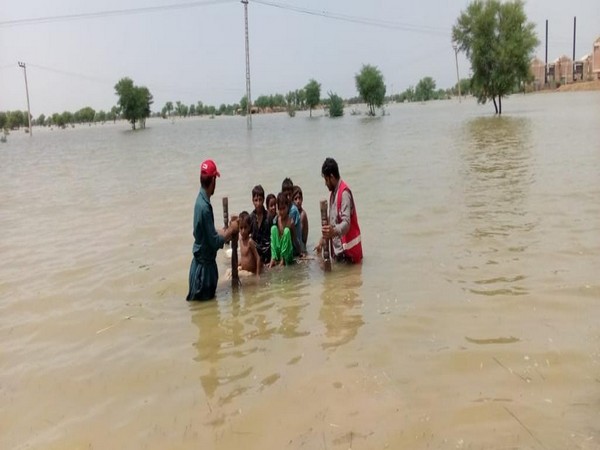
Flood-affected residents in Theme Park in Lahore, Mohallah Qasim Market in Sialkot and Azmatpur in Muzaffargarh highlighted the value of this kind of local guidance during consultations.
- Country:
- Pakistan
Pakistan's growing exposure to floods is changing what an effective early warning system needs to deliver, as communities face not only major riverine flooding but also flash floods, hill torrents, urban flooding, debris flows and Glacial Lake Outburst Floods (GLOFs) that can develop with very little time for people to respond. A UNESCO-led review initiated after the 2025 floods has examined Pakistan's Flood Early Warning System (FEWS) from the first signs of danger through forecasting and communication to the moment a family must decide whether to evacuate.
Pakistan has invested heavily in hydro-meteorological monitoring, weather forecasting, river-flow prediction, telemetry and coordination between government institutions, creating a strong technical base for anticipating seasonal conditions and large riverine floods. Experiences during the 2022 and 2025 monsoon seasons exposed a different problem: a warning can exist technically without giving people enough practical time or information to protect themselves, their livestock and their belongings. Stakeholders described this situation as "zero effective lead time," where information reaches communities too late, is difficult to interpret or cannot be turned into action quickly enough.
Strong Forecasts Can Still Get Lost Before Reaching Families
UNESCO's review looked at the entire warning chain through desk research and discussions with federal and provincial agencies, disaster management authorities, universities, humanitarian organizations, media representatives and local governments. Two national and six provincial and state-level workshops helped capture institutional experiences, while focus group discussions with nearly 300 people, including 139 women, provided a picture of what actually happens when warnings reach flood-affected communities.
One weakness appeared repeatedly in these conversations: Pakistan relies heavily on GSM-based communication for distributing warnings, even though mobile networks, electricity and internet services can become unreliable during the severe weather that makes those warnings most important. SMS alerts and digital platforms may work well under normal conditions, yet damaged infrastructure or power failures can leave communities disconnected when flash floods or GLOFs are approaching within hours.
The study also identified what participants called a "forwarding paradigm," where technical information moves from one administrative level to another without always being converted into instructions that make sense for a specific neighbourhood or village. A forecast describing rainfall in millimetres or river discharge in cusecs may be scientifically accurate, but a family needs to know which road could disappear underwater, whether livestock should be moved and where the safest evacuation point is located.
Warnings Need to Explain What a Flood Will Actually Do
The review recommends expanding Impact-Based Forecasting, an approach that connects information about the hazard with the people, buildings, roads, farmland and services likely to be affected. Instead of telling residents only that 100mm of rain is expected, an impact-based warning could explain that a bridge is likely to become submerged and advise households to move livestock and valuables before travelling to a designated shelter.
Flood-affected residents in Theme Park in Lahore, Mohallah Qasim Market in Sialkot and Azmatpur in Muzaffargarh highlighted the value of this kind of local guidance during consultations. Producing it consistently will require stronger Geographic Information System mapping, historical records of previous impacts, detailed local risk assessments and district-level teams capable of turning technical forecasts into clear instructions.
This shift matters even more for rapid-onset hazards because every minute can influence the outcome. Forecasting technology may identify a developing threat, but its life-saving value depends on whether information moves quickly enough through institutions and reaches people in language they understand, through communication channels they can still access.
Local People Could Become Pakistan's Network of Human Sensors
Some of the strongest evidence from the review came from communities themselves, where volunteers, shepherds, teachers, mosque committees, local leaders and community observers were already detecting danger, passing on information and helping neighbours evacuate. Their role was particularly visible during a GLOF in Talidas Village in Ghizer District, Gilgit-Baltistan, on August 21, 2025, when a shepherd noticed signs of danger upstream and shared a warning through available local channels.
Community networks and mosque announcements quickly carried the message through the village, allowing residents to evacuate before the floodwaters arrived. Property and livestock suffered damage, but no lives were lost, offering a powerful example of how local observation, trust and fast communication can complement sophisticated forecasting technology.
The review proposes formally incorporating trusted community members into FEWS as "Human Sensors." People who spend their lives around rivers, mountains, glaciers and local drainage systems can recognize unusual environmental changes while also knowing how to reach neighbours who may not receive or understand a digital warning.
Pakistan's next generation of flood warnings will need this combination of science and local knowledge. The review calls for expanded monitoring networks, stronger forecasting and nowcasting, improved cross-border hydrological data sharing and greater use of impact-based forecasts, paired with communication methods that can survive outages, including sirens, radio, mosque loudspeakers, community groups and trained volunteers.
Pakistan already has much of the technical foundation required to forecast floods. The bigger task is connecting that capability with people at the final and most important point in the warning chain, giving every community information early enough, specific enough and reliable enough to turn a forecast into an action that saves lives.


 Google News