

160-year-old skeletons in Punjab belong to martyrs of the Ganga plain: Genetic study
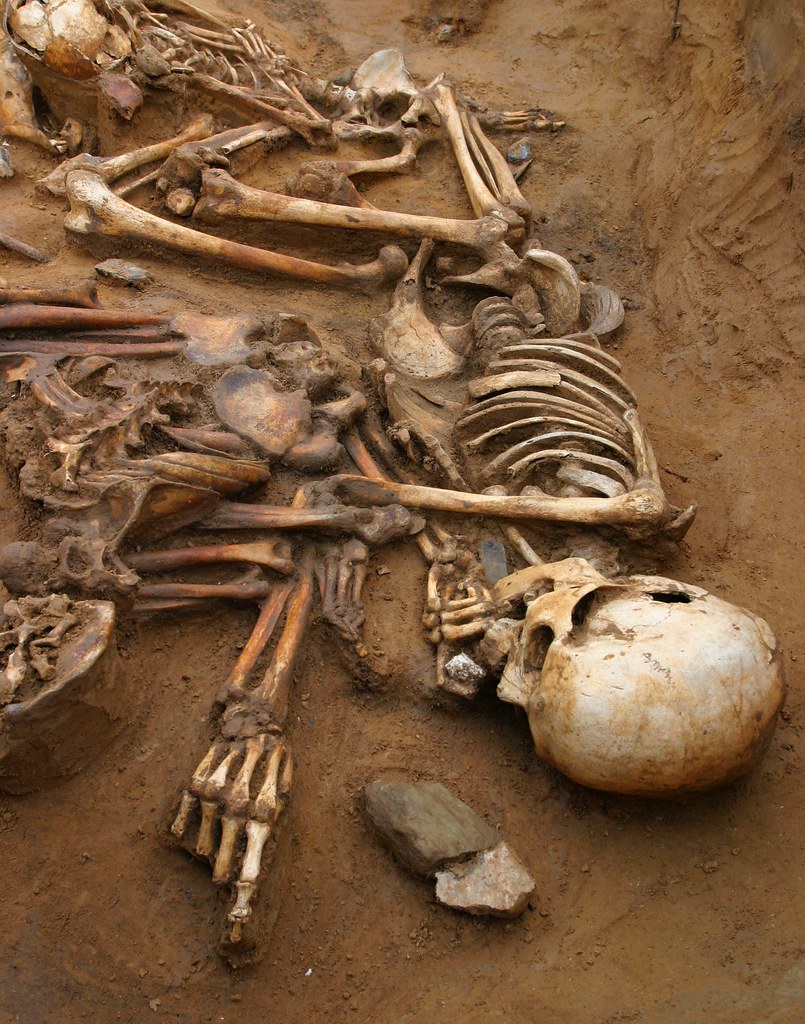
A genetic study by researchers of city-based Centre for Cellular and Molecular Biology CCMB and other institutes has revealed that the skeletons excavated from an old well in Ajnala town of Punjab in 2014 belonged to the 26th Native Bengal Infantry Battalion killed by the British army during the revolt of 1857 as part of the Indian freedom struggle.
- Country:
- India
A genetic study by researchers of city-based Centre for Cellular and Molecular Biology (CCMB) and other institutes has revealed that the skeletons excavated from an old well in Ajnala town of Punjab in 2014 belonged to the 26th Native Bengal Infantry Battalion killed by the British army during the revolt of 1857 as part of the Indian freedom struggle. Some historians believed the skeletons belonged to the people who were killed in riots during the partition of India and Pakistan. The other prevailing belief, based on various historical sources, was that these were skeletons of the Indian soldiers. However, the identity and the geographic origins of the soldiers were under intense debate due to lack of scientific evidence, a release from CCMB said on Thursday.
J S Sehrawat, anthropologist from Punjab University, collaborated with the CCMB, Birbal Sahni Institute, Lucknow, and Benaras Hindu University (BHU) to establish the roots of these martyrs using DNA and isotope analyses, the release said.
The finding revealed that the skeletons belonged to residents of the Gangetic plain region. The study was published on Thursday in the journal 'Frontiers in Genetics,' it said.
Researchers used 50 samples for DNA analysis and 85 specimens for isotope analysis. "DNA analysis helps understanding ancestry of people, and isotope analysis sheds light on food habits. Both the research methods supported that the skeletons found in the well were not of people living in Punjab or Pakistan. Rather, the DNA sequences matched with the people from Uttar Pradesh, Bihar, and West Bengal," said K Thangaraj, Chief Scientist, CCMB; Director, Centre for DNA Fingerprinting and Diagnostics, Hyderabad, and a senior member of this team.
"The results from this research are consistent with the historical evidence that the 26th Native Bengal Infantry Battalion consisted of people from the eastern part of Bengal, Odisha, Bihar and Uttar Pradesh," said Sehrawat, the first author of this study.
As per historical records, soldiers from this battalion were posted at Mian-Meer, Pakistan, and killed British officers in a revolt. They were captured by the British army near Ajnala and executed, it said.
BHU's Department of Zoology professor Gyaneshwer Chaubey, who played a crucial role in the DNA study, said the findings would add a chapter in the history of the unsung heroes of the country's first freedom struggle.
Niraj Rai, lead researcher of this team and expert on ancient DNA, said scientific research done by the team helps look at history from an evidence-based way.
CCMB Director Vinay Nadicoori said CCMB plans to take up large-scale, ancient DNA study, which would unravel several historical and pre-historical facts.


 Google News