

Astronomers use ML and supercomputers to measure black holes' growth
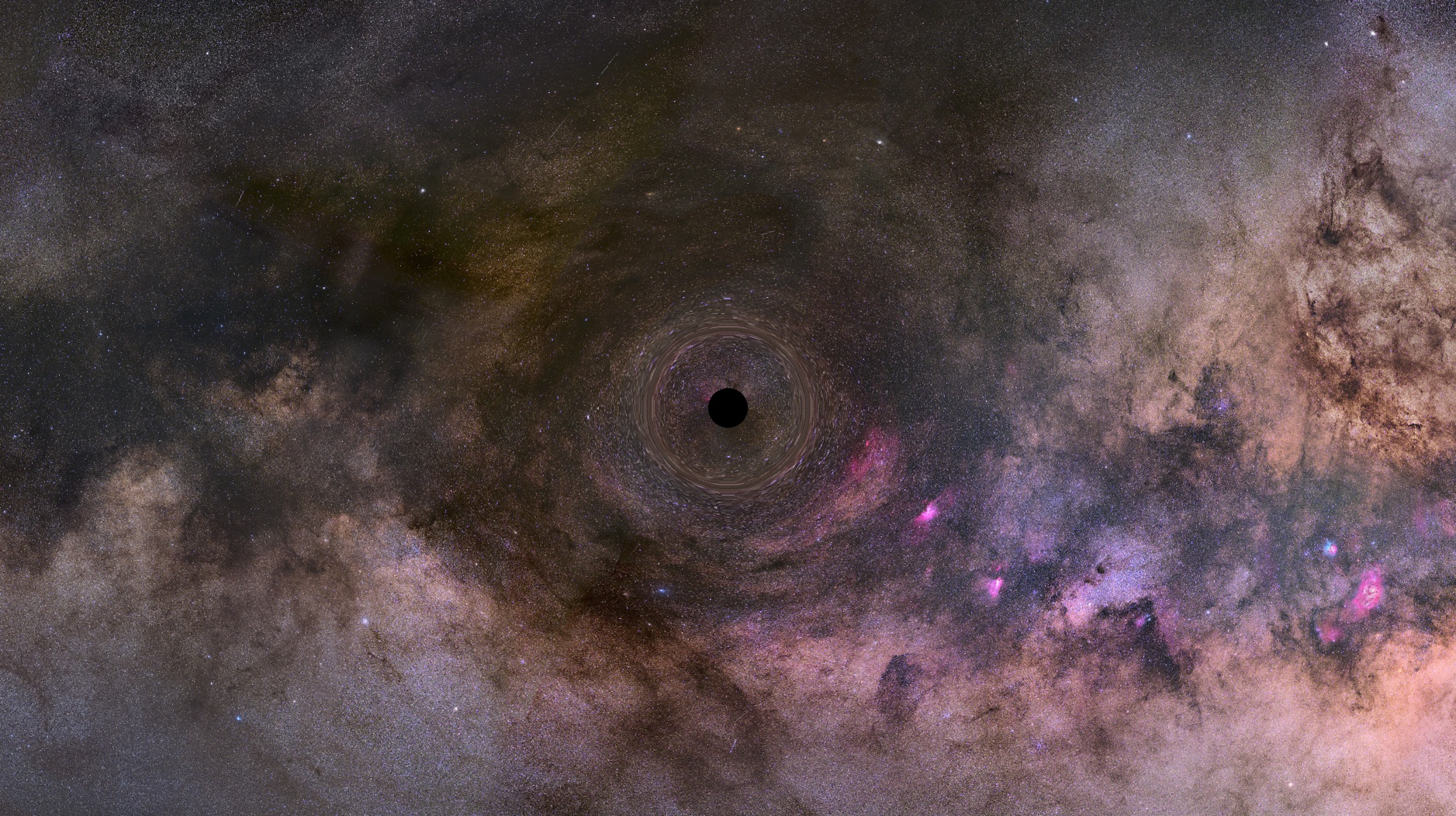
One of astrophysics' most vexing questions has been how black holes grow as fast they do, and how they form across the universe in the first place. To find the answer, an international team, led by University of Arizona researchers, used machine learning (ML) and supercomputers to reconstruct the growth histories of these behemoths.
Peter Behroozi, an associate professor at the University of Arizona Steward Observatory and a project researcher at the National Astronomical Observatory of Japan, together with Haowen Zhang, a doctoral student at Steward, led the international team to create simulations of millions of computer-generated "universes", revealing that supermassive black holes grow in lockstep with their host galaxies.
The team developed a platform called Trinity that uses a novel form of machine learning capable of generating millions of different universes on a supercomputer, each obeying different physical theories for how galaxies should form.
In the next step, they built a framework in which computers propose new rules for how supermassive black holes grow over time and then used those rules to simulate the growth of billions of black holes in a virtual universe and observed the virtual universe to test whether it agreed with decades of actual observations of black holes across the real universe.
Even though no individual black hole's history could be reconstructed, the researchers could measure the average growth history of all black holes taken together.
"If you put black holes into the simulated galaxies and enter rules about how they grow, you can compare the resulting universe to all the observations of actual black holes that we have. We can then reconstruct how any black hole and galaxy in the universe looked from today back to the very beginning of the cosmos," Zhang said in a statement.
"I think the really original thing about Trinity is that it provides us with a way to find out what kind of connections between black holes and galaxies are consistent with a wide variety of different datasets and observational methods," he added.


 Google News