

Science News Roundup: Nobel physics prize goes to trio who lit up secrets of the atom; China offers to collaborate on lunar mission as deadlines loom and more
Russia's first moon mission for 47 years ended in failure on Aug. 19 with the crash of its Luna-25 spacecraft, dashing Moscow's hopes of beating India to the unexplored south pole of the moon.
Following is a summary of current science news briefs.
China offers to collaborate on lunar mission as deadlines loom
China, which aims to become a major space power by 2030, has opened up a key lunar mission to international cooperation as mission deadlines loom for setting up a permanent habitat on the south pole of the moon. China welcomes countries and international organisations on its uncrewed Chang'e-8 mission and to jointly carry out "mission-level" projects, the China National Space Administration (CNSA) said at the 74th International Astronautical Congress in Baku, Azerbaijan, on Monday.
Hungarian and US scientists win Nobel for COVID-19 vaccine discoveries
Hungarian scientist Katalin Kariko and U.S. colleague Drew Weissman, who met in line for a photocopier before making mRNA molecule discoveries that paved the way for COVID-19 vaccines, won the 2023 Nobel Prize for Medicine on Monday. "The laureates contributed to the unprecedented rate of vaccine development during one of the greatest threats to human health in modern times," the Swedish award-giving body said in the latest accolade for the pair.
Russia pinpoints cause of moon shot failure, looks to bring next missions forward
Russia on Tuesday blamed a malfunction in an on-board control unit for causing its lunar lander to crash into the moon in August, and said it was looking at speeding up the timetable for two further missions. Russia's first moon mission for 47 years ended in failure on Aug. 19 with the crash of its Luna-25 spacecraft, dashing Moscow's hopes of beating India to the unexplored south pole of the moon. An Indian spacecraft landed there on Aug. 23.
Avio's Vega C rockets to fly again in late 2024 after ESA recommendations
Italy's Avio said on Monday its Vega C rockets would return to flight in late 2024 after implementing fixes recommended by an independent panel set up by the European Space Agency (ESA) following a failed satellite launch. An Arianespace mission on Dec. 20 carrying two Airbus Defence & Space satellites failed around two and a half minutes into flight when an anomaly occurred with the Zefiro 40 motor used by the Vega C rockets.
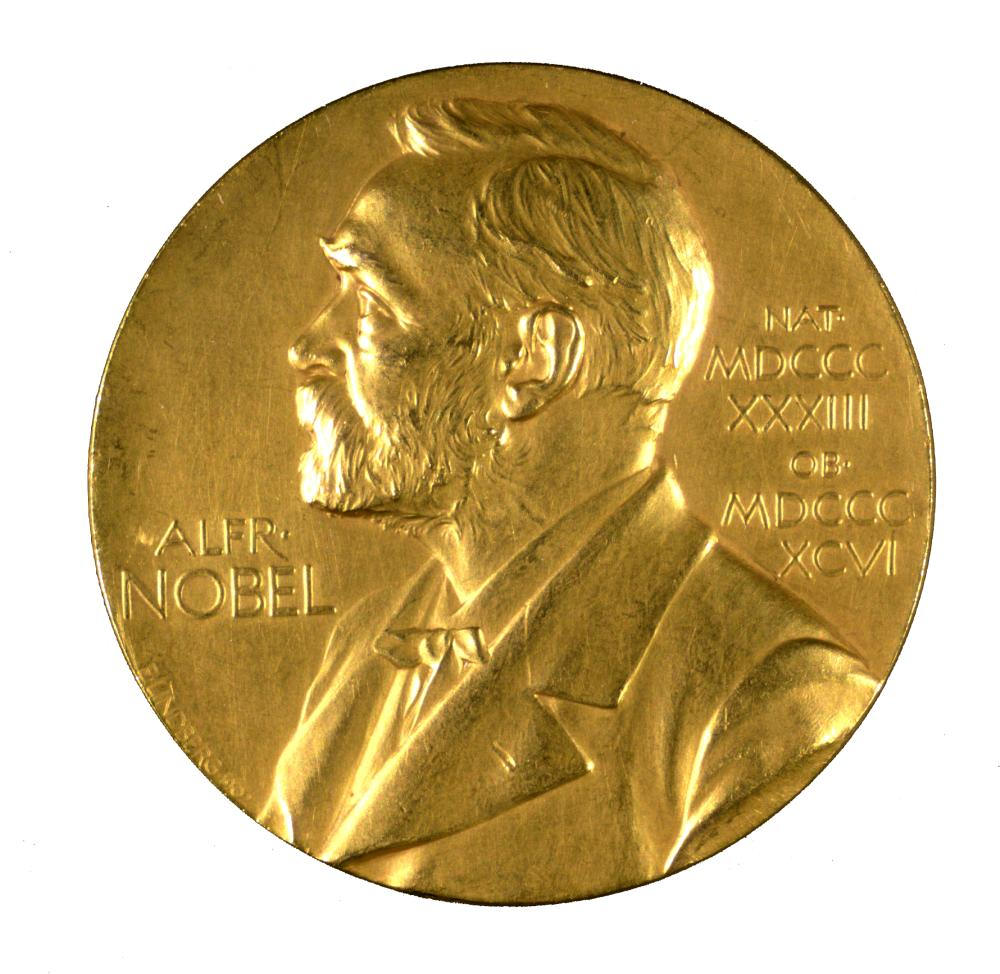
Nobel physics prize goes to trio who lit up secrets of the atom
Scientists Pierre Agostini, Ferenc Krausz and Anne L'Huillier won the 2023 Nobel Prize in Physics for creating ultra-short pulses of light that can give a snapshot of changes within atoms, potentially leading to better detection of disease. The prize-awarding academy said their studies had given humanity new tools for exploring the movement of electrons inside atoms and molecules, a phenomenon that was long thought impossible to trace.
ALSO READ
-
"Sheer opportunism, politics of deception": Congress slams BJP-SAD reunion in Punjab
-
Sir Gurdip Dev Bath Receives Special Recognition at BAMFA 2026 in London
-
"Shared cultural heritage a strong bridge connecting SCO nations": Union Minister Gajendra Shekhawat
-
"India-Japan cooperation seeks to support a multipolar Asia, multipolar world": Jaishankar at 4th 2+2 ministerial dialogue
-
India and Azerbaijan explore new avenues to deepen cultural cooperation


 Google News