

CREWS Expands Lifesaving Early Warnings for Millions in Climate-Vulnerable Nations
Since its inception, CREWS has extended life-saving early warning systems to 397.6 million people across 77 countries, more than a third of which are affected by conflict or fragility.
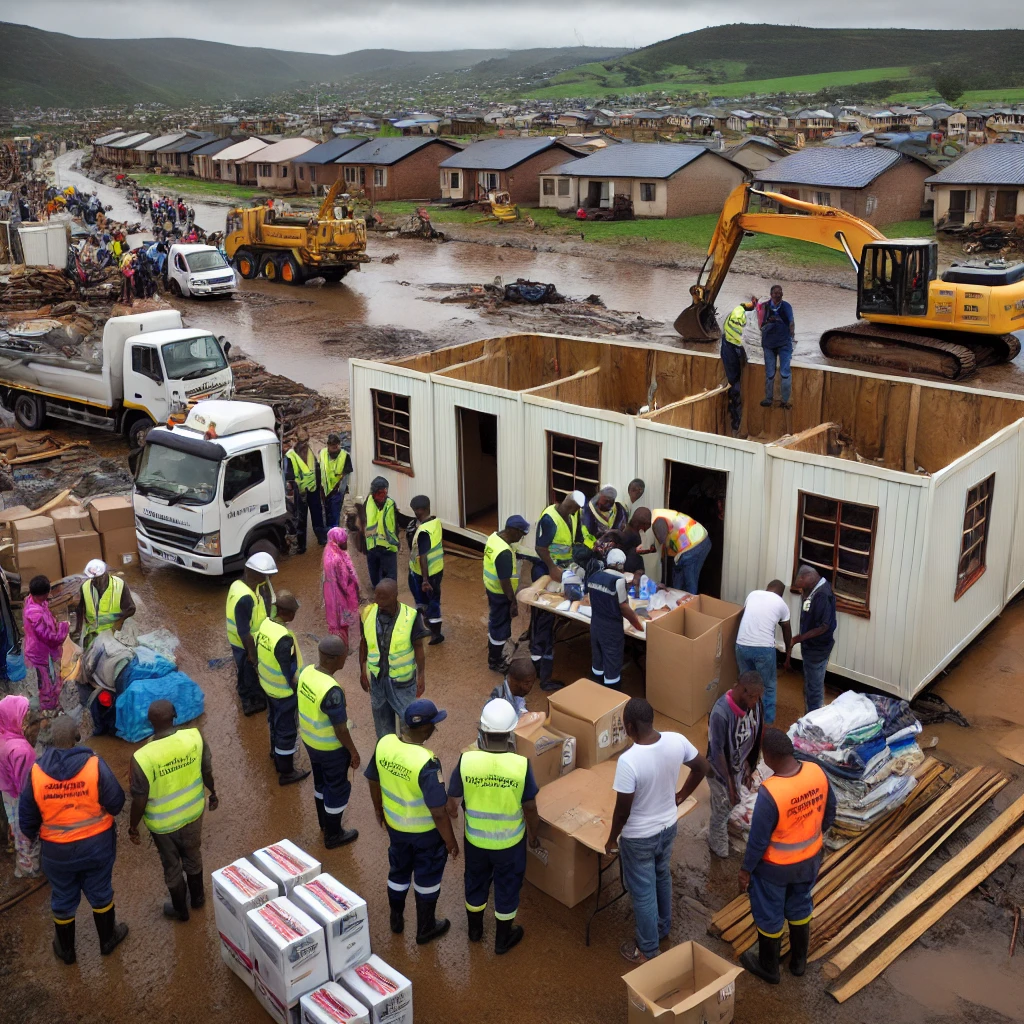
The Climate Risk and Early Warning Systems (CREWS) Initiative continues to prove itself as a global cornerstone for climate resilience, delivering critical early warning systems to some of the world's most vulnerable populations. The recently launched 2024 CREWS Annual Report, titled "Achieving with Confidence – Navigating Uncertainty," highlights the initiative's achievements and growing impact despite mounting global challenges.
Unveiled during the Global Early Warnings for All Multi-Stakeholder Forum, the report underscores how CREWS has enhanced access to climate and hazard forecasts for millions in Least Developed Countries (LDCs) and Small Island Developing States (SIDS)—regions disproportionately affected by climate change, weather extremes, and socio-economic vulnerabilities.
Transformative Reach Since 2015
Since its inception, CREWS has extended life-saving early warning systems to 397.6 million people across 77 countries, more than a third of which are affected by conflict or fragility. These systems not only provide forecasts but also actionable alerts that help communities prepare for extreme weather, including floods, droughts, and cyclones—reducing disaster-related mortality and economic losses.
CREWS is also a pivotal part of the UN Secretary-General's Early Warnings for All initiative, which seeks to ensure that everyone on Earth is protected by early warning systems by 2027.
"We all share the same vision of inclusive, accessible, and actionable early warning systems. It is a moral obligation, and it makes economic sense. Early warnings work. We must make them work for everyone, everywhere," said Celeste Saulo, Secretary-General of the World Meteorological Organization (WMO), a key implementing partner of CREWS.
2024 Milestones and Regional Highlights
With $23.5 million contributed in 2024 and $929.2 million leveraged in resources since 2015, CREWS continues to scale impact through regional and national programs across Africa, Asia-Pacific, and the Caribbean.
Africa (39 countries):
-
Ethiopia: Forecast-based financing systems help deliver aid before disasters.
-
Chad: Capacity-building for national meteorological services.
-
Malawi: Launch of a National Framework for Climate Services.
-
Mozambique: Early Warning for All roadmap developed.
-
Seychelles: New strategic planning to strengthen climate risk readiness.
Asia-Pacific (20 countries):
-
Cambodia: Community-based flood management programs implemented.
-
Afghanistan: Installation of new flash flood and weather warning systems.
-
Regional: Support for national and village-level disaster risk reduction plans.
Caribbean (17 countries and territories):
-
Haiti and Belize: Strengthening national meteorological services and warnings.
-
Caribbean 2.0 Program: A regional approach to integrated climate risk resilience.
Financing and Partnerships
To meet growing demand, CREWS needs an additional $78.8 million in funding. Its core financing members include Australia, Austria, Canada, Finland, France, Germany, Luxembourg, Monaco, Netherlands, Norway, Switzerland, and the United Kingdom.
CREWS operates through a collaboration of world-class institutions:
-
WMO (World Meteorological Organization)
-
World Bank/Global Facility for Disaster Reduction and Recovery
-
UN Office for Disaster Risk Reduction (UNDRR)
"The highlights featured in this report show we can be increasingly confident in CREWS' impact, in our use of learning, in the strength and depth of our partnerships and in our value offer in a rapidly evolving and uncertain context," said Gerard Howe, outgoing Chair of the CREWS Steering Committee and Head of the Climate Resilience Department at the UK Foreign, Commonwealth and Development Office.
New Frontiers: Digital Access and Global Dialogue
The 2024 edition of the CREWS Annual Report marks a technological milestone with the release of its first interactive digital version, expanding access and engagement worldwide. The launch also featured video highlights and a presentation of the Anticipation Hub 2024 Global Overview Report, which tracks proactive disaster preparedness trends globally.
At the launch event, remarks were delivered by several global figures:
-
Celeste Saulo, Secretary-General of WMO
-
Kamal Kishore, UN Special Representative for Disaster Risk Reduction
-
Guangzhe Chen, World Bank Vice President for Infrastructure
-
Francis Pigeon, incoming Chair of the CREWS Steering Committee
Looking Ahead
As the climate crisis intensifies, CREWS stands at the forefront of the international community's efforts to ensure no one is left behind in the face of escalating disasters. Its work is not only saving lives but also enhancing livelihood resilience, strengthening governance, and building local capacities to adapt to a rapidly changing world.
With the 2027 Early Warning for All target looming, CREWS is poised to lead the charge—one forecast, one alert, and one life at a time.
ALSO READ
-
World Bank Approves $110 Million to Rebuild Sri Lanka’s Cyclone-Hit Roads and Lives
-
Vienna’s Vegetable Garden Shows Why Local Voices Matter in Climate Adaptation Plans
-
ITU and WMO urge spectrum protection to keep weather forecasts and warnings reliable
-
ADB’s Five-Year Plan Backs Better Services and More Jobs Across Papua New Guinea
-
Mongolia Secures $100 Million ADB Loan to Strengthen Disaster Readiness


 Google News