

Dollar falls against major peers, euro gains at two-week high
The dollar index, a measure of the greenback against a basket of its major rivals, fell 0.2 per cent in early trading to hit a two-week low of 95.902.
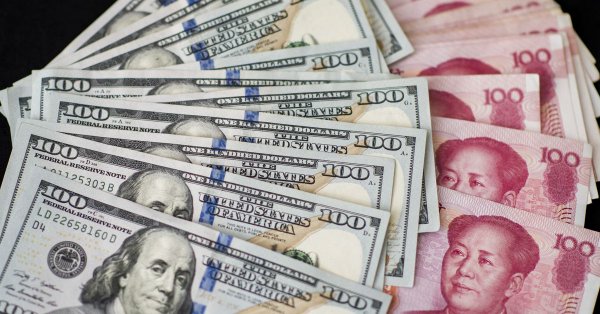
The dollar was down against the euro and yen on Wednesday on investor caution as traders awaited U.S. midterm election results for implications on Washington's broader economic and political agenda.
The U.S. currency has outperformed most of its key rivals this year, benefiting from a robust domestic economy and higher interest rates. Investors are focused on whether congressional elections could disrupt the stellar run of the world's most liquid currency.
The Democratic Party is expected to win control of the U.S. House of Representatives, with Republicans seen likely to keep their majority in the Senate.
"If the Democratic Party wins both houses, sentiment will turn risk off, so we'll see a strong dollar and strong yen," said Yukio Ishizuki, senior currency strategist at Daiwa Securities.
"If that does not happen, the dollar will likely strengthen against the yen and sold somewhat against other currencies. It will be risk on, at least temporarily," he said.
The dollar index, a measure of the greenback against a basket of its major rivals, fell 0.2 per cent in early trading to hit a two-week low of 95.902.
The euro gained 0.3 per cent at a two-week high of $1.1459. The single currency changed hands about 1.4 per cent above this year's trough of $1.1301 reached on Aug. 15.
The dollar also fell on the day against the yen, a safe haven sought in times of turmoil and economic stress.
The greenback last traded down 0.4 per cent at 113.01 yen but remained not far off a four-week high of 113.385 yen scaled last week.
A split Congress may hurt the dollar temporarily: a Democratic win in one or both chambers is likely to be seen as a repudiation of President Donald Trump and the policies which have boosted corporate growth.
That, in turn, may lift emerging market currencies which have been hurt this year by rising U.S. interest rates, in particular currencies of countries running big external imbalances, such as Turkey and Argentina.
The Australian dollar rose 0.1 per cent to $0.7252, adding to two days of gains.
The Aussie was 3.3 per cent above a more than 2-1/2-year trough of $0.7018 touched on Oct. 28.
The pound was 0.2 per cent higher at $1.3134, coming off slightly after hitting a three-week high of $1.3140.
On Tuesday, sterling slipped as low as $1.3023 before erasing the losses in volatile trading, on growing hopes of a Brexit deal breakthrough.
ALSO READ
-
Same Medical Research, Different Conversations: Clinical Trials on Bluesky and X
-
Prospects of a New Summit: South Korean Optimism Amid Uncertainty
-
Nomination Turbulence: White House Withdraws Jeffrey Anderson for ICAO Post
-
Potential EU Partnerships Stir International Debate
-
Trump's Rate War with the Fed: A High-Stakes Economic Drama


 Google News