

Lebanon’s Health System Under Severe Strain as Conflict Escalates, WHO Warns
Lebanon’s healthcare sector—already weakened by years of economic instability and previous crises—is now grappling with compounding challenges.
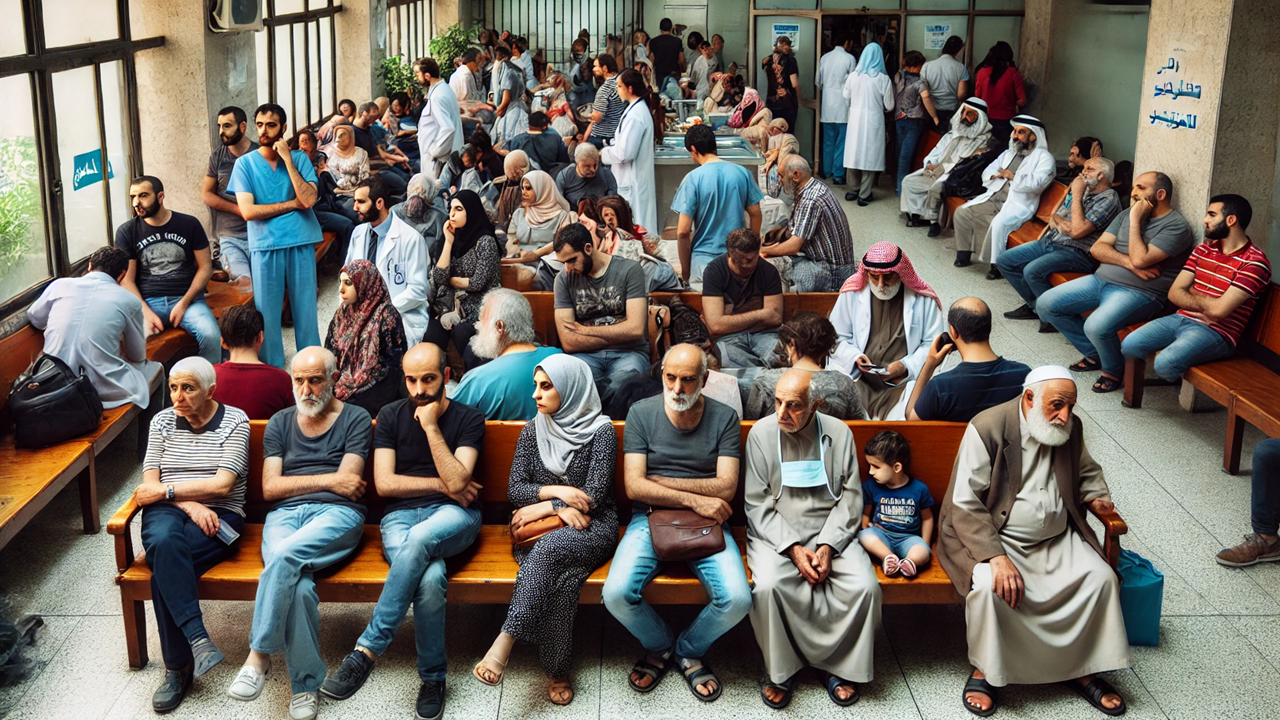
Lebanon's fragile health system is continuing to operate under extreme pressure from ongoing conflict, mass displacement and repeated attacks on medical infrastructure, but global health authorities warn that without urgent international intervention, access to essential services could soon deteriorate sharply.
Following a high-level three-day mission to the country, Dr Chikwe Ihekweazu, Executive Director of the World Health Organization's (WHO) Health Emergencies Programme, issued a stark assessment: resilience alone may no longer be enough to sustain the system amid escalating crises.
"The dedication of frontline health workers and the resilience of affected communities are extraordinary," Dr Ihekweazu said. "But the system is under continuous shock. Without sustained support, it is uncertain how long it can continue to function."
Mounting Pressure on a Fragile System
Lebanon's healthcare sector—already weakened by years of economic instability and previous crises—is now grappling with compounding challenges. Since early March 2026, the country has recorded 92 attacks on healthcare, resulting in 137 injuries and 53 deaths, according to WHO data. These incidents have targeted hospitals, ambulances and medical personnel, significantly disrupting service delivery.
The consequences are visible across the country. At Rafik Hariri University Hospital, Beirut's largest public facility, emergency admissions have surged threefold following the closure of hospitals in heavily affected southern suburbs. Overcrowding, supply shortages and staff fatigue are stretching capacity to its limits.
Emergency Support and Critical Supplies
In response, WHO has scaled up its emergency operations in coordination with Lebanon's Ministry of Public Health and humanitarian partners. A recent convoy of four trucks delivered critical medical supplies on 1 April, including trauma kits and specialized medicines sufficient to treat 50,000 patients, among them 40,000 requiring surgical interventions.
WHO's support extends beyond logistics. The agency is:
-
Training healthcare workers in emergency response
-
Strengthening the Public Health Emergency Operations Centre
-
Coordinating nationwide health interventions
-
Enhancing disease surveillance systems, particularly in displacement settings
These measures are helping to temporarily stabilise services, but officials caution that needs are rapidly outpacing available resources.
Displacement Deepens Health Risks
The humanitarian toll of displacement is intensifying public health risks. Thousands of families are now living in overcrowded collective shelters, where access to clean water, food and healthcare is limited.
During his visit, Dr Ihekweazu observed first-hand the conditions in these shelters and highlighted the heightened vulnerability to disease outbreaks. Surveillance systems are being reinforced to detect and respond to illnesses quickly, but challenges remain significant.
"The message from displaced families is clear—they want to return home," he said. "But until that becomes possible, ensuring basic health services and disease prevention is critical."
Call for Protection of Health Care
WHO has strongly condemned attacks on healthcare infrastructure, reiterating that such actions violate international humanitarian law.
"Health care must never be a target," Dr Ihekweazu stressed. "Facilities, workers, patients and transport must be actively protected at all times."
The continued targeting of health services not only causes immediate casualties but also undermines long-term system functionality, reducing access for entire populations.
Urgent Funding Appeal
To address escalating needs, WHO has launched a US$30 million Flash Appeal for the next six months across the region, including US$10 million specifically for Lebanon. The funding will support emergency care, essential medicines, workforce support and public health interventions.
Dr Abdinasir Abubakar, WHO Representative in Lebanon, emphasized that while past investments in preparedness have helped sustain the system so far, the current crisis requires sustained global engagement.
"The resilience we are seeing today is the result of years of collaboration," he said. "But without immediate and continued funding, continuity of care—especially for vulnerable populations—cannot be guaranteed."
A System at a Crossroads
Lebanon's health system now stands at a critical juncture. While it continues to function against the odds, the convergence of conflict, displacement and resource constraints is pushing it toward a tipping point.
WHO officials stress that humanitarian aid alone cannot provide a long-term solution. A durable resolution to the conflict remains essential to safeguarding health services and protecting lives.
"Ultimately, what Lebanon needs is peace," Dr Ihekweazu concluded. "Only then can its health system recover, rebuild and truly serve its people without interruption."


 Google News