

Syria: Urgent response needed to uptick in fighting, economic crisis
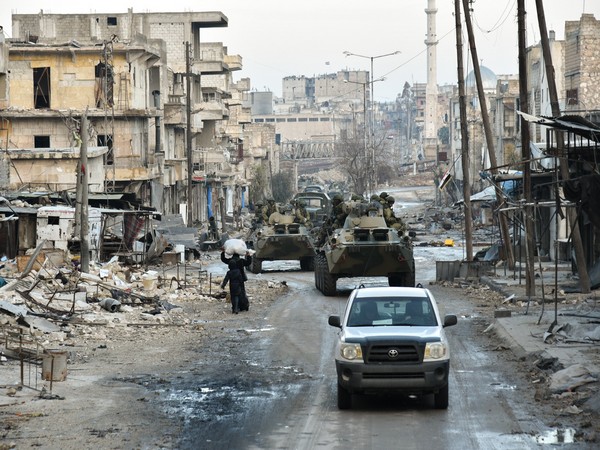
The "dire needs" of Syrians have been systematically ignored during more than 12 years of brutal conflict in the country, the U
The UN World Food Programme (WFP) said on Tuesday that a historic funding shortfall was forcing it to "drastically" cut rations in most of its operations, potentially pushing an additional 24 million people to the brink of starvation over the next 12 months.
With a funding gap of over 60 per cent, WFP's chief economist Arif Husain said the organization had "never seen this type of shortfall" in its 60-year history.
As contributions decline but needs rise, the UN agency said "massive reductions" have already been implemented in almost half of its operations.
The latest analysis from the agency shows every one per cent cut in food assistance pushes 400,000 people into emergency hunger.
The lack of funding comes at a time of massive jump in needs which started with the COVID-19 pandemic and compounded by the war in Ukraine.
Some 345 million people in the world already face acute food insecurity; this includes 40 million suffering emergency levels of hunger and at risk of dying from malnutrition. This number has doubled since 2020.
"With the number of people around the world facing starvation at record levels, we need to be scaling up life-saving assistance – not cutting it," said WFP Executive Director Cindy McCain.
Hunger hotspots
Cuts have already been felt across many of the 79 WFP operations globally including Afghanistan, Bangladesh, Democratic Republic of Congo (DRC), Haiti, Jordan, Palestine, South Sudan, Somalia and Syria.
This year, 10 million people have lost support from the agency across Afghanistan – whilst more than one-third of the population still go to bed hungry every night.
Due to a series of consecutive rations cuts, the UN agency will only be able to support three million people per month across the country from October.
In Syria, 5.5 million people who relied on WFP for food were already on 50 per cent rations and in July the agency subsequently cut all rations by half again.
The agency says the ripple effects of these cuts in life-saving aid will cause emergency levels of hunger to "skyrocket even higher."
Funding cuts
Explaining the reasons for such a drastic drop in resources, the WFP said funding from traditional donors is insufficient.
With a 41 per cent drop in funding, donor fatigue and spending on the COVID-19 pandemic are also contributing factors.
According to Mr. Husain, matters are made worse as lower-income buckle under the burden of record high levels of debt, resulting in an inability to purchase essential food.
He underscored the need to broaden WFP's donor base and to address the root causes of the rise in global hunger, such as the impact of conflict, insecurity and climate change.
"If we don't address the root causes why should the situation change," he emphasised.
The doom loop
Last year, the UN agency reached a record number of 160 million people, stabilising many situations of hunger and famine globally. This was with 41 per cent more funding than is currently available for this year.
This level of assistance delivered means that for now "the number of people who are in crisis level or worse hunger situations, is relatively stable," according to Mr. Husain.
"If that assistance goes away in a drastic way, that means we will start to see additional suffering."
As needs increase due to economic shocks, conflict and climate extremes, 783 million people globally are unsure of where their next meal is coming from.
Experts at WFP fear that a humanitarian 'doom loop' is being triggered, where the UN agency is being forced to save only the starving, "at the cost of the hungry."
Mr. Hussain warned that unless there is investment in early response and community resilience "we continue the cycle of emergency to emergency."
"We are saving the same lives again and again and again."
N Commission of Inquiry on Syria warned on Tuesday. In its latest report, the UN Human Rights Council (OHCHR) body found that attacks on civilians, escalating fighting, economic decline and human rights violations persist, despite the country's re-admission to the League of Arab States. The continued war in Syria is a "monument to the failure of diplomacy" said Inquiry Chair, Paulo Pinheiro. Speaking in Geneva at the launch of the report, Mr Pinheiro called on all parties to the conflict to cease the attacks on civilians following the recent wave of demonstrations. He urged the government in Damascus to respond positively to Syrians' legitimate aspirations and rights before the country "plunges deeper into escalating violence and economic decline". ## **Aftermath of earthquake** The Commission Chairperson reiterated the need for "unilateral coercive measures" imposed by the European Union, the United States, Canada, Australia, and Switzerland from 2011 onwards, to be reviewed, and called for the easing of sanctions since the earthquake on 6 February 2023 to be maintained. He pointed out that at the time of the earthquake, the Commission received "multiple reports of aid diversion, extortion and corruption," and documented "obstruction and interference in aid delivery" in the immediate aftermath of the earthquake. The "Government and other parties needless hindered life-saving aid" and "no party answered our call for a cease-fire. They continue shelling and they continue the war", Mr Pinheiro said. Citing the report, Mr Pinheiro explained that a single airstrike on 25 June killed or injured over 37 civilians at an outdoor vegetable market in Idlib that should have been observable to the offensive forces. He added that of the 15 attacks documented in the earthquake-affected area, several may constitute war crimes. Tweet URL > UN_HRC ## **Airstrikes** According to the report, humanitarian operations were also affected by suspected Israeli airstrikes that rendered key transport infrastructure inoperable. "These instances, as well as the failure of the UN Security Council to reach a consensus in July to extend cross-border aid deliveries via the Bab Al-Hawa border crossing, stand as a stark reminder of how hostilities, politicisation and fragmentation in Syria harm civilians and deprive them of much-needed assistance," Commissioner Lynn Welchman said. Calling for a thorough review of the failures of the earthquake response," she urged warring parties and the international community to ensure that cross- border humanitarian assistance can continue at the necessary scale and in a principled, needs-based and sustainable manner". ## **Displaced** Meanwhile, the UN aid coordination office (OCHA) found that continued hostilities, including shelling, have displaced some 5,300 families, which is more than 26,500 people, between 1 and 9 September. Clashes in northeastern Aleppo forced nearly 4,600 families from their homes and there are reports of overcrowding in camps and villages, with some families resorting to sleeping in the open. As of 9 September, at least five people were killed, with 22 others, including 11 children, injured. While the situation in Deir-ez-Zor Governorate, in Syria's northeast Syria, is calm, hostilities since 27 August have reportedly resulted in 69 deaths and 96 injuries. More than 6,700 families have been displaced according to Syrian Arab Red Crescent. ## **Safe return 'implausible'** The Commission also documents how recent weeks have seen increased conflict in greater Idlib, displacing thousands, and killing dozens in Deir-Ezzor, as well as an outbreak of large-scale protests calling for economic, social, civil and political rights in Government controlled-areas, notably Suweida. It warns that beyond the frontlines, the safe return of Syrian refugees is implausible with cases of ill-treatment by Syrian security forces, including some blackmailed for their release. Several refugees, including children, have since gone missing, it states. Arbitrarily detaining, torturing, forcibly disappearing and executing civilians in areas under their control is a war crime and crime against humanity the Commission points out, while calling for the release of all persons arbitrarily detained in Syria. In a positive development, Mr Pinheiro noted that families seeking clarity on the fate of detained, disappeared and missing loved ones had received "long- awaited welcome news" following the establishment of the Independent Institution on Missing Persons in Syria by the General Assembly in June. ## **No peace** Commenting on the impact on ordinary Syrians, Commissioner of the Inquiry, Hanny Megally described the experience of truffle gatherers in central Syria: "We're seeing an increase, [in] people fighting over economic needs and survival and that results in violence, abductions." People fighting over the truffle market is "an example of the country descending into that state of insecurity," he said.
Visit UN News for more.
ALSO READ
-
Equal Work, Fair Pay: New ILO Tool Helps Moldova’s Employers Uncover Wage Gaps
-
Potential EU Partnerships Stir International Debate
-
Canada's Cinematic Potential: Andrew Haigh Champions Alberta's Film Industry
-
Canadian Trade Minister Heads to India for Pivotal Economic Talks
-
Global Politics in Motion: Unpacking Recent Diplomatic Developments


 Google News