

UN Warns of Escalating Atrocity Crimes as Sudan Conflict Fuels Humanitarian Catastrophe
The report paints a grim picture of a country engulfed in atrocity crimes, severe humanitarian deprivation, and systemic violations of international law.
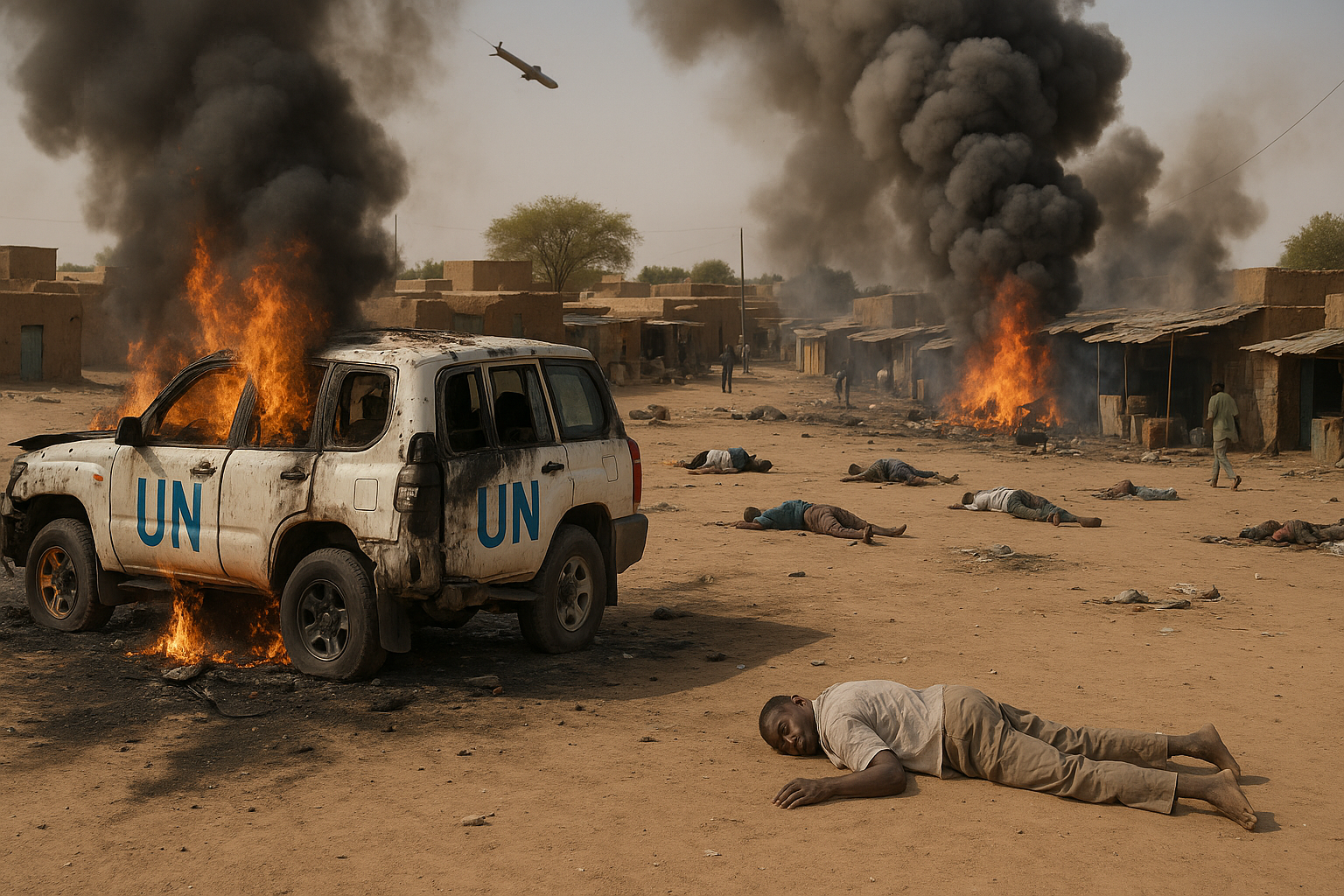
The conflict in Sudan has intensified dramatically in the first half of 2025, with the UN Human Rights Office documenting a steep rise in civilian killings, widespread summary executions, and growing ethnic violence. The report paints a grim picture of a country engulfed in atrocity crimes, severe humanitarian deprivation, and systemic violations of international law.
Rising Civilian Deaths
Between 1 January and 30 June 2025, at least 3,384 civilians were killed in Sudan, representing nearly 80% of all civilian casualties (4,238) recorded throughout the year. The UN stressed that the actual death toll is likely much higher given the challenges in verifying incidents in active war zones.
The vast majority of casualties occurred in Darfur, followed by Kordofan and Khartoum, regions that have been at the heart of the brutal fighting between the Sudanese Armed Forces (SAF) and the Rapid Support Forces (RSF).
-
70% of deaths (2,398) were the result of direct hostilities, including airstrikes, artillery shelling, and drone attacks in densely populated areas.
-
In March, SAF airstrikes on Tora market in North Darfur killed at least 350 civilians, among them 13 members of one family.
-
In April, an RSF offensive on El Fasher and surrounding areas left at least 527 civilians dead, including over 270 in displaced persons' camps at Zamzam and Abu Shouk.
Surge in Summary Executions
The report also records at least 990 unlawful killings outside active fighting, largely due to summary executions. These incidents surged between February and April, particularly after SAF recaptured territory from RSF forces in Khartoum.
One witness described SAF operations in East Nile, Khartoum, where children as young as 14 or 15 were accused of RSF affiliation and summarily killed.
The RSF also engaged in executions. Verified video footage from 27 April shows RSF fighters killing at least 30 civilians in Al Salha, Omdurman, many of whom appeared to be minors, after accusing them of siding with the SAF.
Sexual Violence as a Weapon of War
UN investigators found recurring patterns of conflict-related sexual violence, describing it as a deliberate weapon of war used alongside other grave abuses. Victims included women and girls from communities targeted for their ethnicity or perceived affiliations.
Attacks on Civilians and Humanitarian Collapse
The ongoing conflict has created the world's largest humanitarian crisis:
-
24.6 million people are facing acute food insecurity, with famine looming in several areas.
-
19 million lack access to safe water and sanitation, worsening the spread of disease.
-
A cholera outbreak continues to ravage already vulnerable communities.
In addition, civilian infrastructure has been systematically targeted. Markets, hospitals, energy grids, water supplies, and even humanitarian convoys have come under attack. At least 30 humanitarian and health workers were killed in the first six months of 2025, some in deliberate strikes.
Arbitrary Detention and Suppression of Civil Society
The report highlights widespread arbitrary detention, often based on ethnic profiling or accusations of collaborating with rival factions. Civil society leaders, humanitarian volunteers, and journalists have been among the victims. At least seven media workers were killed in the reporting period, contributing to an information blackout in parts of the country.
Risks of Ethnic Fragmentation
UN Human Rights Chief Volker Türk warned that Sudan's conflict is becoming increasingly ethnicised, feeding on deep-rooted discrimination and inequality. This trajectory, he cautioned, poses "grave risks for the long-term stability and social cohesion of the country."
He added: "Sudan's conflict is a forgotten one. Atrocity crimes, including war crimes, are being committed before our eyes. Impunity is fuelling endless cycles of violence — accountability is the only way forward."
A Call for Urgent International Action
The UN is urging the international community to confront the scale of Sudan's crisis, which has evolved into both a humanitarian catastrophe and a protection crisis. Türk stressed that without immediate intervention to protect civilians and ensure safe, unhindered humanitarian access, "many more lives will be lost."
Diplomatic efforts remain stalled, while humanitarian agencies face mounting restrictions. Analysts warn that unless global powers take coordinated action, Sudan risks descending further into mass atrocities comparable to the darkest chapters of its history.


 Google News