



Mahlobo Calls for Urgent Public–Private Coalition as SA’s Water Crisis Deepens
South Africa is increasingly facing structural water stress, with demand in key urban and industrial regions approaching or exceeding supply capacity.
- Country:
- South Africa
Water and Sanitation Deputy Minister David Mahlobo has issued a stark warning that South Africa’s water security is under growing strain from ageing infrastructure, climate variability, and rapid urbanisation, calling for an unprecedented level of collaboration across government, business, and communities to avert a deepening crisis.
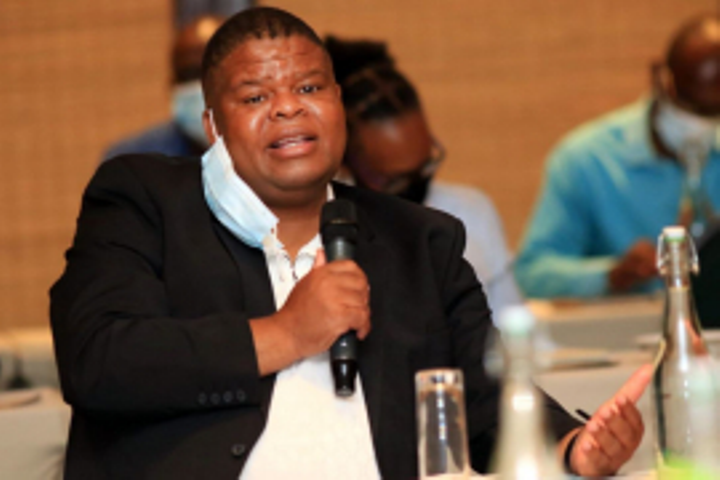
Speaking at the 2026 Future of Sustainability Conference in Johannesburg—held under the theme “Africa’s Green Horizon: Leading the Global Transition”—Mahlobo framed water security as one of the country’s most urgent and complex challenges, requiring systemic reform and coordinated action at all levels.
A System Under Pressure
South Africa is increasingly facing structural water stress, with demand in key urban and industrial regions approaching or exceeding supply capacity. Mahlobo highlighted that outdated infrastructure, in some cases decades old, is failing to keep pace with population growth and economic activity.
“The water challenges confronting South Africa are well known, but their seriousness demands that we confront them honestly,” he said.
Key drivers of the crisis include:
-
Ageing and poorly maintained infrastructure, leading to leaks, inefficiencies, and service disruptions
-
Climate variability, including prolonged droughts and shifting rainfall patterns
-
Rapid urbanisation, placing additional pressure on already strained systems
-
Pollution of rivers and water sources, reducing usable supply
-
Operational weaknesses in wastewater treatment, affecting both water quality and environmental health
-
Persistent inequality in access, particularly in rural and historically marginalised communities
Industry estimates suggest that non-revenue water—water lost through leaks, theft, or inefficiencies—remains above 40% in many municipalities, underscoring the scale of systemic inefficiency.
Breaking the Cycle of Fragmented Governance
Mahlobo strongly criticised what he described as a legacy of fragmented governance and siloed planning that has undermined effective service delivery.
“Water security requires alignment across government departments, municipalities, water boards, regulators, research institutions, and the private sector. The era of parallel planning without integrated execution must come to an end,” he said.
He called for a “coalition of capability” that integrates technical expertise, financing, policy alignment, and operational accountability—both domestically and through international partnerships.
Technology and Data at the Core of Reform
A central pillar of the Deputy Minister’s strategy is the adoption of data-driven systems and smart technologies to improve efficiency, transparency, and long-term sustainability.
“What gets measured gets managed, and what gets managed well gets sustained,” Mahlobo said, highlighting the need for:
-
Real-time monitoring of water systems
-
Predictive maintenance technologies
-
Digital tracking of water losses and usage
-
Improved data integration across institutions
Such tools, he noted, are essential for strengthening accountability and enabling evidence-based decision-making in a resource-constrained environment.
Diversifying Water Sources for Long-Term Resilience
Mahlobo emphasised that reliance on traditional surface water sources is no longer sufficient. Instead, South Africa must adopt a diversified and integrated water management approach, including:
-
Groundwater development to supplement supply in water-scarce regions
-
Wastewater reuse and recycling, particularly for industrial and agricultural use
-
Integrated urban water systems that optimise collection, treatment, and reuse across cities
These interventions are increasingly seen as critical to climate resilience and long-term water security, particularly as extreme weather events become more frequent.
Communities as Co-Creators of Sustainability
In a notable shift from traditional top-down approaches, Mahlobo stressed the importance of community participation in safeguarding water systems.
“Communities are not passive beneficiaries—they are co-creators of resilience,” he said.
He noted that engaged communities can:
-
Protect infrastructure from vandalism
-
Support water conservation efforts
-
Improve local accountability
-
Detect system failures early
-
Strengthen environmental stewardship
Behavioural change at the household and community level, he added, will be essential to reducing demand and ensuring sustainable usage.
Race Against Time: SDG 6 and the 2026 Water Year
With the United Nations declaring 2026 as the International Year of Water, Mahlobo reiterated South Africa’s commitment to ensuring universal access to clean water and sanitation—a constitutional right and a core component of Sustainable Development Goal 6 (SDG 6).
However, he acknowledged that progress remains off track, with less than four years left to meet global targets.
“We are not on track. The responsibility to act is immediate, and the consequences of inaction will be borne by future generations,” he warned.
A Defining Moment for Water Security
The Future of Sustainability Conference—established in 2011 through a partnership between Topco Media and the United Nations during COP17—has evolved into a key platform for advancing sustainability solutions across Africa.
Mahlobo’s address signals a critical inflection point: without urgent reform, investment, and collaboration, South Africa’s water challenges could escalate into a broader economic and social crisis.
“We are not doing this for ourselves alone—we are holding it for our children,” he concluded.
ALSO READ
Cybersecurity Breach Hits European Commission’s Cloud Infrastructure
Manipur Secures Major Boost in Rural and Agricultural Infrastructure as Centre Approves New KVKs, Explores Tissue Culture Lab
Historic Visit: Chief Justice of India Tours Ladakh for Judicial Infrastructure Strengthening
SA Eyes Expanded Infrastructure Partnership with China as Investment Ties Deepen
CSIR-CRRI Leads National Effort to Convert Foundry Waste into Sustainable Highway Infrastructure


 Google News