

Sebilong Celebrates Land Restitution as Paul Mashatile Hands Over Title Deeds in Limpopo
Friday’s ceremony drew hundreds of residents, community leaders, and government officials, transforming the quiet Waterberg locality into a focal point of national significance.
- Country:
- South Africa
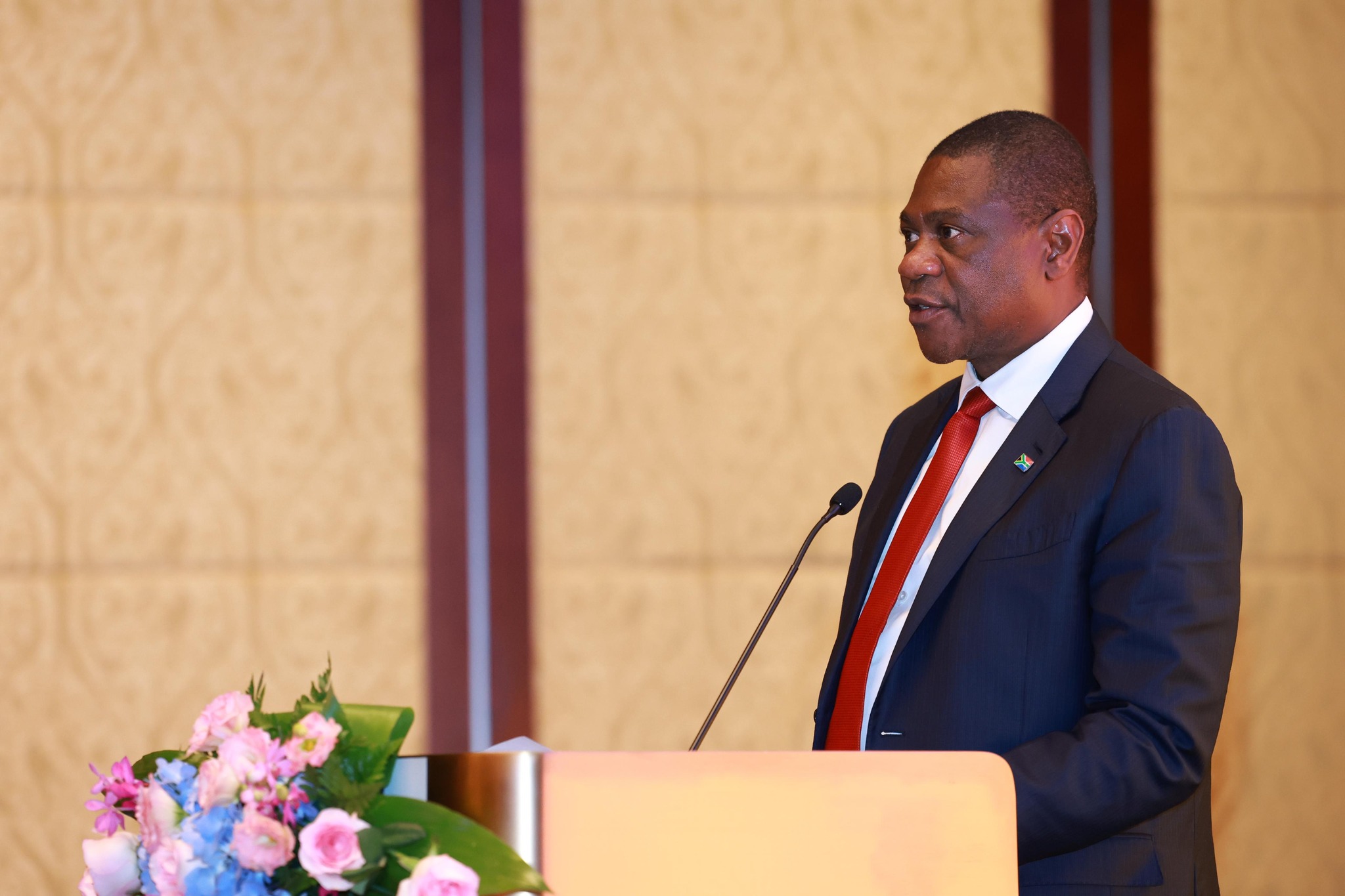
A wave of celebration and emotional reflection swept through the rural community of Sebilong, just outside Thabazimbi in Limpopo, as Deputy President Paul Mashatile officially handed over title deeds to beneficiaries of a long-awaited land restitution claim—marking a major milestone in South Africa's ongoing land reform programme.
Friday's ceremony drew hundreds of residents, community leaders, and government officials, transforming the quiet Waterberg locality into a focal point of national significance. For many in attendance, the event symbolised not only the restoration of land, but the restoration of dignity, identity, and generational justice.
The Sebilong land claim, lodged more than a decade ago with the Commission on Restitution of Land Rights, was spearheaded by Lazarus Nkale Tisane on behalf of 89 originally dispossessed households, representing a total of 1,071 verified beneficiaries. The claim covered Farm Zwartkop 369 KQ, comprising 21 portions within the Thabazimbi Local Municipality.
Following a rigorous verification and adjudication process, the claim was approved, with the community's Communal Property Association (CPA) opting for a hybrid settlement model that included both land restoration and financial compensation—an approach increasingly adopted to balance historical redress with immediate socio-economic needs.
Under the stewardship of the Department of Land Reform and Rural Development, led by Minister Mzwanele Nyhontso, more than 340,000 hectares of land have now been restored to the Sebilong community, positioning the area for renewed agricultural activity and local economic development.
Deputy President Mashatile, accompanied by members of the Inter-Ministerial Committee on Land Reform and Agriculture, Limpopo Premier Dr Phophi Ramathuba, and senior provincial and municipal leaders, described the handover as a testament to government's commitment to addressing the legacy of land dispossession.
"This moment reflects the progress we are making in restoring land to rightful owners and ensuring that communities are empowered to use these resources for sustainable development," officials said during the ceremony.
For community members, however, the moment carried deep personal significance—one shaped by years of perseverance, loss, and hope.
Anna Tisani, one of the beneficiaries, expressed both joy and sorrow as she reflected on the long journey to restitution.
"Although we are getting our land back, I am sad because some of the people we started this journey with have passed on. But I am happy that their families are still here and will benefit," she said.
Her sentiments were echoed by fellow resident Mido Moela, who highlighted the community's plans to utilise the restored land productively.
"We have been waiting for this day for a long time. It was not easy, but we made it. Our children are going to benefit from this land. We want to use it for ploughing and improving our livelihoods," Moela said.
Experts note that land restitution plays a crucial role in rural development, particularly when combined with post-settlement support such as agricultural training, infrastructure investment, and access to markets. In this regard, the Sebilong project is expected to contribute to food security, job creation, and local economic revitalisation in the Waterberg District.
Nationally, the Department of Land Reform and Rural Development has made substantial progress, having settled over 83,721 land claims to date. This has resulted in the transfer of approximately 3.9 million hectares of land to previously dispossessed individuals and communities—a significant step toward equitable land ownership.
Despite these gains, challenges remain, including ensuring that restored land is productively used and that beneficiaries receive adequate support to sustain livelihoods. Government has increasingly emphasized integrated development models that combine land access with financial, technical, and institutional support.
The Sebilong handover is being viewed as a model of successful restitution—demonstrating how coordinated efforts between government, communities, and stakeholders can deliver meaningful outcomes.
As the sun set over Thabazimbi, celebrations continued, with elders, youth, and families gathering on land that now officially belongs to them once again—a powerful reminder that land reform, while complex and often slow, remains central to South Africa's journey toward justice and inclusive growth.


 Google News