

ILO and JDE Peet’s Launch FAIR COFFEE Initiative to Combat Child and Forced Labour in Brazil
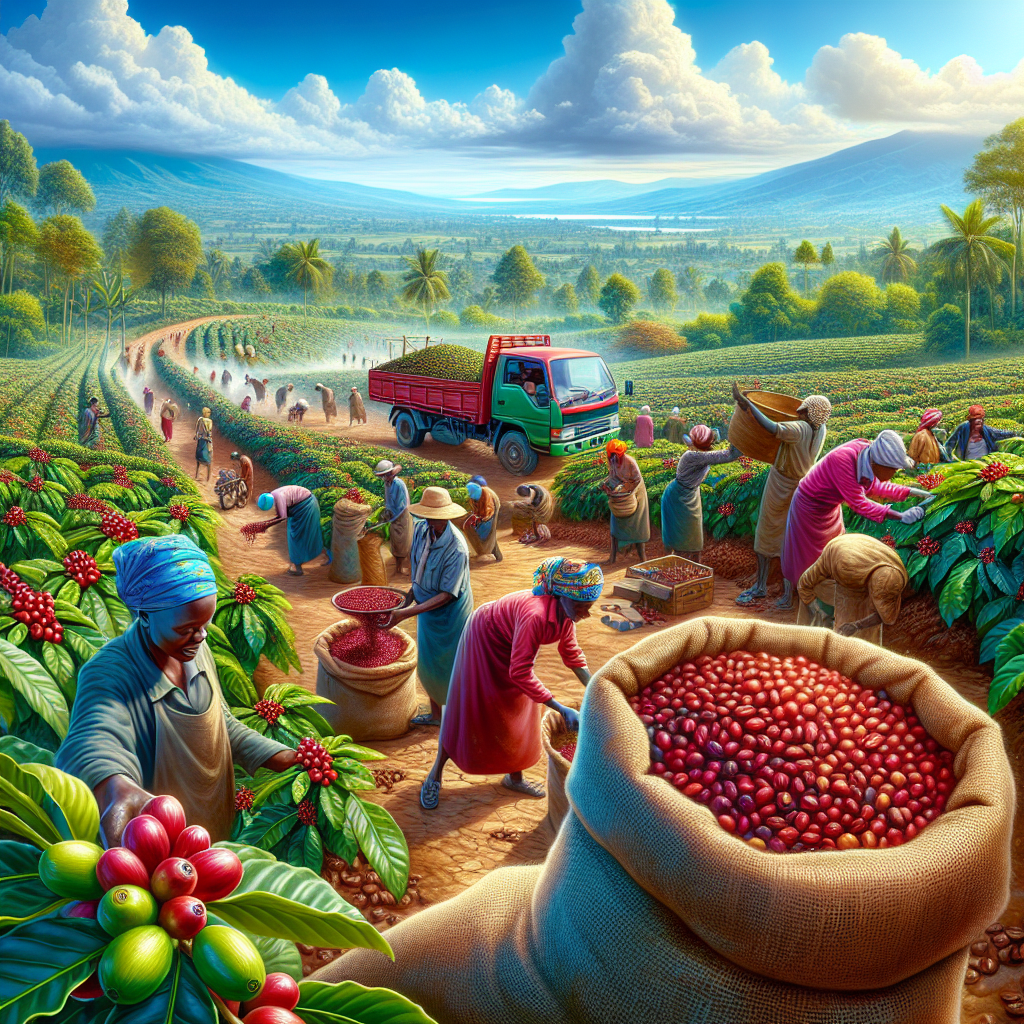
Coffee production remains one of Brazil’s most influential agricultural sectors, contributing significantly to national exports, employment generation, and rural development.
- Country:
- Brazil
The International Labour Organization (ILO) and global coffee company JDE Peet's have launched the FAIR COFFEE project, an ambitious four-year public-private partnership designed to strengthen labour rights, promote decent work, and address the risks of child labour and forced labour within Brazil's coffee supply chain.
The initiative marks a significant step toward improving working conditions in one of the world's most important agricultural industries. As the largest coffee producer and exporter globally, Brazil plays a critical role in supplying international markets, supporting millions of jobs and sustaining local economies across numerous rural regions. However, despite its economic significance, the sector continues to face labour-related challenges that require coordinated action from governments, businesses, workers, and civil society.
The FAIR COFFEE project aims to tackle these issues through research, institutional strengthening, fair recruitment practices, and the promotion of human rights due diligence throughout the coffee production process.
Brazil's Coffee Industry: A Global Economic Powerhouse
Coffee production remains one of Brazil's most influential agricultural sectors, contributing significantly to national exports, employment generation, and rural development. The industry supports millions of workers across farming, harvesting, processing, transportation, and export activities, making it a vital source of income for communities throughout the country.
Brazil accounts for a substantial share of global coffee production, supplying markets across Europe, North America, Asia, and other regions. The sector's success has helped strengthen rural economies and create opportunities for farmers, workers, and small businesses.
However, the industry's vast size and complex supply chains also present challenges. Labour shortages, seasonal migration, informal employment arrangements, and limited access to information about labour rights can create vulnerabilities that expose workers to exploitation and unsafe working conditions.
Addressing these structural issues has become increasingly important as consumers, governments, and businesses demand greater transparency and accountability within global agricultural supply chains.
Tackling Child Labour and Forced Labour Risks
One of the central objectives of the FAIR COFFEE project is to address the underlying conditions that can contribute to child labour and forced labour in agricultural production.
Although progress has been made in strengthening labour protections, experts acknowledge that vulnerabilities remain in certain rural sectors where workers may lack awareness of their rights or access to effective support systems.
Child labour continues to be a global concern in agriculture, where economic pressures can sometimes lead families to involve children in work activities that interfere with education or expose them to hazardous conditions. Similarly, forced labour risks can emerge when workers face deceptive recruitment practices, excessive debt obligations, restrictions on movement, or exploitative employment arrangements.
The new initiative seeks to reduce these risks by strengthening prevention mechanisms, promoting responsible business conduct, and improving oversight throughout coffee-producing regions.
Focus on Key Coffee-Producing Regions
The project will be implemented primarily in the Brazilian states of Bahia and Minas Gerais, two of the country's most important coffee-producing areas.
These regions are home to extensive coffee-growing operations that employ large numbers of workers during different stages of production. By focusing on these strategic locations, the project aims to generate practical lessons and scalable solutions that can later be applied across other coffee-producing regions.
Activities will involve collaboration with local authorities, employers, workers' organizations, producer groups, and community stakeholders to ensure interventions reflect local realities and needs.
Strengthening Social Dialogue and Institutional Capacity
A key feature of the FAIR COFFEE project is its emphasis on social dialogue, one of the ILO's core principles.
The initiative will leverage the ILO's tripartite approach, bringing together representatives of governments, employers, and workers to identify challenges, develop solutions, and promote shared responsibility for improving labour conditions.
Strengthening institutional capacity is expected to play a crucial role in ensuring long-term sustainability. Local institutions, labour authorities, and social partners will receive support to enhance their ability to prevent labour rights violations, monitor compliance, and respond effectively when concerns arise.
By fostering collaboration among stakeholders, the project aims to build stronger governance systems capable of addressing labour challenges across the coffee sector.
Building Knowledge on Labour Risks and Migration
One of the project's three main pillars focuses on expanding knowledge and evidence related to labour risks within the coffee supply chain.
Researchers and experts will examine patterns of internal labour migration, recruitment practices, and working conditions affecting seasonal and permanent workers. Understanding these dynamics is essential for identifying areas where workers may be vulnerable to exploitation or exclusion.
The evidence generated through this research will help policymakers, businesses, and labour organizations design more effective interventions and develop targeted strategies to improve worker protection.
Enhanced data collection and analysis will also contribute to greater transparency throughout the supply chain.
Promoting Fair Recruitment Practices
The second pillar of the FAIR COFFEE initiative focuses on strengthening local institutional networks and testing innovative fair recruitment models.
Fair recruitment is increasingly recognized as a critical component of responsible labour management. Ethical recruitment practices help ensure that workers are informed about employment conditions, are not charged excessive recruitment fees, and can access jobs without coercion or deception.
By piloting fair recruitment approaches in key coffee-producing regions, the project seeks to demonstrate how responsible hiring practices can reduce labour risks while benefiting both workers and employers.
The initiative will also support training and awareness-building activities to help employers adopt stronger workforce management systems and comply with international labour standards.
Advancing Human Rights Due Diligence
The third major pillar of the project centers on Human Rights Due Diligence (HRDD), a framework that enables businesses to identify, prevent, mitigate, and address adverse human rights impacts within their operations and supply chains.
As global regulations and consumer expectations evolve, companies are increasingly expected to demonstrate that their products are produced in ways that respect human rights and labour standards.
The FAIR COFFEE project will support the adoption of HRDD practices throughout Brazil's coffee supply chain, helping businesses strengthen risk assessment processes, improve transparency, and develop effective remediation mechanisms where necessary.
By integrating human rights considerations into business decision-making, the initiative aims to create more responsible and sustainable supply chains.
Private Sector Engagement Drives Change
JDE Peet's will play an active role in mobilizing private-sector participation throughout the project.
The company will support pilot initiatives, facilitate stakeholder engagement, and contribute resources and expertise aimed at improving labour practices across the coffee sector.
The partnership reflects a growing trend among multinational companies to collaborate with international organizations and local stakeholders to address social challenges within global supply chains.
Corporate involvement is increasingly viewed as essential for achieving meaningful and lasting improvements in labour conditions, particularly in sectors that rely on complex networks of suppliers and producers.
Supporting Global Efforts to Eliminate Labour Exploitation
JDE Peet's is also a member of the Child Labour Platform (CLP), a global initiative convened by the ILO that brings together businesses, employers' organizations, workers' groups, governments, and civil society actors to address child labour and forced labour risks.
The platform encourages collective action and knowledge sharing to help organizations develop practical solutions for eliminating labour exploitation across supply chains.
Through its participation in both the Child Labour Platform and the FAIR COFFEE project, JDE Peet's is contributing to broader international efforts aimed at promoting ethical sourcing and responsible business practices.
Contributing to the Sustainable Development Goals
The FAIR COFFEE project directly supports the achievement of the United Nations Sustainable Development Goals (SDGs), particularly Goal 8, which focuses on promoting sustained, inclusive and sustainable economic growth, full and productive employment, and decent work for all.
Of particular relevance is Target 8.7, which calls for immediate and effective measures to eradicate forced labour, end modern slavery and human trafficking, and eliminate child labour in all its forms.
By addressing labour risks, strengthening institutions, and promoting responsible business conduct, the project contributes to creating more equitable and sustainable agricultural supply chains.
Toward a More Ethical Coffee Industry
As consumers around the world become increasingly concerned about the social impact of the products they purchase, initiatives such as FAIR COFFEE are helping reshape expectations for ethical production and sourcing.
The partnership between the ILO and JDE Peet's demonstrates how collaboration between international organizations and private companies can generate practical solutions to complex labour challenges. Through research, social dialogue, fair recruitment, and human rights due diligence, the initiative seeks to ensure that coffee production supports not only economic growth but also dignity, fairness, and respect for human rights.
By strengthening protections for workers and addressing the root causes of labour exploitation, the FAIR COFFEE project has the potential to become a model for responsible agricultural supply chains worldwide.
ALSO READ
-
Africa’s Informal Workers Power Trade but Have Little Say in Rules Shaping Lives
-
Jordan’s Skills Recognition Programme Opens New Opportunities for Workers
-
Vietnam Rethinks Ageing as Jobs, Skills and the Care Economy Become Economic Priorities
-
Viet Nam Puts Older Workers at the Heart of a New Plan for Jobs, Skills and Care
-
Asturias Backs Women Care Workers in Cali With New ILO Community Support Agreement


 Google News