

The Great Carina Nebula: A nebula where some of the oddest things occur
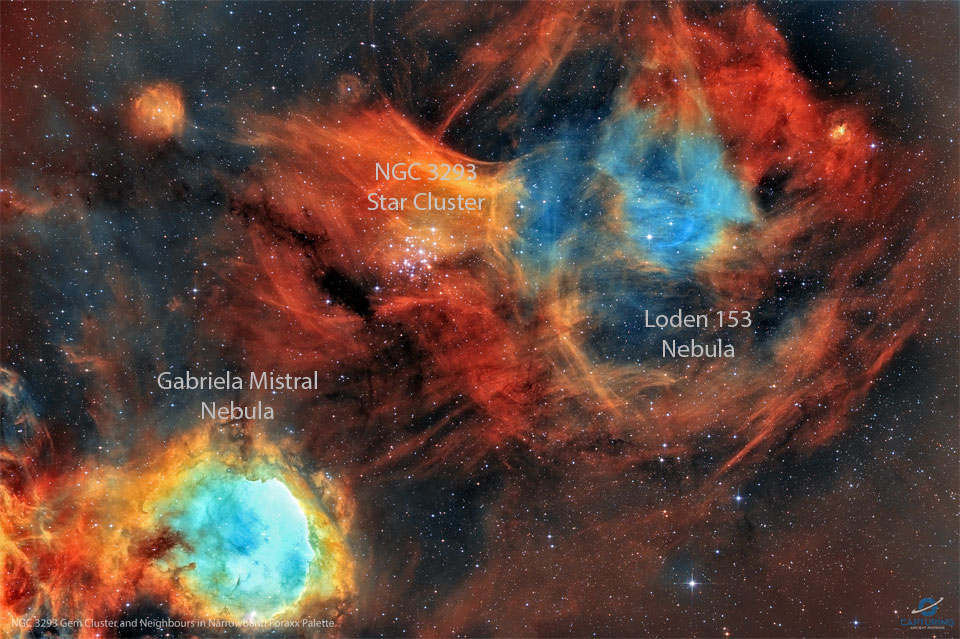
NASA's Astronomy Picture of the Day (APOD) features the northernmost part of the Great Carina Nebula - a large, bright nebula located 7,500 light-years away in the constellation Carina. The nebula is home to strange stars and iconic nebulas.
The Great Carina Nebula, also known as NGC 3372, spans over 300 light-years in the southern sky and is visible to the naked eye. The nebula is home to strange stars including Eta Carinae, a volatile system containing two massive stars that closely orbit each other.
Eta Carinae was once one of the brightest stars in the sky, with a mass estimated to be around 100 times that of the Sun and a luminosity over five million times greater than the Sun. It is a fascinating object for astronomers to study not only because of its past but also because it is expected to undergo a supernova explosion at some point in the future, which would be one of the most spectacular astronomical events in human history.
The above image by Carlos Taylor shows in great detail the Carina Nebula North. The picture was shared by NASA on the APOD website with the following explanation:
"The Great Carina Nebula is home to strange stars and iconic nebulas. Named for its home constellation, the huge star-forming region is larger and brighter than the Great Orion Nebula but less well known because it is so far south -- and because so much of humanity lives so far north. The featured image shows in great detail the northernmost part of the Carina Nebula. On the bottom left is the Gabriela Mistral Nebula consisting of an emission nebula of glowing gas (IC 2599) surrounding the small open cluster of stars (NGC 3324). Above the image center is the larger star cluster NGC 3293, while to its right is the emission nebula Loden 153. The most famous occupant of the Carina Nebula, however, is not shown. Off the image to the lower right is the bright, erratic, and doomed star known as Eta Carinae-- a star once one of the brightest stars in the sky and now predicted to explode in a supernova sometime in the next few million years."


 Google News