

Star's Fatal Dance: Black Hole Tango Ends in Explosive Supernova
Astronomers discovered a new type of supernova when a massive star's gravitational dance with a black hole ended catastrophically. The star exploded after years of losing mass to the black hole. This phenomenon was observed using AI tools and telescopic follow-up, offering insights into stellar life cycles.
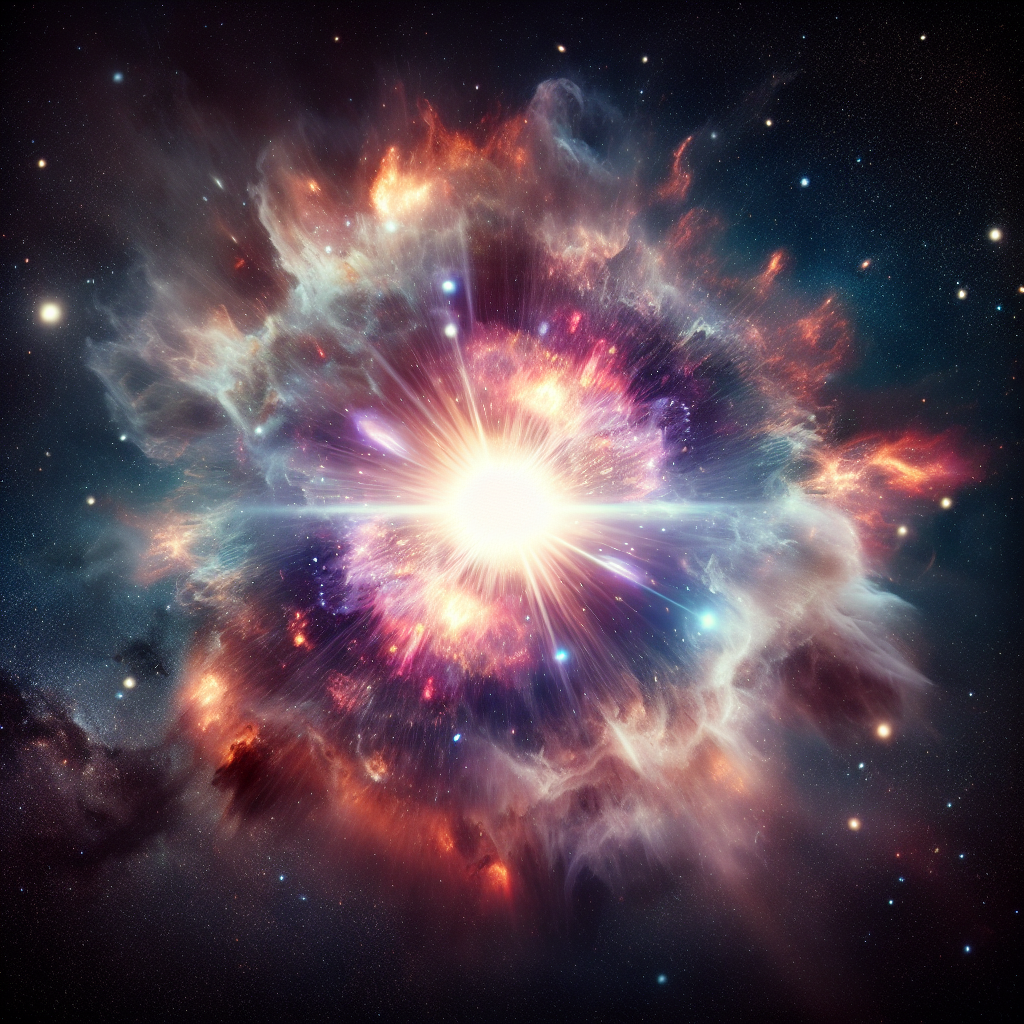
A catastrophic cosmic event resulted in a new type of supernova, observed by astronomers as a massive star tried to consume a black hole in a destructive gravitational dance. The star, around 10 times the mass of our sun, exploded after being distorted by the black hole’s pull.
The seminal event, situated 700 million light-years away from Earth, was witnessed in real-time thanks to an artificial intelligence algorithm. This enabled astronomers to conduct immediate observations, leading to pivotal insights into the life cycles of stars and the role black holes play in their demise.
This discovery highlights the profound impact celestial companions, such as black holes, have on massive stars as researchers continue to unravel the complexities of these stellar interactions. Such interactions might redefine our understanding of supernovae triggers and stellar lifecycle endings.


 Google News