

Govt Opens Consultation on Raising SH1 Transmission Gully Speed Limit
The proposal marks a significant development in the Government’s broader strategy to boost infrastructure efficiency and support economic growth.
- Country:
- New Zealand
Transport Minister Chris Bishop has announced the launch of a six-week public consultation period on a proposal to increase the speed limit on two key stretches of State Highway 1—Transmission Gully and the Raumati Straights—from 100km/h to 110km/h. The proposal marks a significant development in the Government's broader strategy to boost infrastructure efficiency and support economic growth.
Beginning on Friday, 30 May, the consultation invites feedback from the public on the proposed change, which aims to reduce travel times, enhance regional connectivity, and optimise the use of New Zealand's newest and safest motorway infrastructure.
A Modern Highway Built for Higher Speeds
"Boosting economic growth and productivity is a key part of the Government's plan to rebuild the economy, and this proposal supports that outcome by reducing travel times and increasing efficiency on this vital route between Wellington and the lower and central North Island," said Minister Bishop.
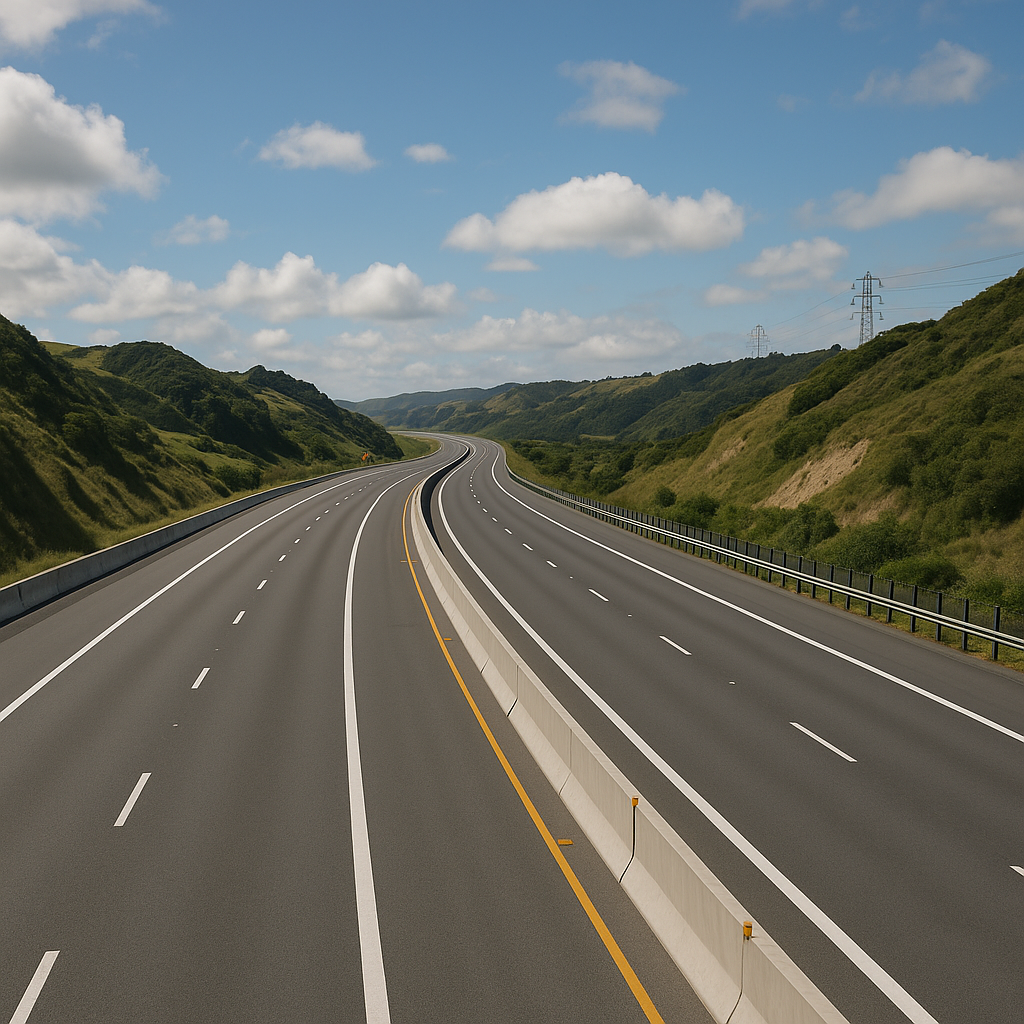
Transmission Gully, a 27-kilometre, four-lane motorway opened in 2022, was one of the first Roads of National Significance (RoNS) introduced by the former National Government in 2009. Designed to meet the highest modern safety and engineering standards, it is equipped with multiple features that support higher travel speeds, including:
-
Two separated lanes in each direction
-
Flexible median barriers to reduce head-on collisions
-
Improved signage and lighting
-
Emergency stopping bays
-
Advanced drainage and slope stability systems
The motorway sees an average of 22,000 vehicles each day, underlining its importance as a regional arterial route and a gateway to Wellington. Since opening, Transmission Gully has recorded over 150 barrier strikes—an indicator of its high traffic volume—but notably, no fatalities, a fact attributed to its strong safety design.
Raumati Straights Also Under Review
Alongside Transmission Gully, the Government is also consulting on raising the speed limit on the adjacent Raumati Straights—a key connector between Transmission Gully and the Kāpiti Expressway. By consulting on both sections simultaneously, officials aim to streamline decision-making and align speed limits across the corridor for better consistency and traffic flow.
"This is about improving not only travel times but also ensuring a smooth and safe experience for drivers transitioning between these critical segments of the highway," said Minister Bishop.
While Raumati Straights may still undergo safety improvements in the future, the Government sees the current consultation as a proactive step in determining appropriate speed settings that reflect both current road conditions and future plans.
Part of a Wider Economic and Infrastructure Strategy
The proposal forms part of the Coalition Government's wider transport and infrastructure agenda, which emphasises delivering high-performing state highways that facilitate productivity, reduce congestion, and enhance economic output.
"We're committed to providing state highways that help people get where they need to go quickly and safely," Bishop said. "This is about more than speed—it's about using modern infrastructure to support our economy and quality of life."
Public Participation Encouraged
The Government is keen to hear from a wide cross-section of road users, residents, and transport professionals. Public feedback will help the New Zealand Transport Agency (NZTA) determine whether the proposed changes should proceed, and if any further safety mitigations or adjustments are required.
The consultation will be open for six weeks, concluding in mid-July 2025. Submissions can be made through the NZTA website at: www.nzta.govt.nz/tgspeed
What Happens Next?
If approved, the speed limit changes could take effect later this year, accompanied by updated road signage and public information campaigns. The Transport Agency will also monitor road performance and safety outcomes post-implementation to ensure the policy continues to meet public and government expectations.
As New Zealand continues to expand and modernise its highway network, this consultation marks an opportunity for citizens to help shape how their infrastructure is used—and to weigh in on the balance between safety, speed, and economic efficiency.


 Google News