

Empowering Informal Settlements: Community-Led Climate Action for Urban Resilience
The World Bank’s 2025 report highlights how community-led climate adaptation in informal settlements can drive more resilient, inclusive urban development. It advocates for empowering grassroots action through participatory planning, flexible financing like Results-Based Finance, and strong local-government partnerships.
 CoE-EDP, VisionRI
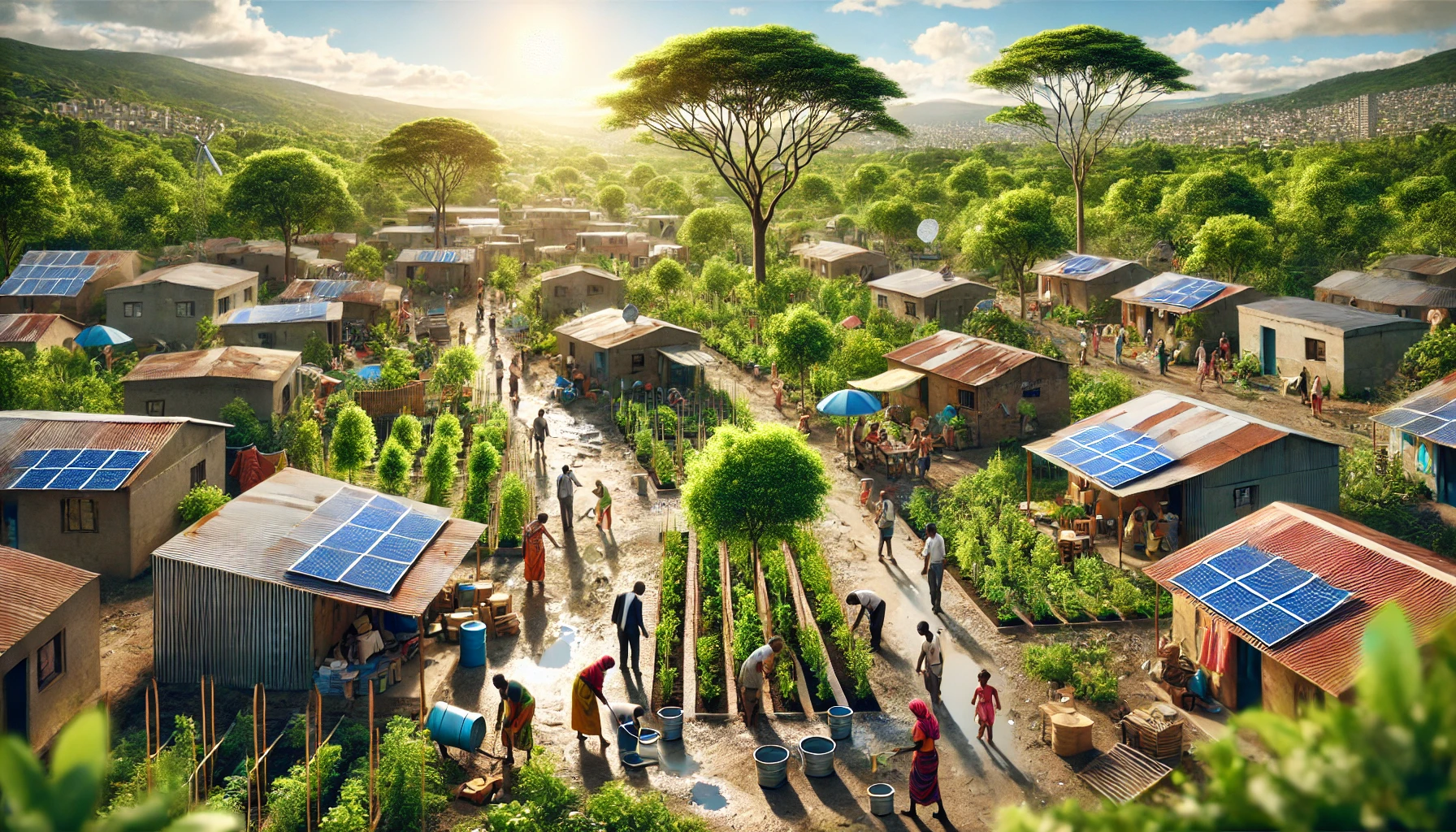
The World Bank's 2025 report, authored by Wayne Shand of the International Institute for Environment and Development and Tim Ndezi of the Center for Community Initiatives (CCI) in Tanzania, delivers a timely and urgent analysis of the role grassroots leadership must play in the global climate response. Through case studies, participatory research, and financial insight, the report lays out a roadmap for how community-led climate adaptation, especially in rapidly growing informal settlements across the Global South, can be integrated into national and city-level climate planning. Drawing deeply from the experience of Dar es Salaam's Kombo and Pakacha settlements, the research paints a compelling picture of both the challenge and potential of enabling low-income urban communities to lead on resilience.
Cities on the Frontlines of the Climate Crisis
With an additional 2.2 billion people expected to be living in cities by 2050, the vast majority in Asia and Africa, climate change is hitting urban centers harder than ever. Informal settlements, now home to over a billion people, are often built in high-risk areas such as floodplains, steep hillsides, and reclaimed wetlands. Residents of these communities live in substandard housing without access to adequate infrastructure, formal recognition, or secure land tenure. The result is a dangerous confluence of poverty and environmental exposure. Yet despite these realities, urban informal residents are mostly absent from national adaptation strategies and are grossly underrepresented in datasets that shape investment. In Dar es Salaam, for instance, residents spend up to a third of their annual income simply coping with climate impacts like flooding or heatwaves. This cycle of reactive spending leaves no space for longer-term adaptation. The report argues that to break this pattern, institutions must work with communities, not around them.
Grassroots Knowledge as a Catalyst for Adaptation
One of the report's most powerful contributions lies in its endorsement of community-led data collection. In collaboration with the Tanzania Federation for the Urban Poor (TFUP) and the CCI, residents of Kombo and Pakacha were trained to collect, analyze, and act upon local data related to flooding, heat exposure, and infrastructure risks. This participatory approach yielded rich insights into how climate risks impact different demographics, women, children, elderly residents, and people with disabilities faced the brunt of climate-related health, economic, and mobility challenges. In Pakacha, solid waste blocking drainage channels aggravated flooding, while in Kombo, poor building materials and eroded riverbanks made homes acutely vulnerable to collapse. Yet, despite this hardship, the communities also demonstrated resourcefulness. They raised floor levels, weighed down rooftops, planted trees, and mobilized around shared problems. This research did more than highlight problems; it also generated recommendations, from expanding drainage to increasing greenery and using heat-resistant construction materials. More importantly, it provided an entry point for city governments to collaborate meaningfully with organized communities.
Global Examples Show What's Possible
The report highlights successful community-led adaptation projects around the world to illustrate what scalable models can look like. The Asian Coalition for Community Action (ACCA) directed small grants to organized communities in 165 cities across 19 countries, funding improvements like toilets, drainage, and electricity. Ghana's UN-Habitat-backed Participatory Slum Upgrading Program empowered residents of Accra's Jamestown settlement to design and deliver vital infrastructure upgrades. In Kenya, the KISIP project relied on locally elected settlement executive committees to guide investments. In Vietnam, household investment in property upgrades surged after participatory drainage and sewage works were introduced. All these cases share a common thread: empowered communities not only deliver more cost-effective solutions but also foster local ownership, long-term maintenance, and social resilience. The report further argues that partnerships with NGOs, local governments, and donors are essential to scaling these efforts. The key lesson: when community priorities drive action, adaptation becomes more effective, equitable, and sustainable.
Financing That Rewards Outcomes
Despite increasing global climate finance, only a tiny share, just 2.1 percent of projects and 3.5 percent of budgets between 2003 and 2023, target informal settlements. Many donor systems still operate under the assumption that community-based organizations cannot manage funds or deliver technical projects. This perception, coupled with bureaucratic hurdles, limits the flow of funding where it's needed most. The report advocates for Results-Based Finance (RBF) as a practical and transformative solution. Under RBF, funding is disbursed only after verified results are achieved. This not only improves accountability but also encourages innovation and local relevance. Successful uses of RBF include rewarding communities in Jamaica for improved solid waste collection, subsidizing household sanitation in Ghana, and incentivizing land tenure reform in the West Bank. In Dar es Salaam, the authors suggest that RBF could support tree planting, community research, sanitation expansion, and green infrastructure, aligned with the priorities identified by the communities themselves.
Toward a Shared Future of Resilient Cities
The report closes with a strong call to shift the urban development paradigm. For too long, adaptation has been led by top-down strategies disconnected from the realities of informal urban life. The report insists that only by positioning communities as co-creators, rather than recipients, can cities hope to withstand the shocks of climate change. Results-Based Finance, community mapping, flexible partnerships, and decentralized governance models are not experimental ideals, they are actionable tools to transform urban futures. The Dar es Salaam case offers a replicable blueprint: organized communities, with the right support, can gather critical data, shape investments, and implement adaptation strategies tailored to their needs. The task ahead is to scale this model, build political will, and unlock the finance to match it. As urban centers brace for more frequent and intense climate events, inclusive adaptation is not just an option, it is a necessity. Through the combined efforts of governments, donors, and communities, a more resilient, equitable urban world is within reach.
- FIRST PUBLISHED IN:
- Devdiscourse
ALSO READ
-
Tanzania’s Young Talent Takes Centre Stage as Skills Competition Opens New Doors
-
Home Visits Linked to Better Timing of First Foods for HIV-Exposed Babies in Tanzania
-
Mozambique Shapes New Climate Strategy to Protect Communities From Extreme Weather
-
Climate Change Is Deepening the Crisis for Millions Living Without a Nationality Today
-
Tunisia’s Water Crisis Puts Jobs and Growth at Risk as Economic Recovery Loses Speed


 Google News