

Regional Allies Endorse Modi for Prime Minister: The Role of TDP and JD(U)
Two key regional allies, the Telugu Desam Party (TDP) and Janata Dal (United) JD(U), have endorsed Narendra Modi for India's next prime minister. Both leaders, Nitish Kumar and Chandrababu Naidu, focus on state-specific issues and economic policies, while promoting inclusivity and welfare programs for their constituents.
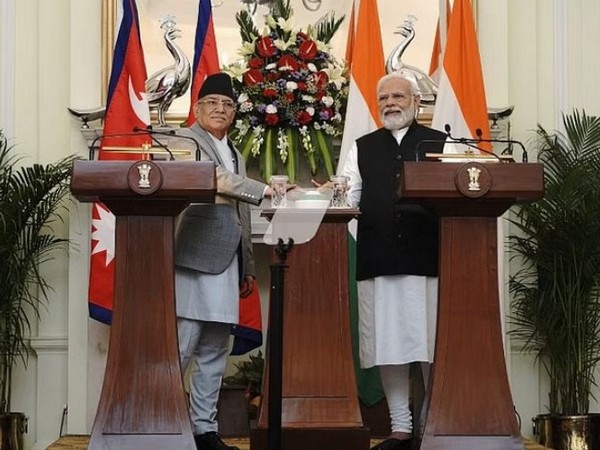
Two key regional allies in Narendra Modi's coalition have endorsed him as India's next prime minister, after Modi's Bharatiya Janata Party (BJP) fell short of a majority in a general election. Here are some details about the two allies, the Telugu Desam Party (TDP) and Janata Dal (United), who typically focus on issues concerning their states:
WHO ARE THE REGIONAL LEADERS? - Janata Dal (United)'s Nitish Kumar, 73, is the chief minister of India's poorest state of Bihar. He has been credited with steadying the state and pursuing economic development after accusations of widespread corruption and crime in previous administrations.
However, Kumar has switched his political alliances several times. He returned to Modi's coalition earlier this year after previously having helped to form an opposition alliance of more than two dozen parties for the general election. - TDP boss Chandrababu Naidu, 74, was the chief minister of the undivided state of Andhra Pradesh from 1995 to 2004. He played a key role in developing the state capital Hyderabad as a technology hub, while attracting foreign investors including Microsoft.
KEY ECONOMIC POLICIES Both Naidu and Kumar are considered pragmatic politicians and are comfortable working with bigger national parties and industrialists. Both rely heavily on welfare policies such as free travel for women and programmes for girls' education to help maintain support among voters.
Naidu said in a recent interview that his party would make building a new state capital, Amaravati, a key priority. He also plans more policies to attract investment in new technologies such as AI to create high-quality jobs in his state. Kumar focuses on more basic priorities such as building roads, hospitals and schools in his impoverished but populous state. He generally seeks aid from the federal government.
He also speaks in favour of raising up marginalised castes. Under him Bihar conducted one of India's first caste surveys. STANCE ON MUSLIMS
While Modi's BJP considers the majority Hindu population as its base, Kumar and Naidu are seen as more accommodating towards minorities such as Muslims. Both have said their parties do not believe in dividing societies based on religion, caste and region.


 Google News