

From Experience to Algorithms: Global Experts Turn to Decision Intelligence to Transform Nuclear Decommissioning
“Today, the right solution depends on many factors and can vary from country to country,” said Philippe Lefevre, Senior Nuclear Engineer at the IAEA.
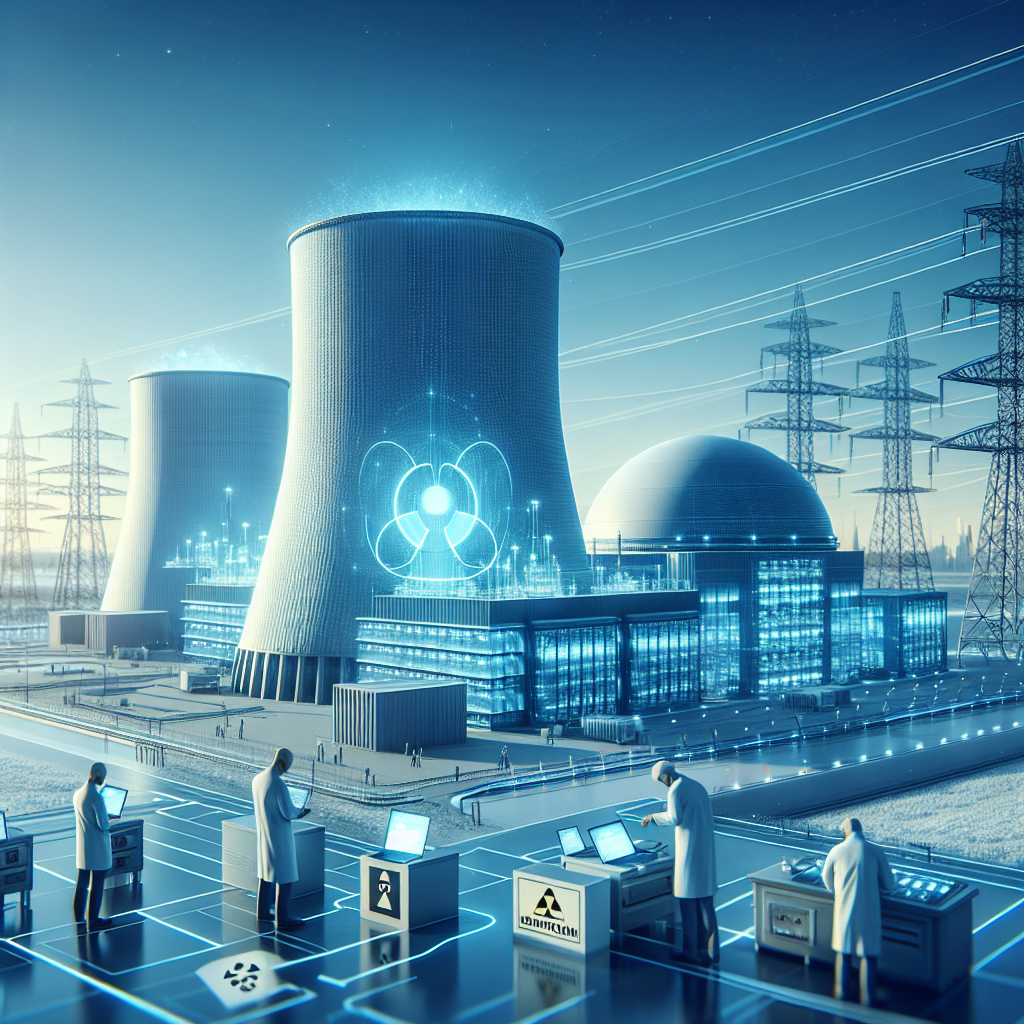
As nuclear facilities around the world approach the end of their operational lives, international experts are increasingly turning to data-driven decision frameworks and advanced technologies to determine how best to dismantle them safely, sustainably, and cost-effectively.
That shift was on display last month in Vienna, where more than 60 specialists from 30 countries met under the auspices of the International Atomic Energy Agency (IAEA) to examine how multi-criteria decision making (MCDM) can guide decommissioning strategies for nuclear installations.
Decommissioning — which includes radiological characterization, decontamination, dismantling, waste management, and site release — is a technically complex and high-stakes phase of the nuclear lifecycle. Many older facilities were never designed with dismantling in mind, making early and structured decision-making increasingly critical.
"Today, the right solution depends on many factors and can vary from country to country," said Philippe Lefevre, Senior Nuclear Engineer at the IAEA. "A common methodology allows us to reach technically sound decisions with international consensus."
Robotics, automation — and hard trade-offs
Recent decommissioning projects in France, Japan, Slovakia, and the United Kingdom have demonstrated the potential of robotics, remote handling, and advanced tooling to reduce worker exposure and improve precision. However, such technologies often come at higher upfront cost than conventional methods.
Participants emphasized that no single approach fits all sites. Decisions must balance technical feasibility, cost, safety, environmental impact, waste volume, regulatory requirements, and long-term site reuse plans — often with competing priorities.
This is where MCDM tools are proving transformative.
Decision intelligence for complex nuclear challenges
Widely used in fields such as spent fuel management, environmental remediation, and advanced reactor assessment, MCDM applies weighted criteria to compare options in a transparent and structured way. Importantly, the approach integrates both quantitative data and qualitative judgement, drawing input from regulators, operators, industry, and other stakeholders.
"MCDM helps structure complex decisions, balance competing criteria, and build shared understanding," said Simon Boniface, Decommissioning Strategy Manager at the UK Nuclear Decommissioning Authority. "Confidence in the process depends on ensuring all stakeholder perspectives are considered."
During the five-day meeting, participants shared national case studies, explored challenges, and worked through hypothetical decommissioning scenarios using MCDM tools, highlighting how outcomes can shift depending on policy, waste-disposal constraints, or site-reuse ambitions.
Beyond cost: evolving priorities
While cost remains a dominant factor in many contexts, experts noted that other priorities are gaining prominence.
"In situations where disposal capacity is constrained, waste-volume reduction can outweigh cost considerations," said Inhye Hahm, Senior Researcher at the Korea Atomic Energy Research Institute. Korea's Kori-1 reactor, shut down in 2017, is expected to become the country's first fully decommissioned nuclear power plant.
Experts also stressed the importance of reassessing decisions as technologies mature.
"New technical solutions, recycling pathways, and site-repurposing options can change what is possible," said Alexia Mercier, nuclear chemist at the OECD Nuclear Energy Agency. "Adaptive decision frameworks allow decommissioning strategies to evolve over time."
Next steps: building global capacity
Meeting recommendations included developing an IAEA publication on adaptive MCDM frameworks, expanding international case studies, and assessing demand for a Coordinated Research Project on decision methodologies. Participants also called for further training, workshops, and simulation exercises to strengthen global capacity.
IAEA support for a new decommissioning era
The IAEA supports Member States through:
-
Decommissioning & Environmental Management Advisory Services (DEMAS)
-
ARTEMIS peer reviews on waste, spent fuel, and decommissioning
-
Technical cooperation projects, e-learning modules, and the IAEA Decommissioning School
In 2026, new technical meetings and workshops will focus on small-facility decommissioning, cost estimation, and stakeholder engagement.
By combining engineering innovation, robotics, and decision intelligence, experts say the nuclear sector is moving toward a future where decommissioning is no longer an afterthought — but a strategically planned, technology-enabled phase of sustainable nuclear stewardship.


 Google News